
40 years on, the stench of death in Ethiopian refugee camps remains with me. We must not cut overseas aid
Former Labour MP Dennis Canavan urges people to join the campaign to reverse the UK’s cuts to overseas aid
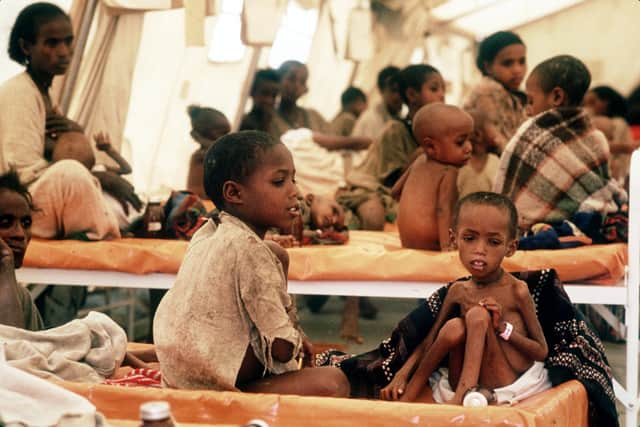
As a member of the House of Commons Select Committee on Foreign Affairs, I visited the Horn of Africa in the 1980s to investigate and report on the famine which was engulfing that part of the world, particularly Ethiopia. It was a harrowing and unforgettable experience.
There was a horrendous stench of disease and death in the refugee camps we visited. Some of the people we met were cadaverous and we were told by the medical staff that many of them had only hours to live. What an appalling indictment of the so-called developed world.
Governments could and did organise task-forces in next to no time for the purpose of waging war but they seemed incapable of organising enough trucks and helicopters to transport emergency supplies to stop people starving to death.
Our committee subsequently produced a positive report containing recommendations for urgent government action to increase emergency aid and support programmes for long-term sustainable development.

The crisis in Ethiopia
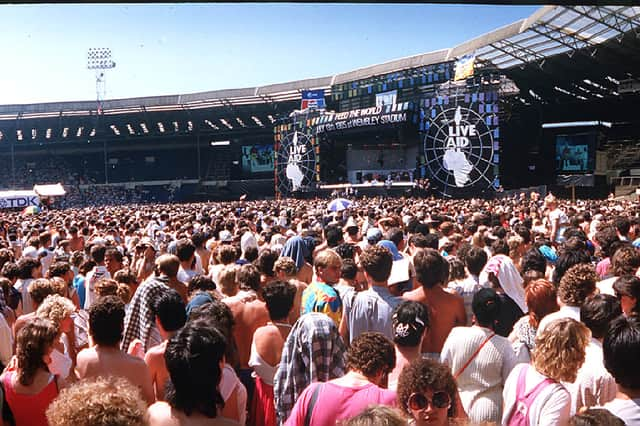
At that time, musicians Bob Geldof and Midge Ure probably did more than any government or parliament to raise awareness of what was happening in Ethiopia and to help raise funds to assist some of the most disadvantaged people in the world.
That was over 40 years ago but we now seem to be going backwards instead of forwards. Ethiopia today is facing a deepening humanitarian crisis. Years of instability have left millions of people without reliable access to food, health care and clean water. Ethiopia is not unique.
There are many other parts of the world such as Gaza, Malawi, South Sudan, Burundi and Yemen, where people are destitute and poverty-stricken, sometimes because of natural disasters but more often because of man-made disasters such as war and global inequalities.
We don’t yet know the full humanitarian fall-out from the conflict growing in the Middle East but it is often the case that warfare increases poverty. According to the World Bank, about 838 million people have to live on less than $3 a day, the official measure of extreme poverty.
It will soon be half a century since the establishment of the Independent Commission on International Development Issues, chaired by the widely respected Willy Brandt, the former Chancellor of the Federal Republic of Germany.
A global response to massive inequality
The Brandt Report referred to the North-South divide with massive inequality between the richest and the poorest countries in the world. Brandt also pointed out the interdependency between North and South, whereby many richer nations are dependent on the poorer nations for their wealth, while the poorer countries are dependent on the richer countries for their development.
To help eradicate such inequality, the Brandt Commission’s first report recommended that developed countries should spend at least 0.7 per cent of gross national product on international development, increasing to 1 per cent by the year 2000. The report was widely welcomed by the international community and the targets seemed reasonable and attainable.
The UK Government has never met the 1 per cent target, although the initial modest target of 0.7 per cent was achieved between 2013 and 2020, when there seemed to be a cross-party consensus on retaining that as a minimum figure.
However, with the advent of the Covid pandemic, there was a cut to 0.5 per cent in 2021 and last year the UK Government announced a further cut to 0.3 per cent by next year. If that drastic measure goes ahead, the UK Government would not be even half-way towards meeting its previous target, in an abandonment of a long-standing commitment.
The reason given by the UK Government for the recent drastic cut is the need to increase spending on defence, because of the current threats to world peace. However, it is arguable that cutting the aid budget will present a bigger threat to world peace because spending on international development is an investment in security and peaceful co-operation between peoples and countries. Deprivation and inequality often sow the seeds of conflict.
Robbing Peter to pay Paul
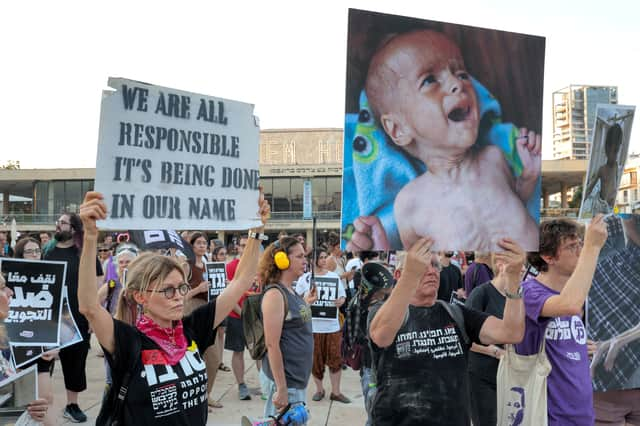
In 2024, the UK Government spent £2.8 billion – amounting to 20 per cent of its overseas aid budget – to support refugees in the UK. Refugees certainly deserve to be supported but taking the money out of the overseas development budget is rather like robbing Peter to pay Paul. If there was more investment in developing the poorest countries, many people might not feel the need to migrate from those countries.
The UK Government’s failure to prioritise international development makes it more difficult for non-governmental organisations to continue their good work. It is not surprising, therefore, that many of the charities involved in international development are appealing to the UK Government to reverse the cuts and here I should declare an interest.
I have been retired from parliament now for nearly 20 years but I occasionally visit schools to talk to young people on behalf of the Scottish Catholic International Aid Fund (SCIAF). I have always found a very receptive audience from young people, who are often more enlightened and sympathetic than some of the politicians when discussing international development. We’re a’ Jock Tamson’s bairns.
I strongly urge people to make their views heard by supporting SCIAF’s petition and contacting their MP to call for the reversal of the cuts in overseas aid. I also encourage people to consider making a donation to SCIAF to help some of the poorest people in the poorest countries in the world.
During Lent, SCIAF is organising a Wee Box appeal for funds. If you want to contribute, details are available on the SCIAF website, www.sciaf.org.uk.
Dennis Canavan was a Labour MP (1974-1999) and an Independent MSP (1999-2007). He served as a member of the House of Commons Select Committees on Foreign Affairs and International Development.
Comments
Want to join the conversation? Please or to comment on this article.