
Coul Links golf plans rejected by Scottish government planners



Development would cause ‘significant harm’ to environmental assets
Scottish government planners have rejected an appeal for a controversial world-class links golf course in the Highlands, arguing that it would cause “significant harm” to an internationally important area of natural environment.
The proposed Coul Links course has been one of the highest profile proposed golfing developments in recent years, with the plans sparking widespread debate.
Its supporters have argued that it would utilise just a small proportion of a site of special scientific interest (SSSI) between Golspie and Dornoch in eastern Sutherland, andl attract well-heeled golfers from the world over.
But opponents of the scheme have warned it would forever alter an ancient Highland wilderness, resulting in “ecological disaster.”
Councillors on Highland Council's north planning applications committee voted eight to six in favour of the scheme in December 2023, with Scottish ministers later calling in the application.
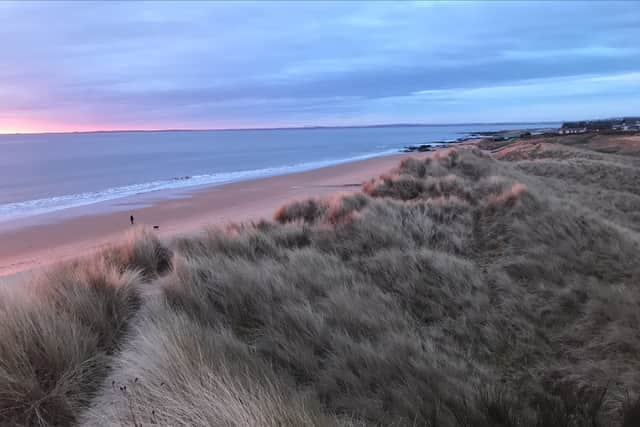
Now, the government’s planning and environmental appeals division has said it should be rejected.
The government reporters, David Buylla and Stuart West, concluded that the proposal was contrary to a number of development plan policies, and contrary overall to the development plan.
“Of particular importance to this conclusion is the policy presumption against the principle of developing such a significant proposal in the undeveloped coast and the significant harm the proposal would cause to environmental assets of national and international importance,” they stated.
The reporters said that there were “no material considerations” which would still justify granting planning permission, and recommended that the permission be refused.
In their 164 page report outlining the reasons for the decision, the planners said that the dune system, dune system, “even by the standards of an SSSI, is of exceptional importance.”
They explained: “The range and quality of habitat types that are found within the dune system, the majority of which are of high conservation value, is possibly unparalleled within Scotland.”
The reporters said that while it was difficult to quantify the precise extent of likely dune heath habitat loss if the course were be constructed, it was most convinced by the estimates of the Not Coul group, which suggested the total loss of such habitat would run to nearly five hectares.
“Taking all of the evidence into account, we find this to be a plausible prediction, which we conclude to represent a significant level of dune heath habitat loss and a consequent significant adverse effect on the SSSI’s sand dune habitats,” they said.
The reporters went on to address concerns about the impact on wildlife of the course, stating that even after mitigation, the proposal would have a “significant adverse effect on wintering birds.”
They added: “Within the proposed golf course footprint it is likely to cause significant biodiversity harm through the loss of nationally important habitats and the fragmentation of extensive areas of the habitats that would remain.”
In weighing up the economic impact of the proposal, their report pointed out that that the course would have become one of the largest direct employers in Sutherland, creating a “substantial number” of permanent, seasonal, and annualised jobs regionally.
But they stressed: “Even if one accepts every aspect of the applicant’s own predictions of the likely socio-economic effects of the proposal, we do not accept that such beneficial effects of the proposal would be of national importance.
“Such benefits would not therefore clearly outweigh the significant adverse effects on features of national importance that we have identified in this report.”
The reporters added that if ministers disagreed with their recommendation and were minded to grant planning permission, they recommended such a step should take heed of several conditions and the satisfactory completion of a habitat regulations appraisal.
But Communities for Coul, which brought forward the plans, criticised the decision.
Its director, Gordon Sutherland, said: “The ministers’ decision to reject our application for planning permission is a real blow for our area’s economy and its unique environment and a slap in the face for local democracy. It will be hugely disappointing and dispiriting for all the many people in East Sutherland that have supported our proposals from the outset.”
He added: “Our plans offered a real opportunity to restore and sustainably protect the Coul Links site, while also creating lasting economic benefits and new employment opportunities in an area that is being decimated by the continuing loss of working-age population. We do not envisage that this opportunity will present itself again.”
The Coul Links landowner, Edward Abel Smith, said he too disagreed with the decision.
“I am absolutely gutted that the Scottish government have decided to overturn The Highland Council’s approval for a golf course at Coul Links,” he explained.
“I am very sorry for everyone in east Sutherland – in particular the wonderful members of Communities for Coul – who have worked tirelessly on a voluntary basis. A golf course at Coul Links would have been transformational for the area.”
NatureScot had objected to the development on the grounds that it would have a significant adverse effect on the protected sand dunes. The RSPB charity said it too “strongly objects” to the plans, reasoning the application had not shown that it would not adversely impact the integrity of various special protection areas, nor shown that it was “not likely to damage” the Loch Fleet SSE.
The RSPB also criticised the “misleading arguments” put forward by the applicant that the development was needed to secure future management of the sites, and that biodiversity enhancement could be “effectively delivered” on the site.
Previous proposals for an 18-hole course, brought forward by the US golf course developer, Mike Keiser, and Todd Warnock, a Chicago-born entrepreneur, were refused permission in 2020. Scottish ministers ruled that while the scheme would have supported economic growth and rural development, the adverse impact on Coul’s wildlife and habitats was too great a price to pay.
Comments
Want to join the conversation? Please or to comment on this article.