
Clean power official 'disappointed' by scrapped offshore wind farm plans

Warning of storm facing sector
The decision by a major Danish energy firm to cancel plans for a huge offshore windfarm partly reflects the “reality” facing the sector in a global market being hit by a “force nine gale of events,” according to the man tasked with delivering the UK government’s clean energy plans.
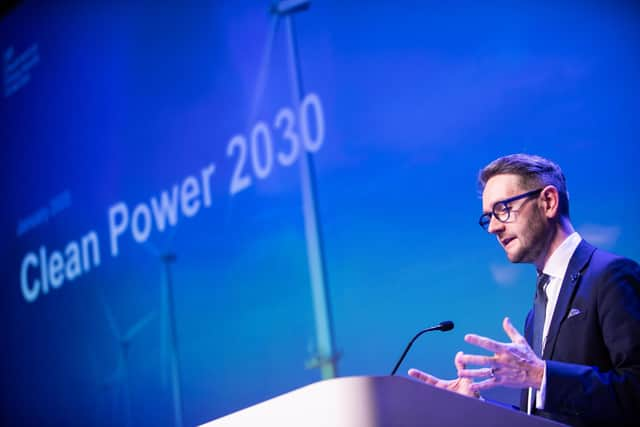
Chris Stark, head of mission control for Clean Power 2030 at the Department of Energy Security and Net Zero, told a key industry conference in Glasgow that Ørsted’s move to scrap the vast development off the coast of East Yorkshire highlighted the pressures facing the renewables business.
It comes as a new report from the offshore energy trade body, OEUK, warned that without action to address price inflation, capital cost, and supply chain competitiveness, the UK government’s clean power target of 2030 will not be met.

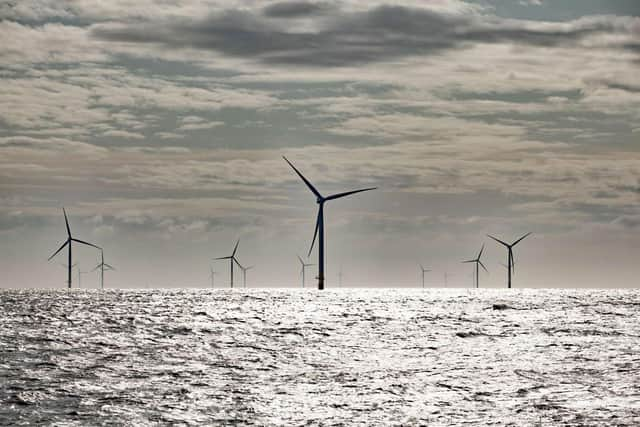
With a potential capacity of 2.4GW, the Hornsea 4 project would have become one of the biggest offshore developments in the world, but the firm behind it cited a range of reasons why it was pulling the plug, including adverse macroeconomic developments, continued supply chain challenges, and increased execution, market and operational risks.
‘A difficult couple of weeks for us’
In a keynote address to the All Energy conference in Glasgow on Thursday, Mr Stark, said: “It is a force nine gale of events happening right now around us. This has been a difficult couple of weeks for us. Ørsted’s decision to delay Hornsea 4, despite securing a CFD (contract for difference award) last year, is definitely a blow for us, particularly because it displaced other very good projects that would otherwise be in full development right now.
“I’m very disappointed that has happened. We can debate the specifics of it. It’s partly about a company that’s very exposed to that global gale. But it’s also partly about the reality of offshore wind development in today’s global market.
“There’s no dressing it up - we need to acknowledge the challenges that face this industry. I want our clean power plan to be key to making the UK a safe port for investment in a storm.”
Mr Stark, a former chief executive of the Climate Change Committee, stressed that “no single project throws us of course,” and said the Ørsted decision had given the government fresh impetus.
“If anything it’s strengthened our resolve that we need a mission around this stuff to get it moving, and I do think we’ve got some very good tools in the box, which we’ll bring out shortly,” he added.
Mr Stark, a former director of energy and climate change at the Scottish Government, said that after feeling “gloomy” following the Hornsea 4 announcement, he travelled to Inverness to visit offshore wind projects, an experience which left him “full of renewed conviction that this should be a guiding mission for this country.”
He explained: “If you want to see that transition happening, go north to the Highlands. There is work happening to prepare ports and quaysides for offshore wind deployment at a genuinely huge scale, and it is happening alongside continuing work for the oil and gas sector.”
Comments
Want to join the conversation? Please or to comment on this article.