
Travelling With Dogs in Hot Weather: Here's how to keep your pet healthy and happy during summer car journeys
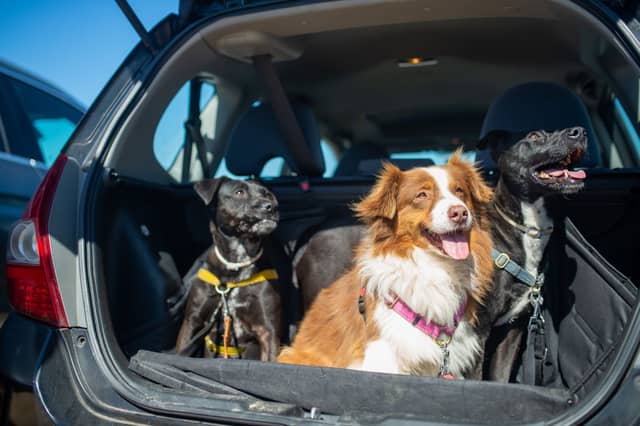

With the weather heating up, it’s time to take extra care of our four-legged friends.
But with the average summer temperature reaching up to 18 degrees celsius, sometimes 30 on occasions, it’s vital to ensure that our pets are kept safe when travelling in the car - especially during the predicted heatwave later this month.
We should all know now that you shouldn’t leave a dog in a hot car for even a few minutes, as the results could be fatal.
But what about when we’re driving somewhere with our pooches - maybe to go on a dog-friendly summer holiday?
To help out, Group 1 Automotive have shared five ways to ensure your pet is properly cared for in your vehicle.
Here’s what they had to say.
Have plenty of water on hand
In the Summer months, it doesn't matter whether it's a short drive or not, it’s always essential to carry water in the car for your pet. Remember, most of our pets have a thick layer of fur unlike humans, so they can feel the heat a lot quicker than we may initially feel it ourselves, and can’t communicate it with us. Our pets can become dehydrated, or even suffer from heatstroke, so ensuring they have water is a necessity. According to the RSPCA, it can take only 6 minutes for a dog to suffer from heatstroke in the car, which can be fatal.
Install some window shades
Window shades are a good addition in the hot weather, as they can block the sunlight from reaching your car’s interior, keeping it cool. Window shades are quick and easy to install on your car windows, as well as being reasonably priced, and can be purchased from both high street and online stores, such as Halfords or Amazon.
Use a bed or crate on the seats for your pet
Leather is a big retainer of heat, and can warm up fast - especially if it's exposed to the sun for long periods of time. To combat this, purchase a crate or a dog bed that can lay on the car seats, and strap your dog in. You could even purchase a cooling mat for your pet, making it more comfortable for them. Strapping your pet in is also a must when it comes to transport, with rule 57 of The Highway Code stating: “When in a vehicle make sure dogs or other animals are suitably restrained so they cannot distract you while you are driving or injure you, or themselves, if you stop quickly. A seat belt harness, pet carrier, dog cage or dog guard are ways of restraining animals in cars.” If you are found to have a loose animal in the car, you could land a hefty £1,000 fine, and points on your licence. This could increase to £5,000 if you are taken to court.
Turn on the air-con
Our cars can heat up faster than we think, with a 24 degrees celsius exterior temperature able to rise to 38 degrees celsius in just 10 minutes inside the vehicle. To cool down your vehicle relatively quickly, turn on your air-con to circulate some cool air. On average, it should take around 4-5 minutes for your car to cool down once this has been activated, and is one of the easiest ways to reduce the interior temperature of your vehicle. Another method can be to open the windows in the car first to let out any hot air. Then, turn on the air con to let the air circulate around the car before setting off for the journey. As well as this, if your pet is in the back of the car, ensure that the rear vents are facing your pet so they can also feel the full effects of the cool air.
Avoid travelling in the car at peak temperatures
Try to avoid travelling in your vehicle at peak temperatures as this can be more dangerous than you might first think. Be sure to check the weather for the day, and work out which times are the best to travel when the temperature is lowest. Early mornings are typically a better time to travel with your pet. If your dog or pet does become ill, or unfortunately die from being left in the car, pet owners risk being charged for animal cruelty under the Animal Welfare Act 2006, and face a potential fine or prison sentence.
Comments
Want to join the conversation? Please or to comment on this article.