
Historic Environment Scotland embarks on 'difficult and emotional' decisions over future of 300 properties
There are tough talks ahead on the future of Scotland’s prized historic sites as climate change, costs and rising visitor numbers take their toll
Scotland’s national heritage body has spoken of the “difficult and emotional” decisions it faces as it assesses which historic properties it will continue to invest in long term, which it will leave to managed decline and which could be used for another purpose, such as rented accommodation.
Historic Environment Scotland today launches a major new strategy on how it will care for its 300 properties against a backdrop of rising costs, deepening decay of its assets accelerated by climate change and a shortage of traditional skills to maintain them.

Crucially, the strategy acknowledges that “not all sites and collections are equally important” and that “it may not be possible or necessary for us to be the custodians of a place forever”.
Some properties could be turned into rented accommodation or community space under the bold plan, the first of its kind since the concept of state care of historic sites was introduced in the late 19th Century.
An major exercise is now underway to measure the “significance” of HES sites, which will no longer be valued solely on its historic and cultural value but also their worth in in economic, social and environmental terms.
While some properties will warrant continued long term investment, others may be made safe and left to naturally decay in the landscape as they become dangerous and too expensive to fix.
Dr David Mitchell, director of cultural assets at HES, said it was necessary to look at historic sites through a new lens in order to determine their future.
He said: “They are not museums in the landscape and I think there has been a perception and a view that we look at these places and manage them as if they are museum objects.
“There is a desire for us to shift our approach as to what we see is significant. Now that is challenging for some people but we have to look at drivers and challenges that we have got now in terms of climate and investment.
“It is about how we look after properties in a completely different environment that we have done in the past and there is a reality as to how much resource can go in.
“So how do we make the choice about where do we invest and I think we want to be much more open how we do that.
“There needs to be an evolution in the sector and I know that colleagues in other organisations agree - we need ot have a more holistic view about what Scotland deems to be significant and how that is managed going forward.”
A public consultation opens today on the strategy, which has been under discussion for around 10 years as rising visitor numbers, TV tourism, weather changes and funding challenges impact the sector.
Dr Mitchell added: “What we choose to do will have long lasting consequences so it’s important that all views are taken into account.
“We know how much these places mean to local communities, to the people of Scotland and those who visit us from overseas. They are truly sustainable assets for subsequent generations if we get our approach right – balancing benefits without placing the assets themselves at risk.
He added: “The consultation is about encouraging all these conversations. It is difficult and it is emotional but there is a reality that we have to have these discussions. Because if we don’t the natural process of decay continues and the long term survival of the assets is fundamentally based on their ability to resist that natural process.”

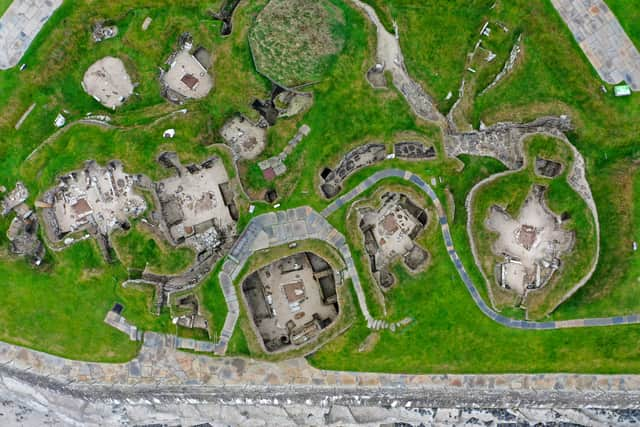
Dr Mitchell pointed to two sites under discussion - Fort George, the18th Century military fortress built at Culloden at Ardersier and Skara Brae, the Neolithic village in Orkney.
Fort George recently suffered a collapse into the sea, which was “directly in line with what had been forcecast” in a recent climate risk assessment.
Dr Mitchell said: “Now, if that happens at scale , there is a reality there. Are we as a society prepared to spend £30 to £40m on coastal protection at Fort George?
“Skara Brae is another very obvious example that we use. We know that the rate of loss of the coastline there is quite remarkable.
“Skara Brae is an emotional one because it is so significant. What is there is remarkable.
“Skara Brae is an incredibly difficult one. It is so important internationally. I suspect that we should invest at Skara Brae. The costs of doing that and doing that long term may be unviable but I think for example, for the next 50 to 100 years, and this is where the strategy comes in, that we need to be able to say ‘Skara Brae, long term, yes we are going to invest there’.
“Are we going to invest £40m at Fort George ? Maybe not, but yes we are going to do it at Skara Brae because the cultural significance and economic impact is disproportionately strong in Orkney rather than if it were somewhere else.”
Dr Mitchell said the organisation had to “navigate the line” between public benefit and revenue generation at its properties, with the potential of assets now being examined.
He added: “ I think we have to be honest and that is difficult for some people. Edinburgh Castle is where we derive the majority of our revenue and people get a bit anxious that we are over commercialising it.
“But the reality is that Edinburgh Castle directly supports the conservation of tiny wee sites in villages in rural Scotland. That is the reality. We shouldn’t be ashamed of saying that.”
HES already rents out properties in Holyrood Park and next to Melrose Abbey, but Dr Mitchell said the organisation could go further.
He said: “Look at Fort Charlotte in Shetland, which slap bang in the middle of the town and we have some vacant property there. Historically we would have been quite uptight about talking about this sort of thing.
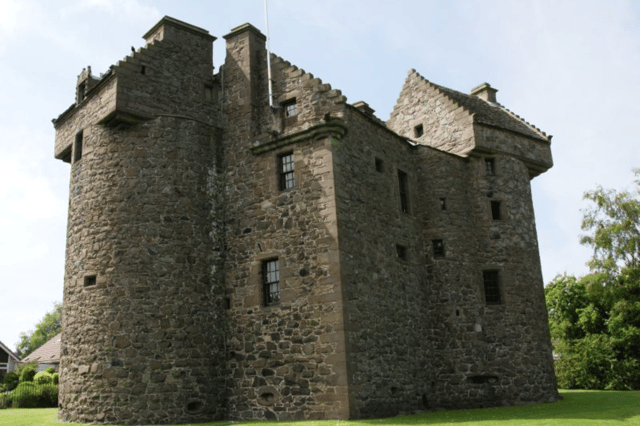
“Look at Claypotts Castle on the outskirts of Dundee. It is the most beautiful wee thing. It is in the middle of a housing estate, people generally don’t get in , it is a wonderful wee building and it is on a scale that is great. That building should be doing more than just being sat there.
“It could be serving a purpose. It could be everything from a community facility to a cook school. It could have a purpose beyond what it is doing just now. I think that is fundamental to the strategy - getting that balance between the conservation bit and the opportunities.”
He said that creating accommodation for staff in areas where there was a shortage of rural housing was also an option.
HES manages properties in State Care on behalf of Scottish Ministers, with properties conserved as they were found.
This has led to a minimal intervention approach, but this now had to evolve, Dr Mitchell added.
He added: “The approach of treating these places and objects in the landscape might have been ok in the 1930s when labour was cheap, but we are now in a situation where scaffolding at Linlithgow might cost half a million pounds.
“It is no longer viable to take a minimal intervention approach , which is the traditional approach. It is not enough.”
Comments
Want to join the conversation? Please or to comment on this article.