
Glencoe coin hoard buried before massacre gets new Highland home
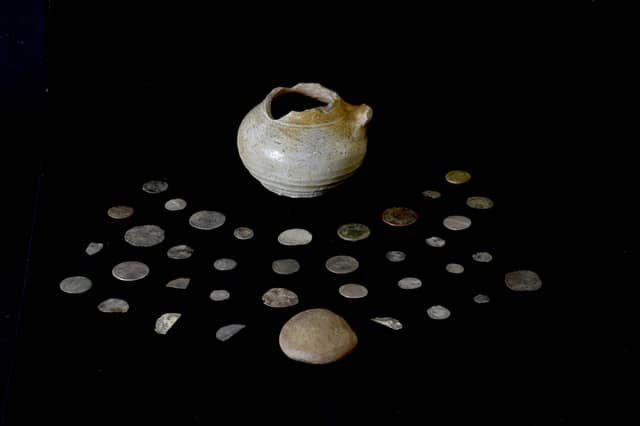

The finds made deep in Glencoe speak to the people who lived there at the time of the infamous massacre
A coin hoard which “vividly” depicts the “highly educated and well-travelled world” of the MacDonald clan chief murdered during the infamous Massacre of Glencoe in 1692 is to go on permanent display in the Highlands.
The coins were in a ceramic pot placed beneath the fireplace in the remains of a “summerhouse” traditionally associated with Alasdair Ruadh “MacIain” MacDonald, 12th Chief of the MacDonalds of Glencoe, who was killed during the atrocity along with several of his kin.
The summerhouse was likely used by the clan for feasting, drinking and gathering.
The 36 coins range in date from the mid 1500s to the early 1700s, and include pieces from the reigns of Elizabeth I, James VI and I, Charles I, the Cromwellian Commonwealth, and Charles II, as well as coins from France, the Spanish Netherlands and the Papal States.
Some of the coins may have been collected by MacIain himself during his travels across Europe, archaeologists believe.
As well as the coins, the excavation assemblage includes items such as musket shot, a powder measure, spindle whorls, and high-status pottery from England, France and Germany. A fragment from a “beardman” jug from the Rhine was among the pieces found.
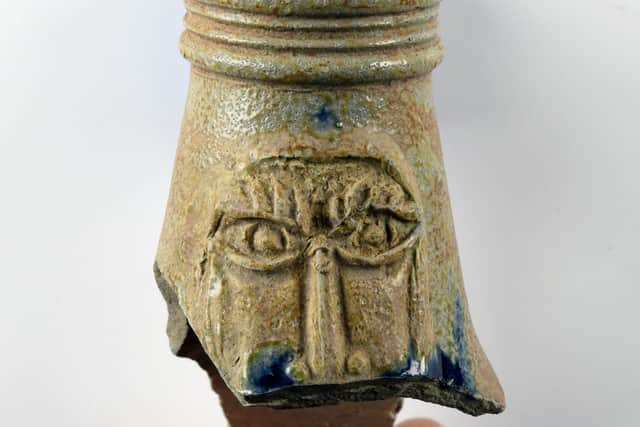
The items reflect the “highly educated and well-travelled” calibre of chiefs of the clan, who had access to continental markets and connections, said Dr Eddie Stewart, senior archeology lecturer at Glasgow University , who led the dig at the Glencoe site.
All the items will go on show at Glencoe Folk Museum, which is due to re-open next year following a major refurbishment.
Dr Eddie Stewart, senior archaeology lecturer at Glasgow University, said of the project: “The excavations at the summerhouse site, and our surveys and excavations in the widerlandscape, paint a vivid picture of the world of the MacDonald of Glencoe chiefs. Instead of wild and savage clansmen in a remote glen, they were highly educated, well-travelled and better connected - with access to continental educations, imported wine and tobacco, and fine dining wares from Germany, France, and England.
“The coins from the hoard highlight these connections which surely played a part in how the chiefs presented themselves and performed their status and worldliness to their clan, kin, and guests.”
The hoard was discovered by student Lucy Ankers in 2023 during a dig in Gleann Leac na Muidhe, Glencoe.
The Glencoe Landscape, Archaeology, and Storytelling (GLAS) Project from the university has undertaken a number of archaeological digs in Glencoe in partnership with the National Trust for Scotland, with the townships of Gleann Leac na Muidhe and the pre-clearance townships of Achnacon and Achtriachtan now well explored.
The GLAS Project has carried out a broader survey of Glencoe, giving new insights into how people lived, travelled, grew their crops and tended their cattle, as well as the major social changes that accompanied the new commercial sheep farms of the 19th century.
Glencoe Folk Museum successfully applied for these objects through Treasure Trove, which investigates and assesses newly discovered objects and allocates them to museums and galleries.
Catriona Davidson, the Curator of Glencoe Folk Museum, said: “We are so excited to be adding these artefacts to our collection. One of the aims of our current redevelopment project is to create exhibition spaces with the environmental conditions and security to allow us to acquire more significant objects – and we’re thrilled that this has already paid off.
“Items such as these give us a tangible connection to the people who lived here in the past and can tell us so much about everyday life in the Glen. We can’t wait to work with the archaeology team to interpret the artefacts for the Museum and share their stories in the place where they were discovered.”
The Museum continues to fundraise to support its redevelopment work.
Comments
Want to join the conversation? Please or to comment on this article.