
Scotland sees UK's most northern egret colony established after chicks born for the first time

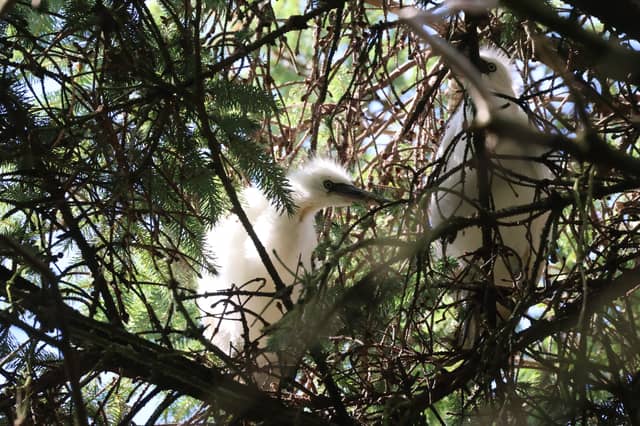

Changing conditions and reduced persecution has led to further spread of the heron species.
Little egrets have bred for the first time in the north east of Scotland - establishing what is believed to be the most northern colony of the species in the UK.
Researchers say climate changes have pushed these Mediterranean birds further north, with developed colonies across south-west and southern England.
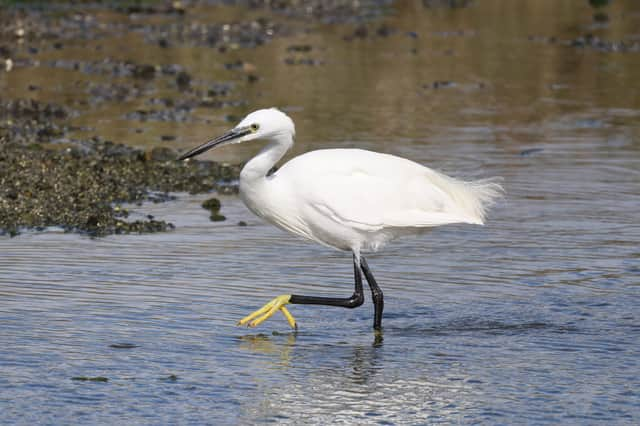
Little egrets are a small, white heron with white plumes on the crest, back and chest. They have black legs and bill and yellow feet.
Four of the distinctive large white chicks have fledged at NatureScot’s Forvie National Nature Reserve (NNR) near Ellon in Aberdeenshire this summer.
The nature agency said they are believed to be from the most northern colony in Britain. Little egrets are a recent colonist of the UK, where they were first recorded breeding in 1996. The first Scottish breeding record was in Dumfries and Galloway in 2020.
While the UK population is around 1,500 to 2,000 pairs, the Scottish population remains small.
Higher temperatures during the warmer months and milder winters have made the UK more attractive to the bird, according to researchers. They said over the longer-term, a reduction in persecution may also have helped the population, as little egrets were extensively hunted in the 19th century for their breeding plumes to adorn ladies’ hats.
NatureScot’s Forvie NNR manager Catriona Reid said: “For years now, we have seen little egrets pretty regularly on the reserve, fishing in the Ythan estuary, but we didn’t think they were breeding. That was until a local birder told us they had spotted egrets up a tree in the reserve’s heronry.
“Egrets often nest with herons, so we started to keep an eye on them and watched as a rudimentary nest was built. However, this was two months after egrets are said to usually breed, proving yet again that wildlife does not follow the rules!
“To our great surprise, almost before we knew it, there were four well-grown youngsters scrambling around the trees. We’ve thoroughly enjoyed watching them clamber about and hearing their bizarre gargling noises. Only one pair have bred this year, but a second pair have been hanging around, and we’ve also had a regional high count of 17 including the youngsters.
“While it has been wonderful to have them here, the sobering fact is that this is one small part of a much wider story where the ranges of birds and other species are moving as a result of our warming climate. While that will provide opportunities for some species like the little egret, others - such as the mountain-breeding dotterel - will be vulnerable and at risk. It underlines the urgent need for us to step up action to tackle the twin crises of nature loss and climate change.”
NatureScot manages 29 NNRs, covering 41,300 hectares or 0.54 per cent of Scotland’s land.
Torridon in the north-west Highlands was declared the country’s newest NNR earlier this month.
NatureScot approved an application by the National Trust for Scotland for about 12,602 acres (5,100ha) to be covered by the designation.
The reserve stretches from the seashore of Loch Torridon to the summits of the mountains Beinn Alligin and Liathach, and includes woodland and habitats that are home to ptarmigans and golden eagles.
Comments
Want to join the conversation? Please or to comment on this article.