
Quantum leap in cancer care will boost economy
Scotland’s great leap forward in treatment signals a critical new phase for life sciences sector, writes Aldona Mzyk
Across Scotland, a quiet but significant shift is taking place in healthcare innovation. Quantum technologies, once seen as far-off scientific curiosities, are beginning to offer practical tools that could reshape how cancer is detected, understood and treated. The move from theory to real clinical application marks a critical new phase for Scotland’s life sciences sector, one that could generate new high-value markets and strengthen the country’s position in global healthcare technology.
A new project at Heriot-Watt University illustrates this turning point. Supported through a £2 million Future Leaders Fellowship from UK Research and Innovation, we are developing ultra-sensitive quantum sensors that can monitor how immune cells behave when they encounter cancer tissue. The goal is to unlock insights that have long held back progress in cancer immunotherapy, particularly for solid tumours, where treatment success remains limited.
Every minute, seventeen people worldwide die from cancer. This continuing toll underlines the need for new approaches that can identify why some treatments succeed and others falter. CAR-T cell therapies, which have transformed outcomes for some blood cancers, work in fewer than half of cases when applied to solid tumours like breast, bowel or lung cancers. Tumour environments strain the metabolism of immune cells and can cause them to malfunction. Without a clear view of what happens inside these cells, the development of more effective therapies has struggled to advance.


Quantum sensing offers a way to observe these biological processes in unprecedented detail. The technology can detect molecular changes thousands of times smaller than the width of a human hair. At Heriot-Watt University, we will use sensors as small as a single electron to track magnetic signals from free radicals, molecules that play a central role in cell metabolism and the development of disease. By following how these molecules behave, we can build a more complete picture of how immune cells interact with cancer and what causes them to fail.
The commercial implications are considerable. Scotland’s life sciences sector already has strong foundations in diagnostics, drug development and advanced manufacturing. Technologies that can map cellular behaviour in real time could accelerate the development of new treatments, provide tools for earlier diagnosis and open opportunities in precision medicine. For Scottish companies focused on biotechnology, medical devices and immunotherapy, quantum sensing represents an emerging market with global potential and the collaboration opportunities are considerable.
This work also builds on a broader national strategy. Heriot-Watt University is involved in four of the five quantum research hubs funded by the Engineering and Physical Sciences Research Council. These hubs are part of a wider effort to translate quantum research into technologies ready for industry and the NHS. The emphasis on ultra-precise sensing, imaging, timing and secure communication networks aligns well with Scotland’s long-established strengths in photonics and its growing healthcare technology sector. One of the four hubs, Q-BIOMED, is fully dedicated to the development of quantum sensors which, with their sensitivity in the detection of few molecules and viruses, can enable early disease detection for better treatment outcomes.
Photonics research at Heriot-Watt, spanning advanced lasers, optical sensors and fibre optic probes, provides further momentum. These technologies already support improved diagnostics and real-time monitoring in clinical contexts and are now converging with quantum advances to produce tools that are more sensitive, more precise and better suited to personalised medicine.
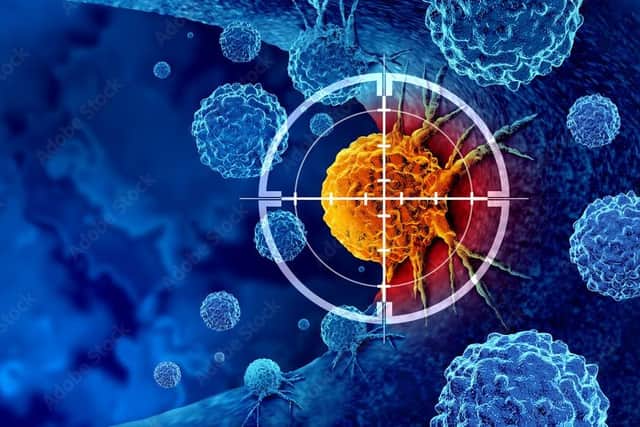
Scotland’s opportunity lies in bringing these strands together. By linking research excellence with clinical partners and commercial investment, the country can play a leading role in shaping the next wave of healthcare innovation. The challenge is not only scientific but strategic. It requires systems that can translate breakthroughs into real clinical solutions and support companies developing the next generation of medical technologies.
If Scotland gets this right, quantum sensing will not simply add to the country’s scientific reputation. It will help build a stronger life sciences economy and contribute to better cancer care for patients across the nation.
Dr Aldona Mzyk, Institute of Photonics and Quantum Sciences, Heriot-Watt University
Comments
Want to join the conversation? Please or to comment on this article.