
Dundee biotech working on infectious diseases gets £2m injection from Bill Gates’ foundation

“What makes the Gates Collaboratory work so well is partnership” – Chris Wardhaugh, CEO
A Dundee biotech company has secured a $2.7 million (£2m) injection from the Gates Foundation to further accelerate the development of new treatments for infectious diseases.
PhaSER Biomedical said the two-year grant renewal from the foundation - co-founded by Microsoft billionaire Bill Gates - came as the firm attracted growing interest from industry and regulators. The grant will help support the discovery of new treatments to some of the world’s most neglected diseases.
The company was formed in 2022 to exploit a unique “transgenic mouse model” developed in a collaboration between Professor Roland Wolf at the University of Dundee, CXR biosciences, Taconic Farms and Scottish Enterprise. The model lets drug developers establish how a compound behaves in people and addresses major bottlenecks in drug development programmes, particularly due to mouse specific metabolic issues.
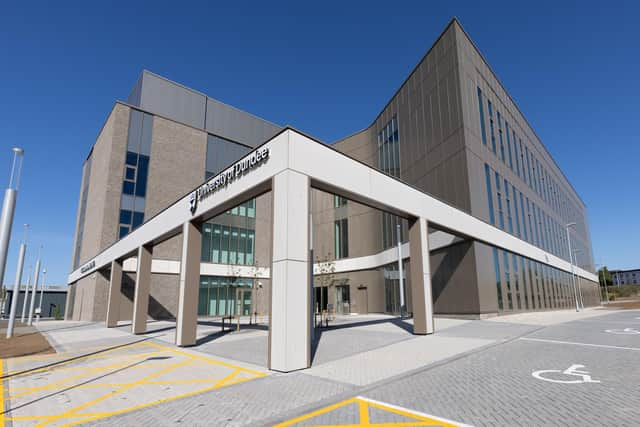

The grant funding renewal builds on the $2.3m (£1.7m) award that the firm received in 2024 from the Gates Foundation.
Professor Wolf, founder of PhaSER Biomedical, said: “We are really excited about the continuation of this collaboratory programme. Over the last two years we have seen how the humanised models provide human-relevant data that can rescue promising compounds, de-risk candidates and save valuable drug development time for the treatment of diseases that affect millions of people.
“The renewal lets us build on our significant progress, with new models and capabilities shaped in close collaboration between PhaSER, Gates Foundation grantees and the University of Dundee.”
Chris Wardhaugh, the firm’s chief executive, said: “The continued support from the Gates Foundation will support our work using humanised models in accelerating drug development. What makes the Gates Collaboratory work so well is partnership and we are thrilled to continue working side by side with world-class investigators, and with our colleagues at the drug discovery unit at the University of Dundee, to design the right studies and turn complex data into clear decisions.
“This is the same philosophy that is proving so fruitful in our partnership with MHRA, involving clinicians, applied mathematicians, data analysts and pharmacokinetic scientists to combine data from our humanised models with clinical trial and real-world data, machine learning and computational modelling - true interdisciplinary teamwork.”
Comments
Want to join the conversation? Please or to comment on this article.