
Allied Vehicles founder Gerry Facenna calls on Westminster to fund apprentice wages
Gerry Facenna, founderat debt-free Glasgow firm Allied Vehicle, calls on Westminster to fund apprentice wages
The UK Government’s decision to raise National Insurance has had a crushing effect on the labour market and its impact on youth employment is becoming increasingly clear.
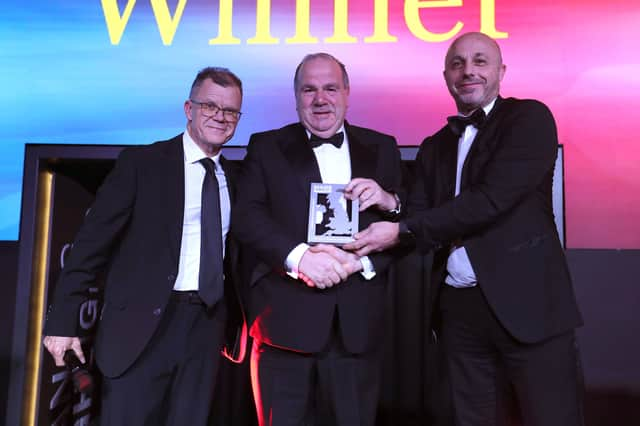

Gerry Facenna, founder of Glasgow’s Allied Vehicles, says the rise in employer contributions has cost his company about £750,000.
Money, he believes, that would have been better spent on bringing youngsters into the business.
“How many apprentices could I have brought in for that?” he questions. “It’s just absolute craziness.”
Gerry’s view carries weight, having built up what has become one of Scotland’s most successful family businesses. More than 30 years ago he started Allied with eight staff and £80,000 lent by his sisters.
This came after economic recession had forced his previous business to be run down.
Allied now employs around 825 people, turns over £310 million, is profitable and has no debt.
This year he won the Outstanding Contribution accolade at both Insider Media’s Made in Scotland and Made in the UK awards.
Allied already has around 30 apprentices on its books but Gerry, 73, says a lot of companies simply can’t afford to do the same.
He explains: “If you take on an apprentice it means investing in wages and training over the first three years, as well as allocating time from experienced employees whose own productivity is affected while they provide support”.
He believes that the UK Government should support businesses in contributing towards apprentices’ wages.
One suggestion being that Westminster continues to pay the equivalent of unemployment benefit to businesses and the company would then top up this amount to a full wage to help get them into work.
Gerry points to the old Youth Opportunities Programme, which was widely criticised at the time during the late ’70s and early ’70sbecause some exploitative employers abused it. He accepts that happened, but says it can be designed out when developing a new scheme.
“Put something in place where they can’t abuse it,” he says.
“There were a lot of people who said after six months, ‘this person’s good, we’re going to keep him on’.
“At least they’re getting wages and paying tax. At the end of the day, you’re going to have people who can do jobs.”
Allied, which builds wheelchair-accessible vehicles for the Motability market, recently brought in six mechanics and two panel beaters from South Africa. Gerry says: “Allied’s difficulty in recruiting mechanics in the UK illustrates the need for more investment in domestic skills and training.
He argues that young people need routes into skilled trades as well as university, pointing to demand for vehicle technicians, plumbers, joiners and tilers.
“These are people who can come out of schools in Possilpark. They might not have degrees, like myself, but they’re good with their hands. Set up colleges for that, and fund it."
Indeed, Gerry left school in the Glasgow district of Possilpark at the tender age of 15. And, despite being dyslexic, he was running his late father’s garage, along with his brother, within a year. Gerry grew up helping his dad’s business serving petrol, fixing punctures, washing cars, as well as being a paper boy and doing a milk round.
However, he believes that kind of start is disappearing. “When’s the last time somebody chapped your door and said, mister, can I wash your car?” he asks.
“Twenty years ago, there were queues of kids at your door asking for jobs – it just doesn’t happen.”
Gerry says support from parents helps young people establish a routine and settle into working life, and that involving families in the apprenticeship process has made a difference.
During Covid-19, Allied absorbed a cost of several million pounds to protect jobs while vehicle supply dropped.
Staff took on everything from painting and cleaning to gardening and although prolonged vehicle shortages eventually made some redundancies unavoidable, the business retained as many employees as it could. Staff turnover stayed low and headcount has since grown from about 500 to more than 800 in five years, and the company issued a profit-share bonus for all employees.
The next wave of growth is in Europe for Allied. The company has opened showrooms in Madrid and Lyon. The firm has also taken a stake in a Polish business, and appointed a manager in Germany who is currently looking for premises. But, every vehicle will still be built in Glasgow and that means more jobs in Scotland, if the people can be found to fill them.
Gerry has seen what one job can do, and recalls a young person who had struggled to find work. Allied took him on. He says: “Within four months, that father was saying to me that they couldn’t believe the difference in their child. That’s not the kid’s fault – that’s us, as employers and families, not finding something for these kids. It’s a whole generation, and we need to get them working.”
The importance of remaining debt free
A bank recently took Gerry Facenna to lunch at the new Ivy in Glasgow and his host asked whether he’d been in the building before.
“I said, just that top floor, when I had to kneel on the floor and ask for an extension to our financing,” he recalls.
In the 1990s, Gerry was a partner in Ashfield Motors, which had recovery wagons, Ford and Daihatsu franchises and leasing offices across the UK. When recession hit, the business had to be run down.
Gerry only managed to keep his family home because his sisters remortgaged theirs’ and lent him £80,000 to start again.
“When we opened this business, I said I’m not going to be in that position ever again,” he says. And Allied has stayed debt-free ever since, owns its property and funds its growth from profits.
That gave it the room to retain employees during the Covid lockdowns.
Potential buyers and investors still write to Gerry almost every week, but he is adamant that he isn’t selling.
His sons Peter and David run the business, and his eldest son, a KC, sits on the board.
“We like growing the company,” Gerry says. “This is where you’ll find me when I’m getting carried out!”
Comments
Want to join the conversation? Please or to comment on this article.