
Story of graffiti dating back 5,000 years to be told in new exhibition

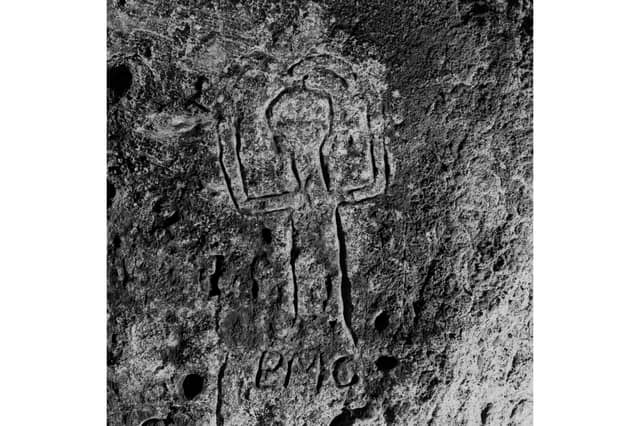

Some of the graffiti dates back 5,000 years
An exhibition exploring the past 5,000 years of "graffiti" left on historic Scottish buildings is to go on show in a West Lothian castle - including a “mark” made by musicians who played there more than 80 years ago.
Marking Time, an exhibition exploring the history of graffiti throughout Scotland, from ancient markings to the vibrant street art of today, is now open at Blackness Castle, near Linlithgow. Often overlooked or dismissed, graffiti forms a powerful visual archive of the human urge to communicate and literally leave a mark.
Featuring images from across Scotland’s historic environment, the exhibition explores a wide range of markings, some of which date back as far as 5,000 years. It delves into the meanings and intentions behind the inscriptions, highlighting stories of love, wars, creativity, and everyday events that have inspired people to leave lasting messages in the environments that surrounded them.
The 5,000 year-old “graffiti” featured in the exhibition is the Ballochmyle rock art, by the River Ayr, considered to be the first forms of marking surfaces across Scotland.
Dr Alex Hale, curator of the exhibition and Learning Manager at Historic Environment Scotland (HES), said: “This exhibition is about why we can’t stop leaving our mark in places we visit. For centuries, people have left behind messages that echo across time, resonating with us today just as much as they did when the etchings were first made.
“Graffiti has not always been deemed acceptable by wider society and until recently wasn’t considered a traditional source of information. But the remarkable variety of historic markings found across Scotland can teach us a great deal about people’s lives and what mattered to them.”
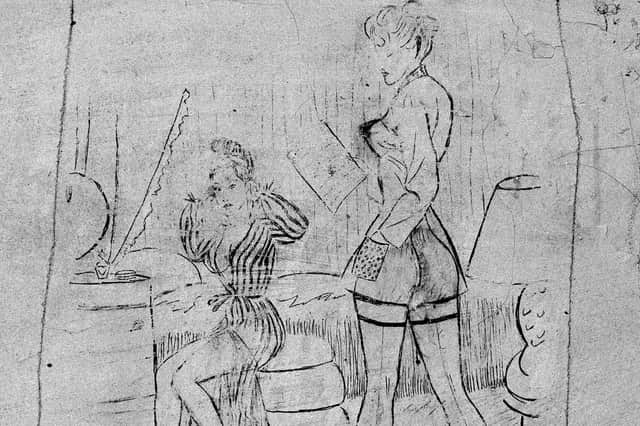
Dr Hale added: “It’s incredibly exciting to take the exhibition to Blackness Castle, which is home to many examples of historic graffiti. One of my favourites is a mark left behind in 1941 by a member of the musical group, the Inver Scotia Nomads, in the castle’s North Tower.
“The group of young musicians were brought together by a love of traditional Scottish music, and often played impromptu gigs all over Scotland, including Blackness Castle, leaving a permanent mark there after a performance. Graffiti brings the past vividly to life, intertwining our modern lives with those of people who came before us.”
The graffiti left by the musicians reads “Inverscotia Nomads 1941” and was carved into a door in the north tower. The musicians were known to hold impromptu ceilidhs, but also were keen hill-walkers, Gaelic speakers and enjoyed Scotland’s great outdoors.
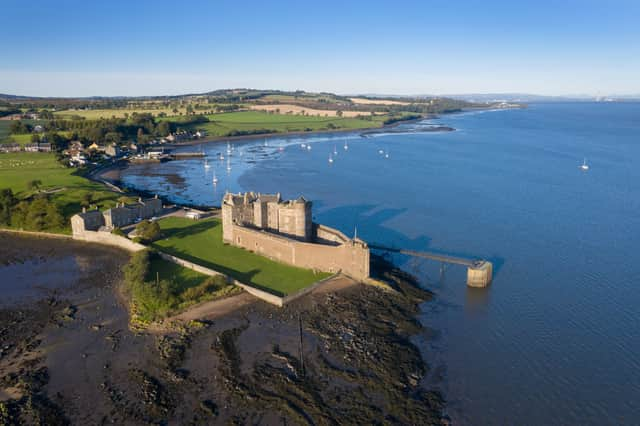
Graeme Sinclair, monument manager at Blackness Castle, which is managed by HES, said: “Throughout history, prisoners have left messages and marks onto their cell walls, and the inmates of Blackness Castle were no different. In 1537, James V converted the castle into a state prison and artillery fortification. It wasn’t just the prisoners either – military personnel who were stationed there often marked the castle walls with the date and their initials.
“Marking Time is a fascinating exhibition, and we’re very pleased to welcome visitors to see it at the castle. They can even have a look around the castle afterwards to see if they can find any historic graffiti for themselves.”
The exhibition is co-curated by Alex Hale and Sace Lockhart and is now open at Blackness Castle on selected dates until Sunday 9 March 2027. Entry to the exhibition is included in admission to the site.
Comments
Want to join the conversation? Please or to comment on this article.