
Album reviews: Jake Bugg | Erland Cooper | Waylon Jennings | Kohla
Jake Bugg’s new album is infused with folk and country influences and all the better for it, writes Fiona Shepherd


Jake Bugg: Alamo (Thirty Tigers) ★★★★
Erland Cooper: Dawn Chorus (Mercury KX) ★★★★
Waylon Jennings: Diamonds (Son of Jessi/Thirty Tigers) ★★★
Kohla: Fantasy (self-released) ★★★★
At the grand old age of 32, Jake Bugg is something of an indie veteran, unapologetic in his love of classic sounds and steadfast in his traditionalism. His seventh album Alamo is positively rootsy in inspiration, with Bugg finding folk and country influences the ideal vehicle for songs on which he takes down some of those scowly emotional barriers to write about recent struggles.
The plangent twang of opening track When the Night is as close as Bugg comes to a dark night of the soul, as he stares down the isolation of the wee small hours with old school wisftulness. This is the kind of yearning Richard Hawley has long made his own and it’s hard not to wish for a richer vocalist to inhabit its sphere.
Next, Bugg invokes the spirit of the Everly Brothers with the rock’n’roll stance of Never Can Tell on which he recalls the perils of navigating post-fame friendship and which voices to listen to. He soundtracks a crumbling relationship on the plaintive balladeering of the title track with soulful slide guitar. The Life is even spindlier, with Bugg’s haunted voice wrapped in layers of resonant fingerpicked guitars.
Trapped In a Cage bristles with the skiffly disaffection of rock’n’roll, while Bugg assumes his best Dylanesque drawl on Day By Day, leavened by chiming guitar. He sticks with the 60s references on the dreamy west coast folk rock number Drop in the Water and heads further into featherlight psych folk territory on the tender chamber pop closer Everywhere I Go.
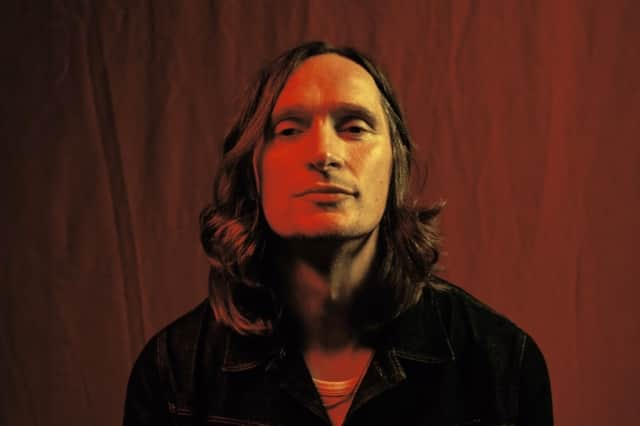
Orcadian composer Erland Cooper deepens his relationship with the BBC Scottish Symphony Orchestra with his latest commission. Dawn Chorus is an avian-inspired concerto for violin and a whopping 100-piece orchestra - no accident, as the piece was written to mark the 100th birthday of David Attenborough, described by Cooper as “our great oak”.
Three movements are inspired respectively by the birds of Papua New Guinea (birds of paradise), London (European robin) and the Scottish Highlands (puffins and oyster catchers) and he doesn’t keep us waiting for the melody, with soloist Freya Goldmark’s wilting violin echoed by the wider string section, then floating around the higher stratospheric reaches on the cadenza before flying closer to earth.
The second movement begins with choppy and cheeky character, becoming more intense, scurrying and soaring. The charming allegretto, with full orchestra in flight, conveys the requisite excitement and drama found in many an Attenborough documentary while the third movement, Fratercula Arctica, blends pomp and sensitivity to beautiful effect.

Waylon Jennings’ son Shooter continues his curation of the family vaults with Diamonds, a second album of unreleased gems, some polished up by members of The Waylors. The title track, recorded in late 1978, features gruff, hoary delivery and Glen Campbell on fleet, intricate guitar. Same Old Blues, written by JJ Cale, is also a sociable affair with a coquettish lead vocal from Jennings’ wife Jessi Colter and Tony Joe White making slinky overtures on guitar.
Lyrically, the selected songs range from the traditional domestic drama of The Good Things Don’t Last Very Long to the pall of writers’ block on I Just Ain’t Been Able, while Wild & Blue is a gentler tribute to an untamed spirit.

Edinburgh singer/songwriter/producer Kohla, aka Rachel Alice Johnson, showcases her spectacular voice on latest album Fantasy, declaring her intention to push her vocals on the brief rapture of I Love You and achieving Minnie Riperton levels of whistle tone on Venus. Musically, she ranges from the sultry neo-soul of Caramel to the fluttery folk of Starlight but the chief pleasure of the record is being immersed in her sensual vocals and the escapist world in which she provides refuge, for herself as much as the listener.
READ MORE: WATCH: Silent Teachers, the SCO’s musical tribute to those who donate their bodies to science
CLASSICAL
Choir of Paisley Abbey: Heartfelt Hope (Priory) ★★★★
Music has been key in shaping Paisley Abbey’s long spiritual history, and so has its root connection - as a Cluniac foundation - with France. Heartfelt Hope, featuring the Abbey’s fine choir under long-serving director/organist George McPhee, celebrates those traditions with a fetching sequence of French choral and organ repertoire. The former charts a lineage from the mid-19th century Romantic sensibilities of Gounod, through those he inspired - Fauré’s enticing Cantique de Jean Racine as an album opener - to the more modernist hues of Poulenc’s a cappella Four Motets with its tart Hodie Christus, and Duruflé’s mellifluous Messe Cum Jubilo. Organ works by Alain and Dandrieu illustrate the Cavaillé-Coll origins of the Abbey organ, and there’s novelty in a version of the 14th/15th century secular French song Esperance, edited by choir member Joshua Stutter, that uses a variant on a musical fragment discovered in the Abbey’s ancient drains.
FOLK
Blue Rose Code: East of Eden (Ronachan Songs) ★★★★
Following 2024’s magnificent Bright Circumstance, Celtic soul songsmith Ross Wilson returns with a sleekly scaled-down country incarnation of his Blue Rose Code band, including guitarist Lyle Watt, fiddler Mhairi Marwick, bassist Gus Stirrat and drummer Stuart Brown. Songs are, as ever, suffused with eloquent humanity, with exuberant outbursts, As Good As It Gets setting the tone, and the bar high, its plaintive thanksgiving escorted by delicate support vocals from Niamh Corkey and Watt’s lithe guitar, before the uproarious, mandolin-laced Broken Hallelujahs – “I fell in love with a beauty queen, she fell in love with a ghost”. Paul Harrison’s bluesy piano heralds the no-holds-barred Here Comes the Shotgun, while The Bad Guys sounds an upbeat call for more civilised times, Conor Smith’s dobro singing through. Texas Medicine builds into quite an epic, while Annalea is sheer, heart-rending confessional, couched in delicate piano and weeping fiddle. Jim Gilchrist
The Scotsman’s arts newsletter is now sent twice a week - subscribe today
Enjoying the Arts & Culture journalism on scotsman.com? Make it easier to find by selecting us as a preferred Google source
Want the latest Scottish headlines sent directly to your phone? Sign up to our new WhatsApp channel here
Comments
Want to join the conversation? Please or to comment on this article.