
WATCH: Silent Teachers, the SCO’s musical tribute to those who donate their bodies to science
It may sound like a dark subject, but Jay Capperauld’s new composition, dedicated to those who leave their bodies to Edinburgh University Medical School, turned out to be “much more optimistic and hopeful” than he had anticipated, he tells David Kettle
“There are obviously lots of pieces of classical music about death. But I can’t think of any other piece that explores something like a body donation programme. I suppose it’s an odd thing to take inspiration from.” It’s certainly unusual. But it’s fascinating, too, and also deeply rewarding on an emotional level, as the Scottish Chamber Orchestra’s Associate Composer Jay Capperauld discovered in a recent collaboration with Edinburgh University’s Medical School.
Capperauld has created a new piece – titled Silent Teachers – that represents one in a series of artistic works being created to celebrate the 300th anniversary of the institution, founded back in 1726. “We’re the oldest medical school in the English-speaking world,” explains Tom Gillingwater, professor and head of the Medical School’s anatomy department. “It speaks to a world-leading legacy of Edinburgh as a centre for medicine, surgery and anatomy. But as part of that anniversary, we realised that we really wanted to recognise the incredible people who have given the greatest gift, which is their body, to the University after they’ve passed. That was where the creative spark for this project came from.”
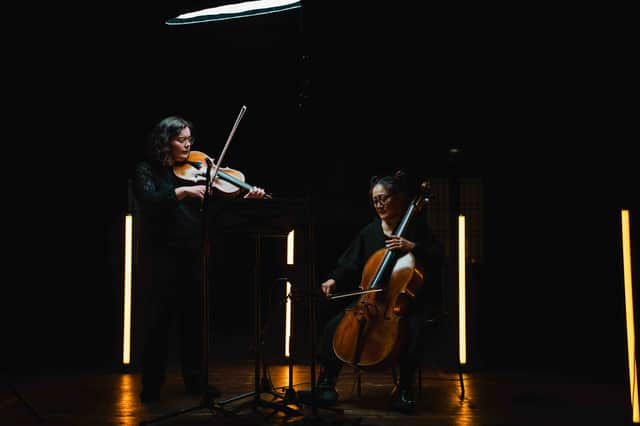

And it built on close existing ties between the University and the SCO. “I was privileged to get a private viewing of the Anatomical Museum with Tom,” continues Capperauld. “During the tour, he used the phrase ‘silent teachers’. It’s how students and teachers refer to the individuals who have left their bodies to medical science – and the phrase itself just grabbed me.”
Gillingwater explains that powerful term further. “I believe my job, as an academic and a teacher, is simply to facilitate and lay the groundwork for the silent teachers to actually teach. My job is to guide our students, support them and help them, but fundamentally the teaching comes from the silent teacher. And that process is very similar now to what it was 300 years ago when we were first established. We’ve got amazing technologies now, with virtual reality and all sorts of other tech, but I’m an absolutely fundamental believer that if you want to understand the human body, and heal the human body, you’ve got to understand the real human body.”
There is, both Capperauld and Gillingwater accept, a certain macabre fascination about the subject of body donation – and Capperauld already has form in a similar area. A previous SCO commission was the hugely powerful but deeply unsettling Bruckner’s Skull, which considers the Austrian composer’s apparent obsession with the remains of Beethoven and Schubert. But Capperauld’s new Silent Teachers couldn’t be more different. “This piece has become much more optimistic and hopeful, and actually much more emotional than I was anticipating.
“For me, writing a new piece is always an incredibly emotional time because I’m pouring everything into it,” Capperauld continues. “But I’ve also seen that there’s so much heart and so much care within the Anatomy Department in terms of the individuals who donate their bodies, and also for their families. That emotional side of it really struck me – in terms of not only individuals who are facing their own mortality, but also their families who are dealing with grief. So the new piece is essentially trying to map a journey of grief from the family’s perspective, but also in an anatomical sense, almost from head to toes. I’m trying to provide a blank canvas for anyone who’s experienced grief to follow that journey: hopefully the piece helps them find their own way through it.”
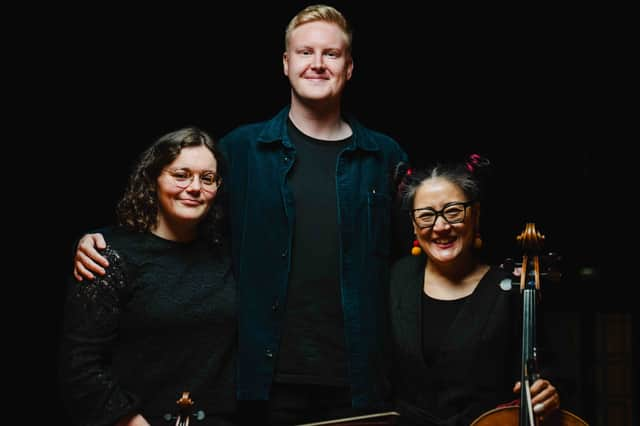
There’s a big question, of course, about why a new piece of music is the right way to mark this particular aspect of the Medical School’s work. It’s an issue than Gillingwater is all too aware of. “How do you begin to convey this process to people for whom it might sound just macabre or grotesque? How do you capture this incredible gift, honour it, celebrate it, but also provide a dignified space for reflection, perhaps mourning? The problem, really, is that words don’t suffice. Personally, through my own life, I’ve found that music can often speak where words aren’t enough.”
Gillingwater isn’t talking just in an abstract sense. The new work – or at least sections from it – will also have an ongoing life as a permanent part of the Medical School’s annual memorial services. “This is an event we hold in the University’s McEwen Hall, where the academic staff of the Anatomy Department invite the families, friends and loved ones of the donors from the past year, as well as current students, to a service to celebrate and remember those remarkable individuals. For some families, it’s a celebration, but for others it’s a surrogate funeral, the chance to mark the emotional passing of a loved one.”
The memorial services take place annually in April. More immediately, following its live premiere at a special University event on 17 November, Silent Teachers is now watchable online (see above) alongside a companion film explaining the thinking behind the project (see below).
It’s clearly a deeply sensitive and profoundly moving subject, one that touches on some of the most fundamental questions facing all of us: our health, our healing, our mortality. “We’re fiercely protective of our donor programme,” explains Gillingwater. “We don’t normally try to proactively go out there and advertise it. And I don’t think we could have been so open unless we’d felt entirely at ease with the project. But I felt completely comfortable with Jay from the first minute I met him. He’s very compassionate, and I could see the weight of responsibility he’s carried about this project.”
“I’ve experienced grief myself on a number of occasions,” Capperauld admits. “But I really wanted to remove myself from this piece: it’s about others. I’ve been thinking about how other people are going to listen to the piece, and how it might shape their experience, or how it might help them tell their own story about death and grief. It’s a huge honour to be involved in something like this. It’s one of those ‘pinch-me’ moments as a composer where you get an opportunity to give something back through your music. For me, that’s so satisfying.”
This feature was produced in association with the Scottish Chamber Orchestra.
The Scotsman’s arts newsletter is now sent twice a week - subscribe today
Enjoying the Arts & Culture journalism on scotsman.com? Make it easier to find by selecting us as a preferred Google source
Want the latest Scottish headlines sent directly to your phone? Sign up to our new WhatsApp channel here
Comments
Want to join the conversation? Please or to comment on this article.