
Exclusive:Music education in danger of becoming 'casualty' of culture cuts, warns Sir James MacMillan
Sir James MacMillan grew up in Cumnock

Music education has become a "casualty" of culture cutbacks and is in danger of becoming only for more privileged young people, Sir James MacMillan has warned.
The composer and conductor said when he was growing up in East Ayrshire, where his grandfather was a coal miner, music was not regarded as "elitist".
However, Sir James, who has run music festival the Cumnock Tryst in the region for 12 years, said he was "not despondent" as he launched a nationwide composition competition to transform anxiety around creating new music into "enthusiasm". The competition will be held in partnership with Scottish Young Musicians.
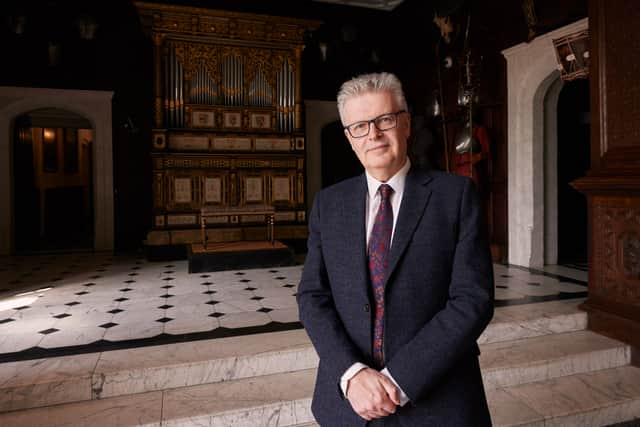

Sir James said: “I’m from Cumnock originally, I grew up there and became a musician there. We never thought of any music form as being elitist. My grandfather was a coal miner and the mining industry in Scotland produced some great brass players. Many of the men and women of that generation played music and were involved in music in one form or another.
“My own father was a joiner and a carpenter and there wasn’t much music in the house, but that didn’t stop me from pursuing a life in music. What’s important is trying to bring that back to life in places like Cumnock, which is an area of multiple deprivation.”
Classical and contemporary music festival the Cumnock Tryst, which takes place in October, was founded in 2014. Its name was inspired by a piece of music Sir James wrote in the 1980s when he was still living in Ayrshire as a setting of William Soutar’s love poem, The Tryst.
“I remember what music in Cumnock was like for me and that’s what we’ve tried to do with the Cumnock Tryst,” he said. “The people of East Ayrshire have really taken us into their hearts and we’ve established ourselves as a real cultural presence.”
“It’s a nationwide thing that there is anxiety about arts education and there’s no doubt music has been a casualty of that. There’s a lack of cultural focus and that needs to be addressed.
“But I’m not despondent about it. There are cultural cycles and people have been talking about the demise of classical music for 100 years now.”
He said the Tryst delivers school composition workshops in schools across East Ayrshire every year and hopes to eventually expand that to other parts of Scotland. He has had discussions with delegations from other nations including Estonia and the US who also hope to set up their own versions of the Tryst locally.
He said: “Our aspirations are to grow bigger and to have an impact across Scotland, but we haven’t been able to do that yet.”
The competition criteria will align with the Qualifications Scotland requirements from National 5 to Advanced Higher, with the winning pieces performed by a range of groups at the Tryst’s 2027 festival. Pupils will be given the opportunity to write for a range of groupings of strings, brass, and wind, based on their own preference.
Sir James added: “A lot of teachers and music students are anxious about the composition element of the syllabus and we hope the composition competition will transform that anxiety into enthusiasm.”
Comments
Want to join the conversation? Please or to comment on this article.