
Michael Mullen: 'the power of the Scots language lies in its diversity'
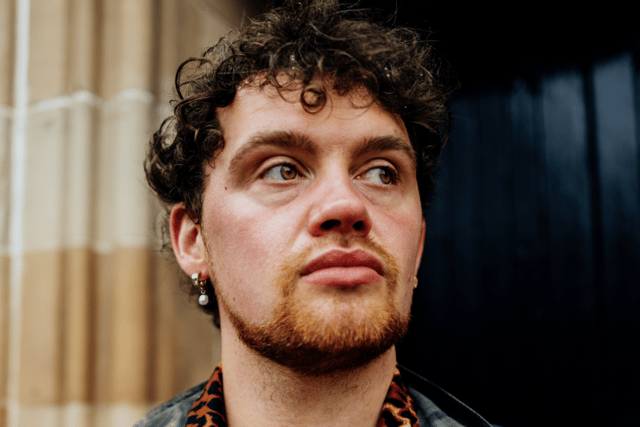

Policy is lagging behind the arts in championing Scots yet there’s much to celebrate as the language booms, writes poet Michael Mullen
In the centenary year of Hugh MacDiarmid’s landmark epic A Drunk Man Looks at the Thistle, a long poem written in Scots, it is perhaps pertinent to reflect upon where Scots and Scots poetry is today. It was only last year, on 1 August, that Scots was recognised as an official language of Scotland, a real milestone and one worth celebrating. It does, however, feel like policy is taking an awful long time to catch up to the arts, especially poetry, where Scots has been booming on the page and the stage for some time. In a recent census, it was recorded that 1.5 million people identified as speaking Scots, with even more indicating that they could understand it. Historically, Scots has been misrepresented as bad English or decried as slang, and has often had associations with working-class voices when compared with “correct” English. Many people in Scotland may speak a form of Scots and not actually even identify it as being such, especially when it is common for Scots speakers to code-switch seamlessly between the languages. Scots is a west Germanic language stemming from Early Middle English. It has many regional differences, is intrinsically tied to the geography of its speakers, and has long been part of a grand poetic tradition.
Scots has never been successfully standardised and with all its variances in spelling, accent and vocabulary it would be a difficult and controversial task. I believe in many ways this is where its power lies: its differences, its diversity makes it such a rich cultural practice. Being told to “talk properly”, being reprimanded for using slang, is an all-too-common tale that many Scots have, verging on cliché from its frequent telling. This stigma has long dogged Scots and its speakers, which is why initiatives like The Scots Language Awards are so important, with not only performers and books being celebrated but schools and teachers too.
It is impossible to talk about Scots poetry without mentioning Robert Burns – the enduring resonance of his verse can be seen in the singing of Auld Lang Syne on Hogmanay internationally and later, on 25 January, when people the world over celebrate Burns Night. Nearly everyone in Scotland has had to read or recite some Burns, and even people who don’t like poetry engage in Burns Night. Burns wrote in Lallans and was interested in writing in the Scots he heard around him and in folk songs. MacDiarmid, inspired by Burns but not impressed with the sentimental image his poetry had garnered, aimed to do something different, which he called synthetic Scots, merging archaic words with commonly recognised ones to achieve a lyrical, literary form that is still loved (and hated) today. In more recent times, Scots is still being written as Burns and MacDiarmid wrote it, but many writers are approaching it differently.
Sheena Blackhall writes in her native language of the northeast, Doric, which has its own distinct vocabulary and style, with other Doric writers like Shane Strachan and Mae Diansangu continuing the tradition in their own unique ways. Writers from the islands also have their own take on Scots, with people like Christine De Luca and Roseanne Watt writing in Shetlandic and Harry Josephine Giles writing in Orcadian, both islands having, again, their own Scots. In the Central Belt, writers like Tom Leonard, Billy Letford and Michael Pedersen use a demotic Scots that reflects the language of Glasgow, Stirling and Edinburgh respectively. From grand literary tradition to humorous dialogue, Scots has proven to be not only a tool of representation but an experimental stylistic device.
On the stage, where Scots lends itself to bombastic performance, it is flourishing. Loud Poets run slams, workshops and showcases with many Scots poets having the chance to compete and perform in their own tongue. There are many open-mic poetry nights up and down the country where you will most likely hear Scots being performed. I myself am lucky enough to be performing at this year’s Wigtown Book Festival, taking place from 25 September to 4 October, where there is a feast of Scots on offer.
Also at Wigtown, Taylor Dyson will be taking to the stage on 26 September for a showcase of her fabulous Dundonian Scots poetry. Taylor was the 2024/25 Scots Scriever (writer), which is a scheme started in 2015 with the National Library of Scotland to promote Scots writers. On 29 September, Gerda Stevenson will be talking about her collection of short stories, Cat Wumman: Tales o Nine Lives. For the bairns, weans (and the adults too) there will also be various events during the festival, and on 27 September James Robertson will be delving into his Scots versions of AA Milne’s Winnie The Pooh and Julia Donaldson’s Jonty Gentoo, the latter titled “Jocky Gentoo: The Adventures o a Penguin”. The Wigtown Poetry Prizes also have a specific category for Scots that welcomes submissions every year where writers can submit work in whatever Scots they write in.
Looking at all the exciting things that have been done in the last hundred years since MacDiarmid’s classic, it’s hard not to feel excited about how the next hundred might unfold and to witness the future of a language that is technically still considered to be endangered. Ever optimistic against the odds, Scots language, like Scots themselves, seems fit to endure it.
Michael Mullen appears twice at Wigtown Book Festival on 27 September, first for a YA Sunday Session with Taylor Dyson and Mark Vernon Thomas, then to discuss Goonie, his critically acclaimed poetry collection, see www.wigtownbookfestival.com The Scotsman is the 2026 media partner of the Wigtown Poetry Prizes, see www.wigtownpoetryprize.com
The Scotsman’s arts newsletter is now sent twice a week - subscribe today
Enjoying the Arts & Culture journalism on scotsman.com? Make it easier to find by selecting us as a preferred Google source
Want the latest Scottish headlines sent directly to your phone? Sign up to our new WhatsApp channel here
Comments
Want to join the conversation? Please or to comment on this article.