
EIF opera Orpheus and Eurydice to feature 'acrobats doing very dangerous things'
If you think opera staging is mannered and boring, wait until you see this production of Orpheus and Eurydice, writes Ken Walton
Yaron Lifschitz has serious issues with opera. “Some of it is excruciating,” he declares, which you’d reckon should worry the pants off the Edinburgh International Festival. After all, the affable founder and director of the Australian contemporary circus group Circa is the mastermind behind this year’s flagship opera production of Gluck’s Orpheus and Eurydice, and here he is, revealing his “dirty secret – that I’ve no knowledge of Debussy past 20 minutes of Pelléas et Mélisande because I’ve never remained awake long enough to hear it. I get bored very easily.”
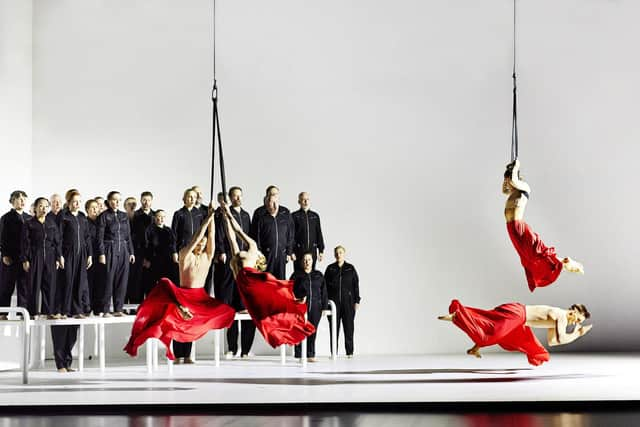

The thing is, it’s not so much opera that’s the problem as its mannered traditions, Lifschitz argues. “Opera at its core is a covers band, people doing other people’s music, singing in a way they were told to sing, about stuff they were told to do with a great apparatus and significant amount of funding, devoted to essentially keeping the art fairly sclerotic, inured to change. It’s not the operas that are boring, but the lack of compelling ways to do them.”
Received wisdom, he suggests, has stifled instinct. “I love working on Monteverdi, for instance, and one of the things I used to ask was, how could there be a set way of singing this if it was the first of its kind? Back in the 17th century it would just have been people who sang as they felt inclined, so maybe we should just go back to that rather than everyone sounding like they went to the same academy for stifling joy and creativity. I have to say I was howled down by a bunch of people who’d been to that academy and in some cases ran it.”
So yes, Lifschitz is a maverick, an inquisitive free spirit who has nonetheless proved his worth in imaginative cross-genre productions that challenge the norm, including this collaborative Orpheus and Eurydice. Unveiled in Brisbane in 2019, this summer’s European premiere production at the Edinburgh Playhouse draws together the original combined resources of Circa and Opera Queensland with Opera Australia, the Scottish Chamber Orchestra and Scottish Opera Chorus, conducted by period music specialist Laurence Cummings.
READ MORE: Works and Days: FC Bergman's celebration of rural life at EIF is 'all about the collective'
That Gluck himself was a reforming phenomenon, freeing 18th century opera of its stilted affectations and even adapting his most famous opera to suit opposing Viennese and Parisian tastes, clearly appealed to Lifschitz, and needless to say, he’s taken brazen liberties.
The traditional frontline cast of three has been reduced to two, the role of Eurydice (Australian/British soprano Samantha Clarke) now conflated with that of Amor. The first sighting of Orpheus (countertenor Iestyn Davies) is in an asylum. “My basic interpretation of the piece is that on their wedding night Eurydice dies, possibly at Orpheus’s hands,” Lifschitz explains.
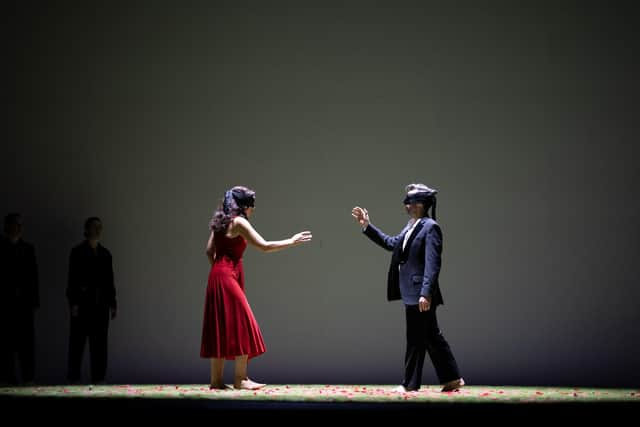
“I’m not suggesting any ill will. Maybe they took the wrong substances to celebrate their wedding night; he wakes up in a mental institution and has no recollection of what happened. It becomes a process of memory, journeying into the Underworld. Every woman looks like her, every man is an extension of him and it probably doesn’t end well. I don’t want to give a spoiler, but it’s opera: generally she dies, and he might.”
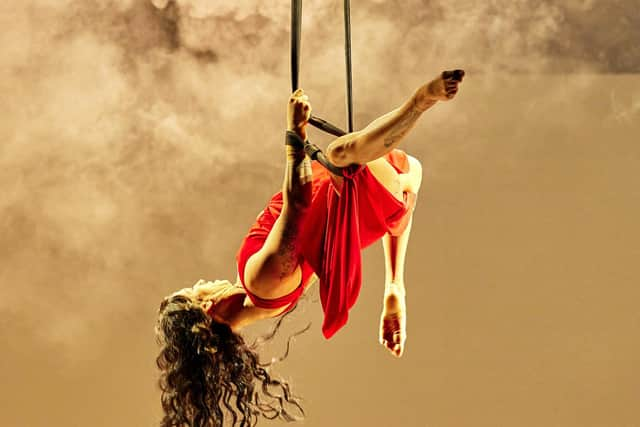
What then of Circa’s circus performers, whose virtuosic acrobatics – devised jointly by Lifschitz and fellow choreographer Bridie Hooper – provide an aligned counterpoint to the entire piece? They are, says the director, essential to his “poetic” vision of the opera, part of “a constant play with foregrounding and backgrounding” that respects both the polished classicism of Gluck’s piece and its emotional volatility, “that mixture of hope and fear that reminds us we’re alive”.
“Working with the artists back in Brisbane on the physical embodiment of the production, the thing I keep coming back to is you have to feel a lot and show very little. Sometimes it just oozes out, sometimes the floodgates open and explode into acrobatics, but then it very quickly turns back into its classical form.”
Of course, that’s just the circus contingent. Is Lifschitz also expecting his singing cast to turn cartwheels?
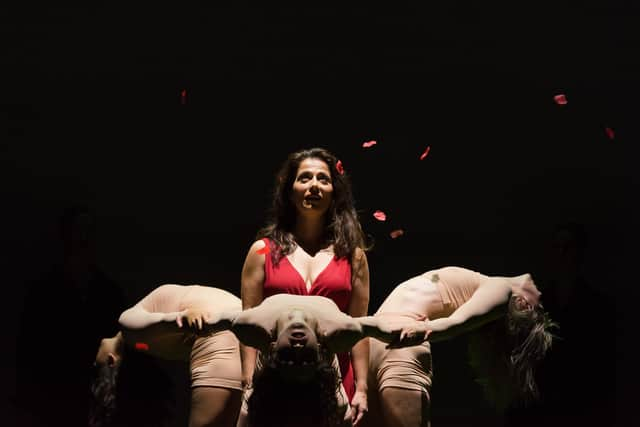
“We’re putting very experienced opera singers in fairly uncomfortable and difficult positions, very close to acrobats doing very complex and dangerous things,” he admits.
How does that go down with Iestyn Davies, appearing in his first ever staged Orpheus? “I’ve watched a video of the original production and know that late on in the show I have to stand on someone’s shoulders,” says the English countertenor, who will eventually join the troupe for a final nine days of rehearsal. “The biggest challenge for any singer in such a physical show is getting the breathing worked out.”
Working with new people is healthy for the production, Lifschitz believes.
“Every staging is different. They’re all based on the same choreography, the same ideas, but when only half the artists have performed this production before – as in Edinburgh – you use that opportunity to freshen things up.”
Is there one thing he’d like audiences to take away from this Orpheus?
“That’s something I’ve thought about very carefully,” he says. “Circa brings a show to the Fringe every year – this year we’re bringing Wolf – and we have a specific following. But for an International Festival production like this I feel we have to appeal to two different audiences simultaneously.
“I’d like an opera audience to come along and think ‘Wow, this is so alive’, where the operatic norms of music meeting dramaturgy exceed and challenge expectations. And I’d love circus audiences to go and sense that this is richer, touches bigger emotions, moves them even more profoundly than straight circus. I want everyone to walk out of the performance at the end of the day and think it would be difficult to figure this opera any other way.
And the litmus test? “Circus is written with one huge commandment – Thou Shalt Not Bore! When you come out of Orpheus you may love it, you may hate it, but you won’t be bored.”
Gluck’s Orpheus and Eurydice is at the Edinburgh Playhouse, 13, 15 & 16 August
Comments
Want to join the conversation? Please or to comment on this article.