
Top Scottish clubs told they are leaving £40m on the table - and how they can fix it

Financial gains from playing more youngsters laid bare to Scottish clubs
Scotland's top-flight clubs have been told they are collectively leaving £40 million per year on the table by not playing more academy players.
The Twenty First Group, who have been asked by the Scottish Football Association to lead an independent comparison analysis, has found that Scotland is lagging behind similarly-sized countries when it comes to playing youngsters and generating cost benefits from it.
It is claimed that Scottish football remains hamstrung by the perception of risk when the data shows there is no obvious correlation between results dipping and picking players aged 21 and under.
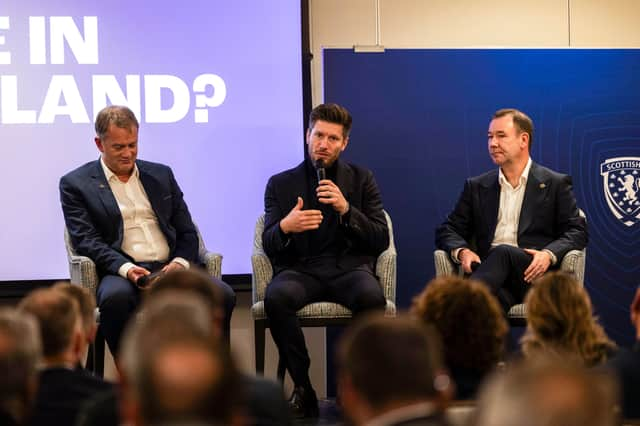

All 42 senior clubs in Scotland were given a detailed presentation on the subject by Twenty First Group chiefs during Friday's Made In Scotland conference held in St Andrews and were recommended to pursue change.
While Scottish clubs generate academy return on investment (ROI) of 7 per cent, that figure is far outstripped by teams from Sweden (162 per cent, Switzerland (121 per cent), Norway (298 per cent), Denmark (730 per cent), Belgium (412 per cent) and Netherlands (494 per cent).
Scotland's top-flight sides are spending £54 million on their academies and generating £58m in revenue. Their investment is significantly higher than most similarly-sized nations - the clubs simply aren't using enough of the players coming through the system.
It is why the best crop of teenagers are choosing to go to England. While the wages on offer are clearly attractive, there are also no other options, who no obvious pathway into the first team.
The majority of Scottish Premiership clubs remain loss-making, with the firm estimating that for every £1 that is put in, 95p comes back. With other revenue streams such as media rights, matchday and sponsorship proving more challenging than ever, it is why Scottish clubs are being recommended to embrace the financial gains of playing youngsters.
The gains can be made not just by selling players, but by replacing those sold on with academy graduates and maintaining the cycle. There is no club leading the way in talent development, although Twenty First Group highlighted the example of Lennon Miller at Motherwell, who made his debut at 16, played more than 5000 minutes and was sold for just under £5m to Udinese last summer.
Scotland has grown its club core revenue uplift due to academy player trading income from six per cent in 2018 to 17 per cent in 2024. That is good news, but the ceiling remains so much higher. With the data from two years ago, Sweden is at 27 per cent, Switzerland and Austria are both on 41 per cent, Norway is 44 per cent, Belgium is 54 per cent, Netherlands is 55 per cent, Denmark is 62 per cent and Portugal 67 per cent.
Scottish football is essentially being told it is choosing to go against the grain and can make significant monetary gains by improving the opportunities for its teenage players. Twenty First Group, who put forward Belgian side Club Brugge as trailblazers for the continent and Norway for what can be done, say that a player needs to be in the first team by 18 to become a sellable asset.
Their widespread belief is that league size and competitive pressure should not have an impact on turning to academy players and that owners and coaches need to be braver when choosing who fills their squads.
Comments
Want to join the conversation? Please or to comment on this article.