
Scotland risk emitting haughty vibes as World Cup woe highlights imbalance amid lost £116m footballer
Bottom line is Steve Clarke needed far better players in the States

In a parallel universe, a Scotland international would have become Britain’s most expensive-ever footballer while starring at this World Cup.
Elliot Anderson’s projected £116 million move from Nottingham Forest to Manchester City will be concluded following the opening round games. One can argue about the fee's size, which is stratospheric given he only has 11 international caps to date.
These have all been earned with England, of course. Anderson, who played for Scotland from Under-16s to Under-21s, was called up to the senior squad by Steve Clarke for games against England and Cyprus three years ago.
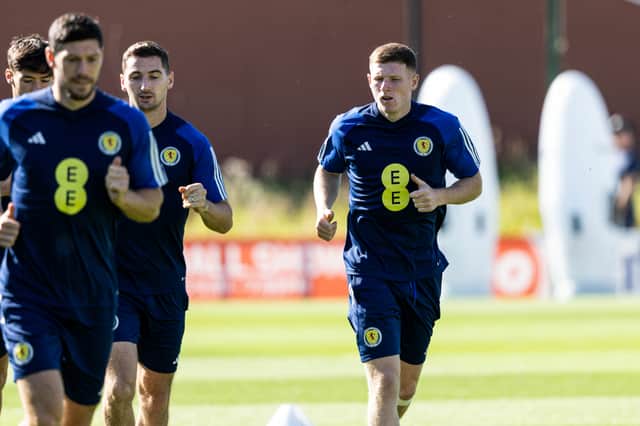

He pulled out due to an “injury” before the first match against the country where he was born and who can now enjoy the benefit of his talent. Former Scotland assistant manager John Carver believes he witnessed the moment Anderson thought better of throwing in his lot with Scotland. Refereeing a small-sided clash between the players a couple of days into the camp, he saw Anderson clash with Stuart Armstrong following a meaty challenge from the then Southampton midfielder.
Carver was surprised by the reaction. After all, full-blooded tackles were part and parcel of a professional footballer's daily life. He started to move towards the player to make sure he was OK but saw that he was already approaching him: ‘John, can I have a word..’
Carver could tell the Whitley Bay-born Anderson was uncomfortable. “Possibly because he was English," Carver, also from the Newcastle area, later hypothesised in an interview. “It was different for me but at the end of the day Scotland lost a top player that day," he added.
As underlined in the starkest possible fashion during another ignominious exit from a World Cup, Scotland are not in a position where they can afford to lose such top players. While we can shake our heads at the £116 m fee, there is no denying Anderson is an elite-level player. Albeit still short of world-class—although he’s still only 23-years-old - he is undoubtedly elite-level.
Harvey Barnes, who turned down a fresh approach from Steve Clarke earlier this year, is someone else who would fit that description. The Newcastle United forward is another English-born player with Scottish lineage linked with switching eligibility to Scotland.
It’s not possible to miss what you never had in Barnes’ case. But Anderson was in the Scottish international system for several years. Both would have helped Scotland’s cause this summer in the United States, upping the number of elite-level players from three to five.
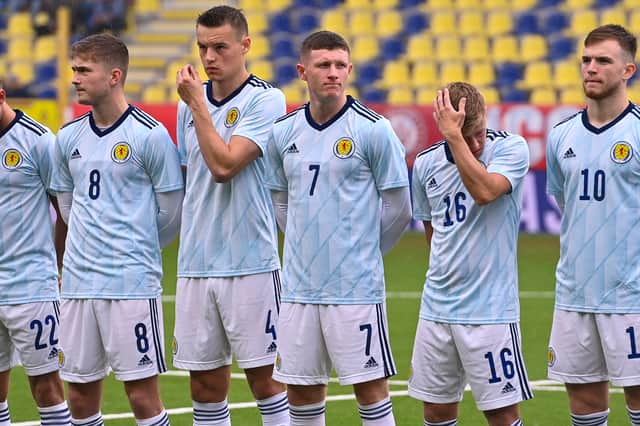
Dearth of elite-level players is clear to see
As it stands, only Scott McTominay, Andy Robertson and John McGinn are comfortably already included in that category. Bologna skipper Lewis Ferguson might be another. He is certainly the only one of those named who has excelled over the past fortnight.
One major reason why Scotland have stumbled in this tournament is that players have not shown their true form, their performances impacted, perhaps, by long, hard seasons for their clubs. But whether they have fallen short of their own high standards or otherwise, the truth is Scotland cannot progress while this ratio of top players to fair-to-middling ones is so imbalanced. It doesn’t matter who is the manager.
It would be ridiculous to think Steve Clarke doesn’t already know this. He is aware. He knows better than anyone in fact. It’s why he has signed another deal. “It’s important we evolve and make improvements and I look forward to working with the new Chief Football Officer, Craig Mulholland, to increase the pipeline of talent to the senior squad through the national youth teams,” he said when this new four-year contract was announced last month.
Mulholland is key to this. The former Rangers Academy head, who most recently worked with Nottingham Forest, starts in his post next month. One of his main briefs is developing players - crucially, the right kind of players: strikers, wingers, defenders. He will ensure young players are steered in the right direction and encouraged to maximize their skillset. It’s not about developing pass-and-go automatons. Where is the next Denis Law? The next Jimmy Johnstone, or Pat Nevin?
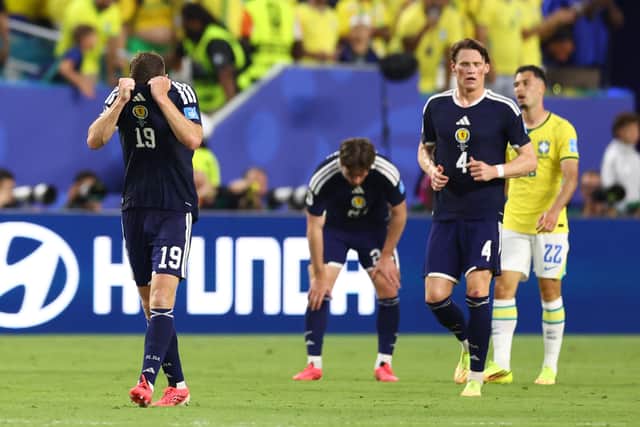
A sign of how desperate we are becoming is the expectation heaped on Ben Gannon-Doak’s shoulders at this World Cup. The 20-year-old may become an indispensable player for Scotland, but that time isn’t yet. Unusually for him, Clarke seemed almost bullied into playing the Bournemouth winger against Brazil, with public opinion urging Scotland to ‘have a go’ at the No. 5 ranked team in the world. How did that work out?
Of course, one natural reaction is to say, well what about Ecuador? They took the game to Germany and earned the reward. And, probably more relevantly, what about Cape Verde, who have done what Scotland could not and qualified for the last 32? We will stop measuring everyone else’s achievements against Scotland’s measly World Cup performance eventually, just not yet.
Ecuador have done brilliantly but they were always regarded as capable of doing something here. Ranked at 25, 17 places above Scotland, they have a squad littered with players from top-ranking clubs, including Paris Saint-Germain, Arsenal and Flamengo.
Cape Verde aren’t blessed with players from major leagues, but, like Ecuador, they have brought a joie de vivre to the tournament. They have infused the World Cup with their spirit, both on and off the pitch. Scotland certainly did that off it. On the pitch, it has been a very different story.
Scotland media centre suddenly rendered reduntant
Suffice to say, it’s all getting very depressing here in Charlotte. Saturday began with a start: a local emergency alert caused mobile phones in the North Carolina area to start bleeping at around 8.15 am following a child’s abduction. It was a reminder of what matters. Football, as much as it’s the World Cup, is not the be-all and end-all. There are serious things going on.
But football is the most serious of unserious things. For Scottish football fans, the national team can be an obsession. We all know people who have splurged cash to travel to the States, their own final reckoning now imminent in the form of bills put off being paid and credit card repayment demands. There is a toll to be paid.
As it stands, there is a risk Scotland are emitting slightly haughty vibes. They are in their Ivory Tower of a luxury hotel in uptown Charlotte. No one has spoken since directly post-match against Brazil.
The media centre nearby, fitted out with expensive high spec equipment by the Scottish Football Association, has been rendered suddenly redundant, despite there being scores of Scottish journalists in the area, primed to head there given the opportunity. Scotland might argue there’s little to say as their World Cup lifeline gets ever fainter.
The players trained again on Saturday, maintenance drills for the most part. Helping to keep them ticking over ahead of the new season.
Scotland have four games in quick succession in late September-early October in the Nations League, starting with Slovenia away. Home games against Switzerland and Slovenia look like tough sells at this stage. Will we see Clarke before he names the squad for this four-game burst? The post-Germany disappearing act suggests not.
The stated intent was to ensure everything was different from that Euro 2024 experience. The reality is that it’s turned out to be much the same.
Comments
Want to join the conversation? Please or to comment on this article.