
Inside my Scotland 2026 World Cup - another case of what might have been on work trip of a lifetime

Following Scotland at the World Cup in the USA may have ended in early disappointment but the intense rollercoaster ride was a lot of fun
From seeing first-hand Carlo Ancelotti’s magnificently arched eyebrow to the surreal experience of watching my first baseball game in Fenway Park while surrounded by Scots, covering a fourth World Cup for this newspaper has been quite a ride.
Was it really only five weeks ago this weekend that it all began? And already three weeks, for Scotland at least, since it ended? It’s strange but only in the last couple of weeks has it felt possible to fully engage with the World Cup despite being several thousand miles from the action and having been very much on the ground for the group stage.
An almighty 72 matches took place in this section. I watched only three from start to finish – all Scotland games. One of them, the sole victory would you believe, was recently included on a list of the 102 worst matches to date at the World Cup. In fact, let's not be shy about it: the 1-0 win over Haiti, distinguished by 44 fouls and just four shots on target, is ranked at 102 in this list by the New York Times. The influential Sports Illustrated magazine, meanwhile, this week delivered its ten disappointments of the tournament. Fourth on the list? Scotland. Ach.
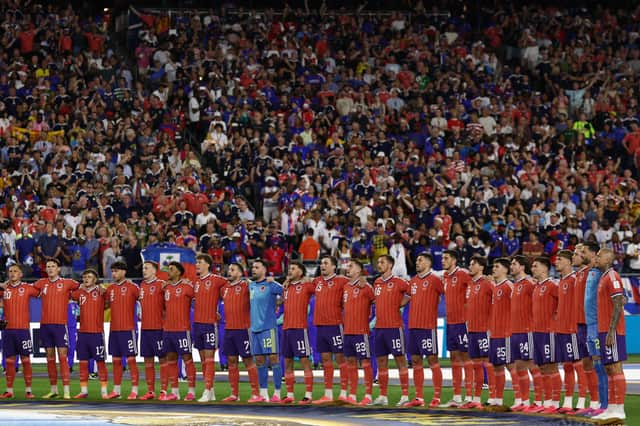

I blame my eight-year-old son to some extent. He willed Scotland to lose every match so his daddy would come home earlier. Not quite the spirit, I told him. And then when I did come home, he was away! On holiday in Greece with his mum. Still, it gave me some peace to start properly watching the World Cup, which was in danger of passing me by while I was padding around the USA on the work trip of a lifetime. Maybe it’s a young man’s game now, I fretted beforehand. At no point was this a more genuine concern than while wheezing around an astroturf pitch in a media versus Scottish Football Association backroom staff challenge match a couple of days after landing. It certainly helped clear the jetlag cobwebs away.
I was 25 at France 98, the first tournament I covered. Now aged 53, the itinerary initially looked punishing. However, for all the criticism of a sprawling, unwieldy competition, Scotland’s World Cup actually felt a bit like a mini tournament.
A World Cup behind soundproof Perspex
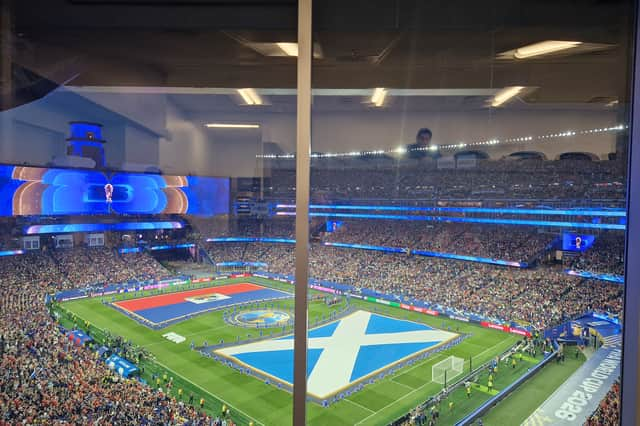
They only played at two stadiums. Lack of goals, shots even, strengthened the impression that, despite the excitement of Scotland being back after such a long absence, something was missing. Perhaps being unable able to really experience the noise generated inside the ground was one reason for this. Friends would message: ‘My God, what an atmosphere!’ You’re never too old to learn - I now know American stadium press boxes are invariably inside. We peered out through large Perspex, noise-cancelling windows and had to rely on the stadium audiometer registering decibel-levels for verification that yes, it was loud.
As everyone and their dog is now aware, the Scottish fans were their usual brilliant selves on their return to the biggest stage of all. A big well played to them. But oh for a time when admiration was earned on the pitch. Oh for a time when Scots were noted for exporting the passing game to distant shores rather than a curious fetish for placing traffic cones on the heads of statues.
“Coming down was the hardest part of any climbing.” So writes Carson McCullers in The Heart is a Lonely Hunter. She wasn’t writing about this unusual practice of cone rearrangement. She wasn’t even writing about the World Cup experience although she might have been. The comedown has indeed been hard. What do you mean, have you put the bins out yet? Re-engaging with domestic chores is a shock to the system. Reality bites hard after three plus weeks free of life's responsibilities on Planet Football, along with colleagues who are really friends.
Although intense it's of course a lot of fun. It isn't even always about the football. In fact the first big story was about a game of football not(itals) happening: Scotland calling off a proposed behind-closed-doors match with Norway at the 11th hour, although the furious Norwegians had the last laugh. It quickly became evident that we needed the practise more than they did.
It wasn’t always about the football...
What’s the word for a going on a pilgrimage if you don’t actually realise it’s a pilgrimage? The last thing I thought I would be doing when sent out to cover Scotland at a World Cup was visiting the house where one my favourite books was written.
It turns out a portion of McCullers’ novel cited above, published in 1940, was written in Charlotte, the very likable North Carolina city where Scotland elected to base themselves.
One of the upsides of the period of limbo when Scotland had to wait to hear the inevitable news they had been eliminated was the opportunity to head to Dilworth, the neighbourhood where McCullers lived for a while with her husband, Reeves.
The handsome frame bungalow dating to the early 1900s is now an Indian restaurant. It really was a case of following my nose as I neared the area, shirt sticking to my back in the muggy conditions. My excitement was not shared by one of the waitresses, who airily dismisses me. “I think there’s something about it on a plaque outside,” she said, when I explain I am not there for a chicken tikka masala.
Sure enough, a sign confirms that “novelist Carson McCullers wrote the opening chapters of her novel, The Heart Is a Lonely Hunter, while residing here”.

What it does not explain is that the book’s title was taken from a poem by a Scottish writer, William Sharp. Unusually, he published a lot of his work under the female pseudonym Fiona MacLeod. These are the sort of things you learn while on flights – with wi-fi! - to and from World Cup matches with initially buoyant hope that this time, this time, it would be different and Scotland would reach the knockout stage. Another few lines from The Heart Is a Lonely Hunter seems appropriate here: “It was like she was cheated. Only nobody had cheated her. So there was nobody to take it out on. However, just the same she had that feeling. Cheated.”
No hard luck story for Scotland
Scotland were eliminated fair and square. Other than a penalty that maybe ought to have been given against Morocco, this was no hard luck story. Scotland could have beaten Haiti 4-0 and still not qualified. And yet, with our hearts set on heading to Estadio Azteca for a last 32 game against Mexico, not going to Mexico City felt like being the victim of a robbery. Curse those wildly erroneous forecasts claiming Scotland were very likely to qualify, provided they weren't thumped by Brazil.
Even Steve Clarke uncharacteristically allowed himself to tempt fate prior to the match versus Ancelotti’s team in Miami. A Mexican journalist, who was also anticipating Scotland’s arrival in the Azteca, asked the Scotland manager for his thoughts on such a scenario.
It’s the kind of question that would have brought a very different answer had it been asked by a Scottish journalist. Something along the lines of: “Are you kidding me, you idiot?! We haven’t even played Brazil yet and you’re asking me to talk about the game after it, which might never happen?!”
Think dripping condescension, of the sort displayed by Walter Smith towards Chick Young in that famous Ibrox tunnel clip. But the beauty of the World Cup is that players and managers tend to be on their best behaviour in the pre-match press conferences, which journalists from all around the world attend. Those on the podium blinking into a wall of cameras naturally wish to put their best face on. Everyone seems to be the better for interacting with fresh faces. It’s what the World Cup is all about, after all. New experiences, making new friends.
And so Clarke indulged this gentleman, even letting slip that he once scored the winner in the Azteca for a Scotland side during the 1983 World Youth Championships. I mean, why the hell wouldn’t you mention that?
This detail stirred the juices of the Scottish press corps as we relished the prospect of writing hundreds of words on Clarke’s memories of this formative experience on the eve of Scotland’s first-ever knockout match. Sadly, like so many articles when it comes to Scotland and World Cups, it remains in a metaphorical draft folder. The ‘what might have been’ files.
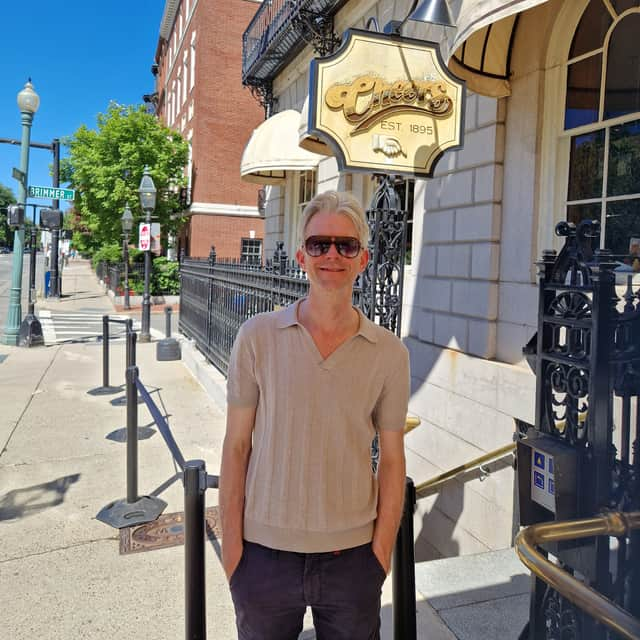
Reporters of most countries have them. They just involve different scenarios. For Scots, the equivalent of winning the World Cup would have been chronicling a historic knockout match. And if it had taken place in the footballing cathedral of the Azteca then so much the better. But history eluded the reporters as well as the footballers. Maybe it was all Del Amitri’s fault. After all, they dusted down their 1998 World Cup song Don’t Come Home Too Soon, which singer Justin Currie admitted they hadn’t played in nearly 20 years, at their gig in Boston ahead of the Morocco game. They’ve jinxed it, came the cry! The ball hanging in the goal netting after Ismael Saibari had thrashed a shot beyond Angus Gunn in the second minute of that second match seems a very long time ago now.
Meanwhile, it’s hard to believe that surely weary journalists covering England are still in the States, still fretting about running out of clean underwear and contact lenses - my chief concerns – while getting in a froth about Thomas Tuchel’s substitutions.
The Dan Burn Headed the Ball Over the Halfway Line trophy, which is all England have won so far prior to Saturday night’s bronze medal battle with France, isn’t quite the prize many seemed to presume was in the post following the appointment of a Champions League-winning manager.
This lump of gold will go to either Argentina or Spain instead, providing Gianni Infantino’s pal Salt Bae doesn’t get there first. If our Spanish friends do prevail, it’s worth pointing out that Scotland were the last team to beat them inside 90 minutes in a competitive match. Memo to the boss: it’s not too late to send me back out for the unofficial world champions presentation.
Comments
Want to join the conversation? Please or to comment on this article.