
Haiti's journey to face Scotland: home soil ban, the chase for Celtic hero and 87,000 fans
A US travel ban, plus expensive ticket and transport prices mean few Haitians will be able to attend matches at this summer’s World Cup Finals

Few nations will enjoy this summer’s World Cup more than Haiti - providing they can overcome some lingering obstacles - after ending a 52-year absence from the global stage.
For a country stuck in a tragic cycle of bad luck, the opportunity to emerge from the darkness and back into the international spotlight is one that Les Grenadiers’ are determined to make the most of.
Qualification was secured with a 2-0 victory over Nicaragua last November. On that evening, head coach Sébastien Migné praised the “unity, unity, and more unity” among his squad. Now they are all set to face Scotland, Morocco and Brazil in just their second World Cup odyssey.
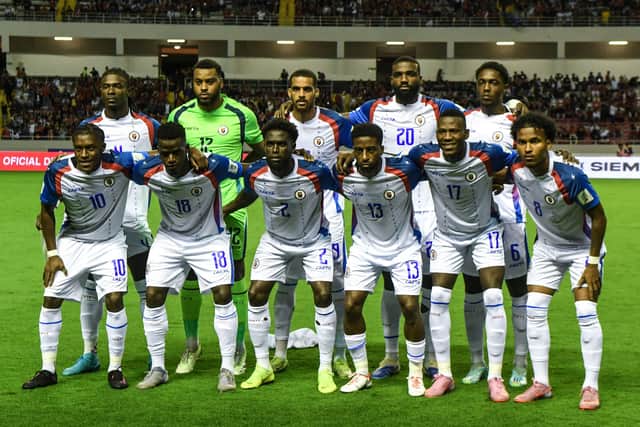

Known for its majestic peaks, rich history and revolutionary pride, Haiti - which has a population of just under 12 million - has endured immense and prolonged challenges in recent decades, including crippling historic debt, political instability and frequent natural disasters.
A nation in turmoil ever since a devastating earthquake sparked a humanitarian crisis in 2010, many areas remain under the control of violent criminal gangs. Its national football teams cannot play games on home soil due to an ongoing conflict between the government and protest forces, leading them to play their home matches over 500 miles away in nearby Curacao.
In addition, the men’s team’s 53-year-old French head coach Migné, is yet to set foot on the strife-torn Caribbean Island since being appointed almost two years ago, because it is deemed too dangerous for foreigners to travel there due to the risk of kidnappings, crimes, terrorist activity and civil unrest.
Armed gangs have seized control of almost all of the nation's capital city, Port-au-Prince, forcing more than a million people to flea their homes and cause widespread food shortages.
‘It's impossible because it's too dangerous’
Discussing the difficulties of travelling to the country itself, Migné told France Football magazine last year: “It's impossible because it's too dangerous. I usually live in the countries where I work, but I can't here. There are no more international flights landing there.”
Despite facing all that adversity, the Haitian people remain optimistic about the future. Renowned for their incredible show of resilience and community spirit, the celebrations on the streets of Port-au-Prince upon qualification were vociferous.
Much of it stems from the recent success of their national teams in building a remarkably tight-knit and resolute group of players. Defying the odds, Haiti staged an impressive late rally to finish ahead of Honduras and Costa Rica in their qualifying section, winning six of their ten matches at natural venues to rubber-stamp their World Cup spot.
To make their achievement all the more impressive, Migné has “managed the team remotely” by relying on information about local players from Haitian football federation officials via telephone. He has delicately pieced together a squad which he hopes is capable of shocking Steve Clarke’s side when both teams begin their Group C campaign in Boston during the early hours of June 14.
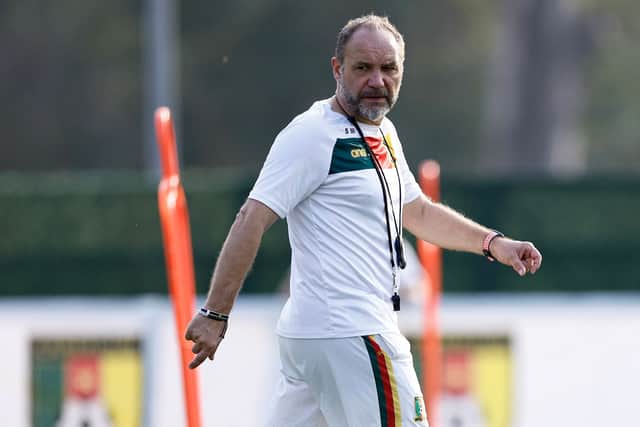
A key member of Migné’s support network is Fifa agent Jerome Salbert, who has worked closely with the Haitian FA since 2024 in talent ID and recruitment, and recommended the Frenchman for the role. He explains the challenges of convincing players to pledge their allegiance to Haiti, what their expectations are for the tournament, as well as highlighting some of the country’s main threats to watch out for this summer.
“There was a feeling of immense pride,” Salbert recalls when contacted by The Scotsman and asked what it meant among struggling Haitians to reach the finals for the first time since 1974 following years of affliction which has shaped the country in distinct ways. “We all know about the situation where gangs control most of the cities, but I think this qualification gives people hope in the country.
“It showed that big sense of resilience also for young players, both male and female, who dream of becoming footballers. I think it gives them light in the darkness and hopefully during this World Cup, gang activity will slow down a little bit because everyone will want to focus on supporting Haiti to see if they can put on a strong performance. No one expects anything from them but I think we can give Scotland a surprise.”
‘A proud moment for everyone in Haiti’
As far as opening World Cup games go, the Scots will have been quite content to be pitted against one of the lowest-ranked teams to have qualified in their quest to reach the knockout stages for the first time. The same could be said for Haiti, who will attempt to fair significantly better than their World Cup debut when they were convincingly beaten by Italy (3-1), Poland (7-0) and Argentina (4-1) on that occasion.
In Migné, they have a vastly experienced international coach who will lead them into battle against the Scots at the 68,000-seater Gillette Stadium in Foxborough. He served as Cameroon's assistant at the 2022 World Cup in Qatar and was previously in charge of African nations Congo, Kenya and Equatorial Guinea.
Tasked with recruiting players from around the world who would be eligible to hold a Haitian passport, Salbert admits being unable to gain entry to the country has posed it’s difficulties.
“It has been very, very challenging,” he states. “We can’t travel in the country, so I use a local scout who is based in the Caribbean region that has the ability to fly and help me look at players. WyScout also helps us to double check the quality of certain players. A lot of the coach’s job has been done online, because we can’t meet with people. We just work on video calls instead, but you need to adapt to different circumstances. And the fact Haiti don’t play at home, they haven’t had the chance to have the proper support of the fans. So this is a proud moment for everyone in the country.
“I have a very good relationship with the head coach,” he adds. “I convinced Haiti to select Sebastian, as he had good experiences in Africa with good teams, and also spoke French, which was a key factor behind why we did this deal. So I'm very proud to have helped this country with enquires and make a small contribution to the qualification after 52 years.”
Haiti eager to make presence felt on second World Cup appearance
For Haiti, issues off-field remain a serious problem. From a footballing perspective, though, Salbert’s Paris-based agency has still managed to convince some big names to represent a relative minnow.
Born in Guadeloupe, an overseas region of France located in the Caribbean, Salbert’s knowledge of Haitian communities in the region has helped him discover “a lot about personalities”. He adds the challenges of working for a conflict-ridden country, who are ranked 84th in the world, also lured him in.
“The problems in Haiti don't have much to do with it - players refusing to represent countries happens a lot when they are based overseas,” he says. “But I know Haiti are not going there to make up the numbers. The coach said that his main target is to reach the last-16, which is why I helped him recruit players like Wilson Isidor and Yassin Fortuné to help achieve this aim.

“We were close to getting Odsonne Edouard, who knows Scottish football very well from his time at Celtic, but that didn't quite happen. They will be an outsider, yes, but they will try to do something in the tournament because they didn't expect to be there in the first place.”
While more than half of their squad were born in Haiti, the 26 names selected by Migné for the tournament are now all foreign-based and includes the recent addition of Sunderland’s France-born striker Isidor along with Wolves midfielder Jean-Ricner Bellegarde.
“Isidor is a very good striker” Salbert confirms when quizzed on which players Scotland must watch out for. “He’s in very good shape after helping Sunderland reach the Europa League for next season. He has the all-round qualities that every coach would like to have.
“Bellegarde will be a threat, because he also plays in England at Wolves, so they know a lot about the pace and strategies used in British football. Danley Jean Jacques is a very good player in the MLS, and is one who I think will have a very good tournament. Frantzdy Pierrot has also scored a lot of goals for AEK Athens and for the national team.”
‘Haitians are crazy about football’
According to US government figures, the state of Massachusetts is home to one of the largest Haitian populations in the US (approximately 87,000). Yet, while the World Cup will present them with a chance to celebrate a momentous occasion, astronomical ticket and transport prices, plus a US travel ban imposed by the Trump administration, will prevent many Haitian fans from attending their group stage fixtures.
.jpeg?crop=3:2,smart&trim=&width=640&quality=65)
“Haitians are crazy about football,” Salbert adds. “It’s the main sport there. Those who live in Haiti and even the diaspora that live outside of the country, are all very passionate about the national teams. Even though it's only their second participation at the World Cup, they have a very, very big expectation from the local fans.
“At the moment, I know most of Haiti’s coaching staff are still trying to sort their visa to travel to the United States. They are struggling to get this done because of the travel ban in place which is affecting other countries too. So we will see how FIFA will deal with this and what the outcome will be. But right now, they don’t have visas to join the delegation that is currently in Florida to prepare the two friendly matches.”
It marks just another stumbling block in a long series of hardships for a nation craving a change of fortune.
Comments
Want to join the conversation? Please or to comment on this article.