
Fifa and Scottish football clubs take note as Refugee World Cup shines light on marginalised players

24 teams compete for four trophies across five hours of football at Toryglen
Over in America, the sprawling Club World Cup grinds on. In Glasgow this weekend, meanwhile, something far more rewarding will be done and dusted within a day despite involving as many as 24 teams. Follow that, Fifa.
The Refugee World Cup, a seven-a-side tournament attracting players from over 50 nationalities, kicks off on Sunday at 11am and will be wrapped up by 4pm, when, in a departure from recent years, four trophies will be presented. The winners of the four groups of six teams will compete for the Refugee World Cup 2025 title. The second, third and fourth-placed teams will play for different cups: the Unity Cup, Equality Cup and Peace Cup. Unity, equality and peace. All concepts worth extolling at this time.
On hearing the organisers are in discussions with Fifa to officially endorse the tournament, it’s possible to wonder why. Why risk ruining it? The bloated, financially motivated Club World Cup that – checks internet – yup is still plodding on in the States is an example of what can happen when Fifa are anything to do with it.
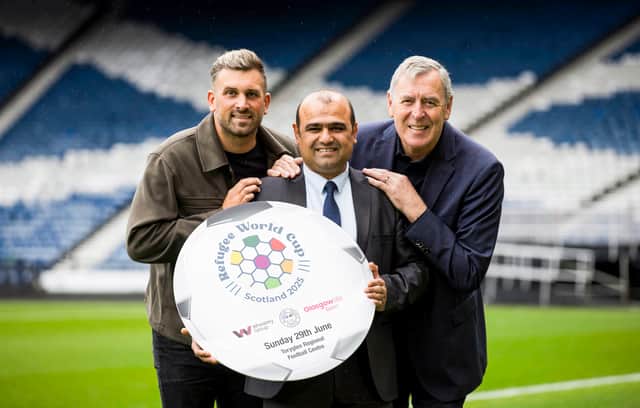

“I don’t see it from that angle,” says Abdul Bostani, managing director of the charity Glasgow Afghan United and one of the leading lights behind the Refugee World Cup. “Fifa are an international body of football around the world and involvement of Fifa will benefit this tournament and make us stronger and more official in the world.”
Discussions with world football’s governing body are, he reveals, ongoing. He wants an open discussion about whether it might be held every four years, every year and in one or in several countries. As it stands, Glasgow is alone.
The competition, which started in 2012, was previously known as the Refugee Football Festival. Renamed the Refugee World Cup in 2024, it’s slightly surprising to hear they haven’t received a cease and desist letter from Fifa president Gianni Infantino protesting about the use of ‘World Cup’ in the name. Maybe Fifa have found a soul. Maybe they can appreciate what Bostani says the Refugee World Cup is all about – a celebration of football and community and a reminder of our shared humanity.
Scotland, too, ought to embrace it because, as Bostani confidently predicts, players of refugee backgrounds will one day proudly wear the Scotland jersey, “just as France’s national team reflects the diversity of its own heritage”. He wonders whether a “Scottish Kylian Mbappe” is already here.
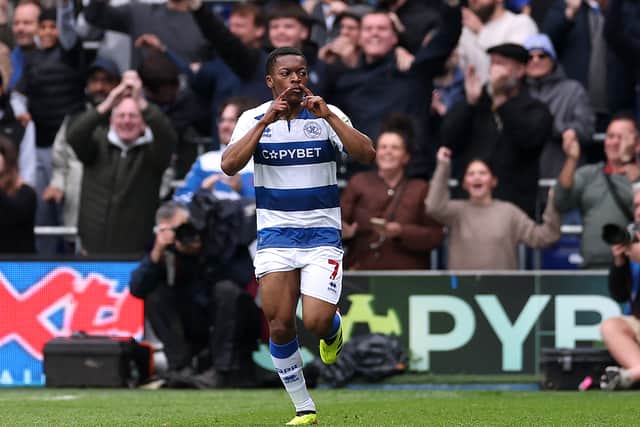
Former Celtic winger Karamoko Dembele, currently with Queens Park Rangers, played in the competition as recently as last year, as did his brother Siriki, now at Oxford United. They grew up in Glasgow after their parents moved to Britain from Ivory Coast and represented a team called Scoutables FC, who are involved again this time around.
“This tournament is an invitation to see refugees not as statistics, but as individuals,” explains Bostani. “It’s about fostering empathy, understanding and inclusion, values that have long defined Scotland and the UK as welcoming nations.
“There over 120 million displaced people in the world,” he adds. “And we have millions of refugees around the world. This type of population is almost denied everything. If you are a refugee, you are not allowed to work, you are not allowed to do this, do that. We need to recognise the reality of what is happening in the world, and football is a main way of bringing people together. You might not speak the same language, but no matter where in the world you are from the minute you kick a ball you have made a connection.”
“Behind every refugee is a story of courage, of leaving behind home, loved ones, language and culture to seek safety and a future free from fear,” he adds. Bostani should know. He fled Afghanistan in 2001 and arrived in Glasgow, graduating in accountancy from the University of Strathclyde in 2011 and then gaining a master’s degree in community development and adult education from the University of Glasgow in 2019. He is a local councillor for the SNP in Maryhill and has British citizenship.
He was still a teenager when he first landed in Glasgow, alone and cut adrift from his family. He was last in Afghanistan in 2014. His father died when he was a young boy. He hasn’t seen his mother since his last visit home 11 years ago. The Taliban’s subsequent return to power has made it impossible for him to return although he has built a new life – and family – in Scotland, having married and had seven children, all born in Glasgow, aged between four and 20.
Two of his sons will be playing on Sunday at Toryglen Regional Training Centre, where the Refugee World Cup takes place. Chris Priestley, manager of Burnhill FC, one of the competing teams, is also fixtures secretary of the Scottish Football Unity League, which was set up to create an environment free from all forms of prejudice and discrimination.
He maintains there’s work still to be done. Few from minority backgrounds have established themselves in the Scottish senior leagues, far less the Scotland national team. Edinburgh-born Rayan Mohammed, who has just been released by Dundee, was included in Pakistan’s squad to play Myanmar earlier this month but is currently clubless.
“Our frustration is that there is a lot of untapped talent here in Scotland but when it does break through it tends to go to England,” Priestley tells me. “We have had players from the Unity League who have gone to Brentford, Southampton…I guess our frustration is these marginalised players are capable of making a contribution to semi-professional and professional clubs and yet are only getting this opportunity when they move to nations, typically England but other places, more used to diverse dressing rooms.
“Scotland doesn’t seem to see this talent,” he says. “For whatever reason these opportunities aren’t coming along within the Scottish game, which is deeply frustrating.” While events such as the Refugee World Cup are a start, there’s a long way to go.
Comments
Want to join the conversation? Please or to comment on this article.