
Annandale Distillery, where history, science, and whisky meet, merging the bard and the barley



A forgotten still, a scientist, and a whisky revival – discover why your whisky trail should head south.
When whisky tourists go in search of the uisgea beatha – the water of life – most instinctively head north to the Highlands and Speyside, or west to the island of Islay, embracing iconic brands as varied and evocative as the story of Scotland itself.
Few know that just a few miles north of the border with England lies an independent distillery with some incredible historical, literary, and entrepreneurial claims to fame.
There are good reasons why Annandale Distillery and Visitor Centre is worth recalibrating your whisky journey, discovering its intriguing place in Dumfries and Galloway’s whisky heritage, and learning how a chance find of an old book led a scientist to rebuild a brand in his own back yard.
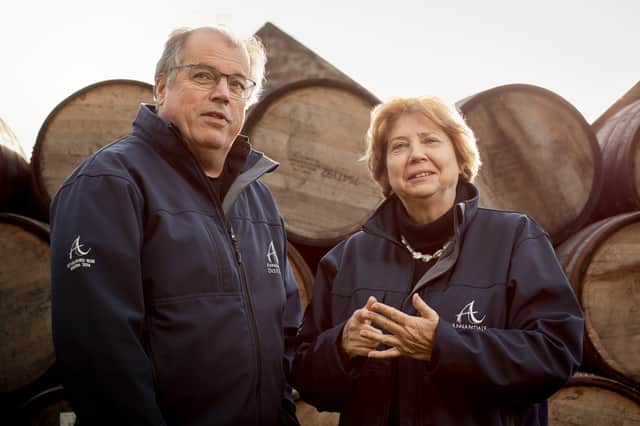
Dumfries-born Professor David Thomson and his wife Teresa Church are the brains behind one of the biggest sensory science research companies in the country, MMR Research, and co-owners of Annandale Distillery.
When whisky-loving David was given a copy of Scotch Missed, the story of distilleries long forgotten, he was astonished to learn that one had once operated just a few miles from where he was brought up, yet he had never heard of it.
The original Annandale Distillery was one of the earliest legal stills in the country, and for the best part of 100 years produced its own unique malt, before being bought over by Johnnie Walker to supply its bigger distillery in Kilmarnock.
However, by the 1920s the Annandale hub was no longer needed, and the still and bottling machinery were cleared, leaving the building to become a farmer’s storage for grain and cattle feed, before eventually falling into disrepair.
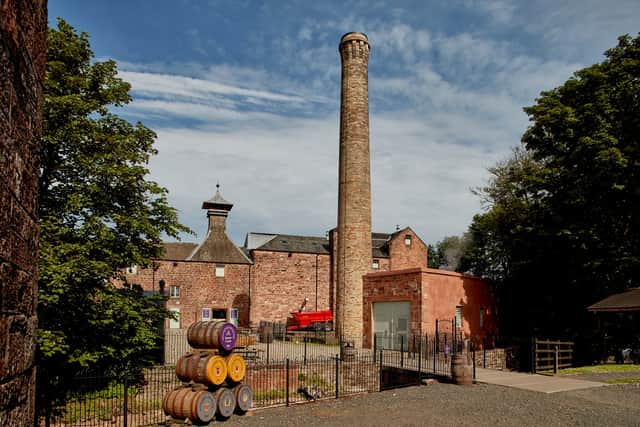
This chance find intrigued the whisky enthusiast who began his own journey, investing 10 years of his life and £17.5m of his money to return Annandale Distillery to its independent glory.
Last year it celebrated its 10th anniversary, and produces two single malt, single cask whiskies, distilled, matured and bottled on site.
As a sensory scientist who works with global food and drink brands to identify consumer purchase decisions based on their senses, David’s nose plays a key part in judging exactly when to bottle each cask, aided by his sensory panel.
Smell, taste and colour are all judged on an individual basis, as each cask in the vault matures at a different rate, depending on the climatic conditions immediately around it and are only ever bottled when each is ready.
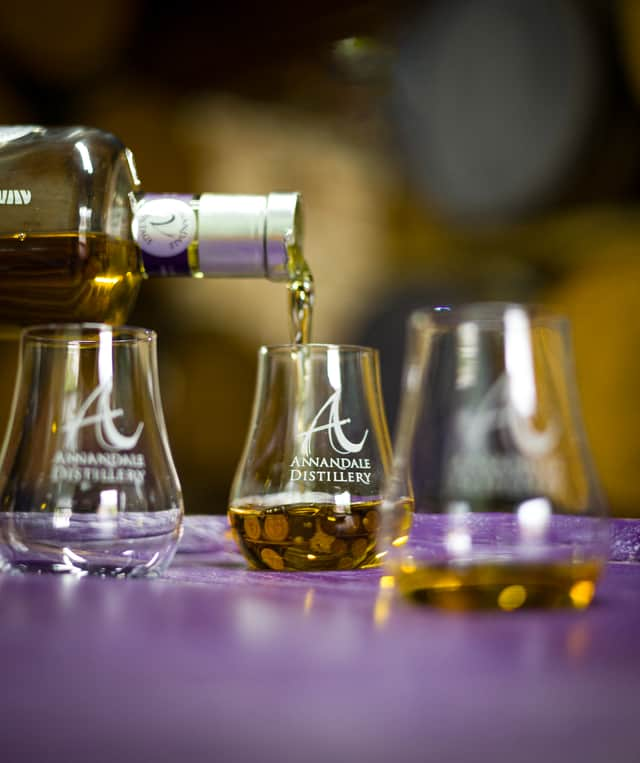
As such, there are three, five, seven and ten year old versions of Man O’Sword and Man O’Words available.
Something for everyone
Knowing that whisky lovers have diverse palates, the Annandale team were keen to create two styles.
The peated version, Man O’Sword, is named for Robert the Bruce, the 7th Lord of Annandale who at one time owned the land the distillery sits on.
The unpeated Man O’Words plays homage to the bard himself, who listed the distillery’s sister business, The Globe Inn, as his favourite howff. Robert Burns, of course, was the excise-man, who in his day collected taxes from farmers and distillers alike throughout Galloway.
As well as those core offerings, David teamed up with an old school-friend from Dumfries Academy to create what will become a highly collectible designer bottle range.
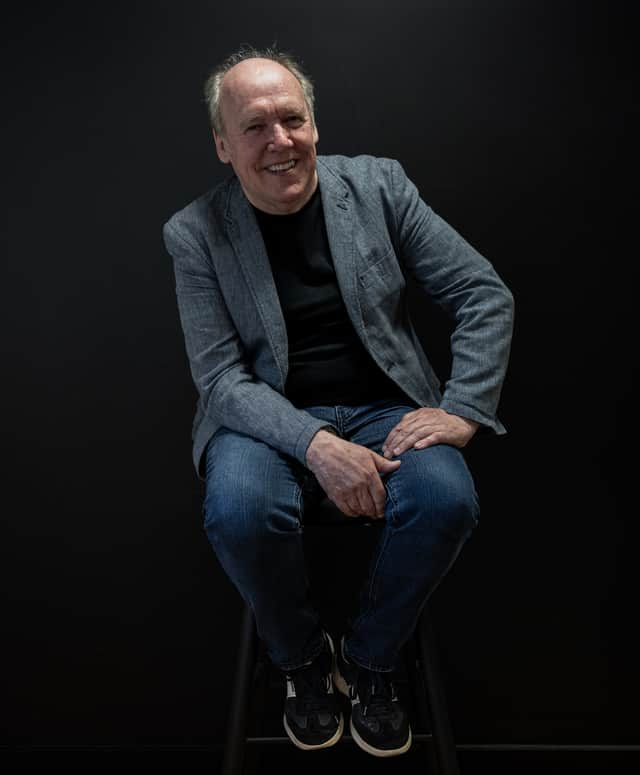
Ian Callum, of Callum Design, is a British car designer who has worked with Jaguar, Ford, TWR and Aston Martin.
Now heading his own design agency, he and the professor are collaborators in a limited edition 350-bottle run, the first of which sold out in an instant. The second, of what will eventually become a run of six collectible ceramic bottles designed by Ian Callum, is now on sale.
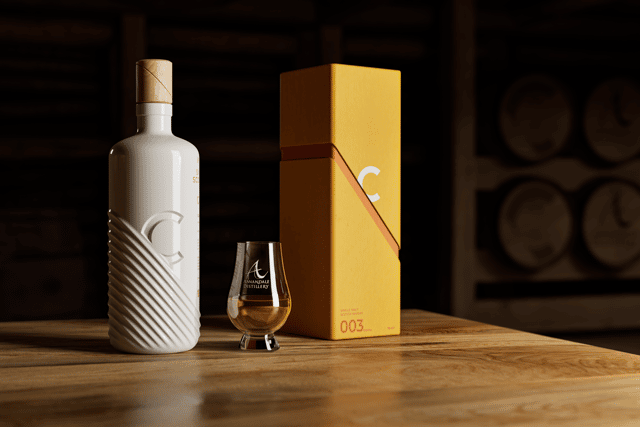
In developing this spirit of individuality, the past and the future are intrinsically woven at Annandale.
Science plays its part, as does the history; a focus on sustainability has seen investment in a bottling plant on site, while the water itself for the uisgea beatha comes from the same borehole in the grounds as it did in the 1800s.
For now, the malt itself is bought in, but David and Teresa have recently bought a castle just a few miles from the distillery, with acres of land, which they plan to develop to grow their own barley.
While Dumfries and Galloway is not – yet – one of Scotland’s biggest whisky regions, it’s not one to be overlooked. Annandale is the first geographically once you cross the border, but other labels such as Crafty, Moffat and Bladnoch are also helping the area develop a strong sense of self.
While the soft water from the Annandale borehole may create a different taste entirely to the Wigtownshire whiskies, each has earned its place on the whisky-lovers’ map.
In Dumfries and Galloway, you won’t find a distillery on every corner – but what you will find is the spirit of Robert Burns, sustainable locally produced product, and enough heritage to make every dram taste a little richer.
Discover more about Annandale Distillery by visiting www.annandaledistillery.com