
Plastic gold: LEGO trading means you could be stepping on a fortune

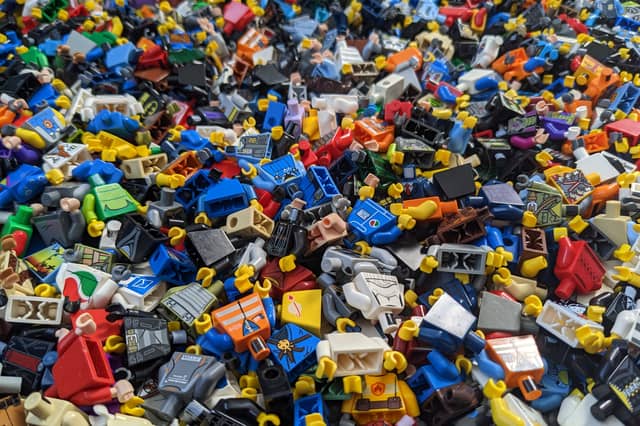

The tiny plastic bricks and figures might have been designed for children, but Gareth Edwards discovers they now have their own economy - and can carry significant value.
It’s one of the most popular toys ever created and likely to be on the wish-lists of children and adults alike this year.
First created in 1949, LEGO has become a global icon, and spawned its own universe of movies, TV shows and comics, while its blocky yellow figures have been used for viral social media videos of comedians and dictators alike
The little plastic building blocks have been used to create official sets of huge pop-culture moments, with recent releases including a massive Lord of the Rings landscapes as well as real-live locations such as Venice and the Eiffel Tower.
They have also seen their value - and their cost - soar, with new sets covering every price point, from a few pounds for individual figures and bricks to £260 for the house from Home Alone, up to almost £900 for a Star Wars Death Star set.
Like any collectible however it is the rare pieces that can fetch the highest price, with a sought after version like the Star Wars Cloud City set from 2003 fetching up to £20,000 in the conditions.
So is there money to be made from that box of assorted LEGO pieces sitting unused in a cupboard? And if so, where’s the best place to start?
One man who has managed to turn his passion for LEGO into a thriving business is Chris Brown, 34, a member of the Tartan LUG (Lego Users Group), which brings together enthusiasts from across Scotland.
He runs the Abrickadabra store on BrickLink, the LEGO-owned online marketplace and catalog for buying and selling individual LEGO parts, minifigures, and new or retired sets
Abrickadabra has the largest range in Scotland, with much of its business coming from builders looking to find the missing piece they need to complete a set.
Like many he really got stuck into the project during Covid, when he was furloughed from his software engineering job and so spent time cataloguing the 50,000 pieces that were taking over his Midlothian home.
“It started off taking up a small room and then it started taking over the master bedroom,” he admits. “I’ve built custom storage no and I try and keep it stable”
His store takes orders every day, ranging between 15p and £250 and including everything from individual bricks to minifigure parts like arms, legs and torsos.
“These are incredibly tiny parts that can easily go missing so they are quite popular,” he said. “The tiny visors from Star Wars figures are something we get asked for a lot.”
And he admits that for collectors it can be the small individual bricks that fetch the highest prices.
“Among the rarest pieces are bricks from the Grangemouth factory which did something they weren’t allowed to do by marbling bricks. This wasn’t approved and it was only a short run, but collectors love them. I’ve only ever discovered four of them, but they can go for between £250 to £1000 for a single brick.”
For anyone wondering how to get an idea of the value of their set, a good place to start is BrickEconomy is an independent global platform set up to track the trading price of Lego sets and mini-figures, compiled from data taken from retailers and reseller markets.
They have just under one million registered members and close to 100,000 daily active users.
Like its own little stock market, the site is used by avid collectors looking to track the value of their collection and find the best time to sell, as well as people just curious to see what their 2007 Millennium Falcon set is worth (Set 10179, 5,197 pieces, currently worth between £800 and £2800 depending on the condition).
“The reason LEGO is seen as an investment comes down to one unusual thing LEGO does: it retires sets,” a spokesman for BrickEconomy explained. “Production stops permanently, usually within two or three years of release, and the supply is then fixed forever while demand carries on. That is rare in consumer goods, and it is the whole engine behind the market.
“A study by Victoria Dobrynskaya at the Higher School of Economics in Moscow found average annual returns of around 11 percent on retired sets, which beat gold and large company stocks over the same period.
“The part that gets lost in the coverage is that most sets do not do this. Plenty of retired sets sit flat or lose some money. Buying blind because you read that LEGO beats gold is how people end up with an expensive cupboard.”
Doug Adamson, 51, is a collector with a large amount of LEGO. Part of the BrickM8 team, he is also lead organiser of the Edinbrick event, which shows off impressive unique builds including a complete Forth Bridge.
“Most collectors will have played with LEGO as a child and then picked it up again later in life,” he said. “What supercharged it for a lot of people was the Covid pandemic - loads of people were stuck at home, and of all the hobbies out there it has one of the lowest entry barriers. It’s ubiquitous, there’s not a huge skill level, you don’t need fiddly glue or massive amounts of space. It’s perfect and as your collections get bigger you start to build your own things.
“People who do large displays can spend a huge amount of money to buy the bricks they need to build the things. In particular limited release individual minifigures. Tron Legacy had one set, for example, but anyone wanting to build a big display like a lightcycle chase scene would need multiple copies, so there was a buyer in America who spent a fortune on these and actually drove up the value of individual minifigures himself!”
Among the most valuable individual pieces is Mr Gold, a solid gold coloured minifigure which was hidden in Series 10 collectible bags in 2013. With only 5000 made worldwide, these now fetch thousands of pounds when they come up for sale.
Even rarer is a 14-carat solid gold C-3PO produced in 2007 for a competition, with only a handful in existence and those appearing on the market fetching tens of thousands.
And for anyone looking to dig into their LEGO for potential treasure, Chris has some expert advice.
“People don’t realise the huge amount of work involved and a lot start and then ask if I can buy their collection in bulk,” he said. “It can be cathartic if you’re willing to commit a huge amount of effort into it.
“One thing people can do to get the most value out of their collection is to take the mini-figures out. That’s a way for someone without expertise can extract value from their collection, and you could pick out some old figures that are worth a decent amount.
“Re-creating sets isn’t something I would recommend -it’s overwhelming, even with a guide to what you are looking for.
“The first step that trips people up is sorting by colour - that’s the worst thing you can do, as it’s very difficult to pick out a specific shape among the same colour. So sort by shape and not colour.
“Don’t sort by every individual piece - sort by similar pieces and then sub-sort them.”
Comments
Want to join the conversation? Please or to comment on this article.