
Exclusive:Scotland to send fishing nets to Ukraine to defend against drone attacks
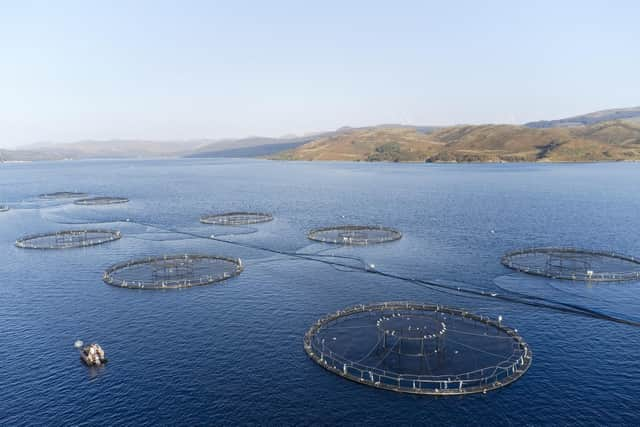
The used salmon farm nets had been stored ready for recycling but will now be sent to Ukraine following a request from its government.
Scotland will send more than 280 tonnes of used fishing nets to Ukraine to help it defend against Russian drone attacks.
The used salmon farm nets had been stored ready for recycling but will now be sent to Ukraine following a request from its government.
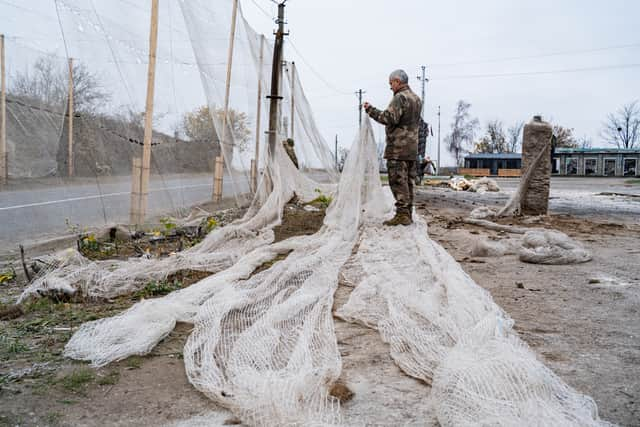
Vital infrastructure and strategic locations in Eastern Ukraine will be protected as the nets are draped overhead to catch exploding drones.

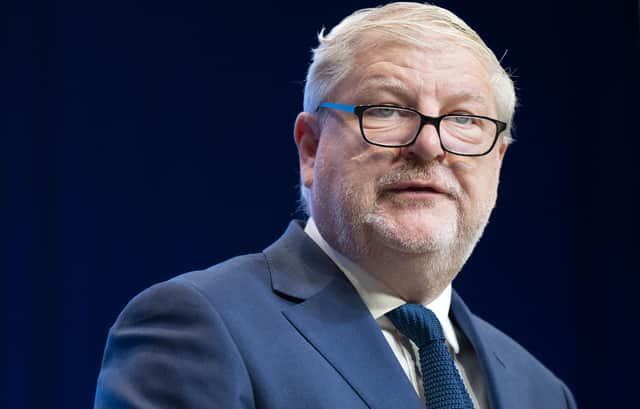
External Affairs Secretary Angus Robertson said: “As we approach the fourth anniversary of Russia’s illegal invasion of Ukraine the Scottish Government is committed to aiding Ukraine’s defence and this donation demonstrates that our support is unwavering.
“The Ukrainian Minister for the Development of Communities made a direct request for Scotland to supply used fishing nets, which would be repurposed to provide anti-drone netting on public roads in Eastern Ukraine.
“We identified 228 old salmon farm nets, weighing 280 tonnes, sitting in storage awaiting disposal. They work by trapping the drone propellers, stopping them reaching their target.
“Drone attacks are a near daily occurrence. They have been responsible for many deaths and casualties as well as causing huge devastation across Ukraine. This will help counter some of these deadly attacks.”
Russia uses small cheap drones and fits them with explosives, which they can remotely control for distances of up to 25km.
They are controlled by pilots will real-time video feeds, which means they can be used extremely accurately against soldiers, military vehicles and equipment.
This means that they are especially deadly, creating a vast “kill zone” where nothing can move without gaining attention from swarms of the drones.
Because many of the Russian machines are connected by thin threads of fibre optic cables, Ukrainian forces are unable to stop them because they are not controlled by electronic signals.
But, the fish nets are a means of halting the drones.
The Ukrainians use the nets to create tunnels which tangle the drone propellers before they reach their targets. It has been compared to how a spider web catches flies.
The nets can be stretched between poles to create netting tunnels. They can also be used to cover trenches and vehicles. Some Ukrainian drones also carry pieces of netting which they drop on enemy drones.
It does not provide a 100 per cent guarantee that the drones will not work, but the nets make the task of attacking more difficult and more drones need to be spent in one area.
Ukraine is now building tunnels across the entire frontline from east to south.
Other countries have already given fishing nets to help Ukraine’s war effort.
Some 280km of used deep-sea nets - once used for trawling monkfish from the sea bed - have been sent from fishing ports along France’s Brittany coast.
Danish fishing nets - worth more than £2 million - which were banned from UK waters after Brexit have reportedly made up a fair share of the donations.
Swedish fishermen have also donated hundreds of tonnes of old nets.
Russia invaded Ukraine on February 24, 2022. It is the largest and deadliest war in Europe since WW2.
Comments
Want to join the conversation? Please or to comment on this article.