
Sinkhole reveals tenement fireplace buried under motorway viaduct in Glasgow
Housing partially demolished nearly 60 years ago to make way for M8

A sinkhole which opened up during major repairs to a motorway viaduct has revealed the fireplace of a partially-demolished tenement in a “fascinating reminder” of life in the area before the road was built nearly 60 years ago.
The remains were found during ground investigations beneath the Woodside Viaducts which carry the M8 just north of Glasgow city centre.
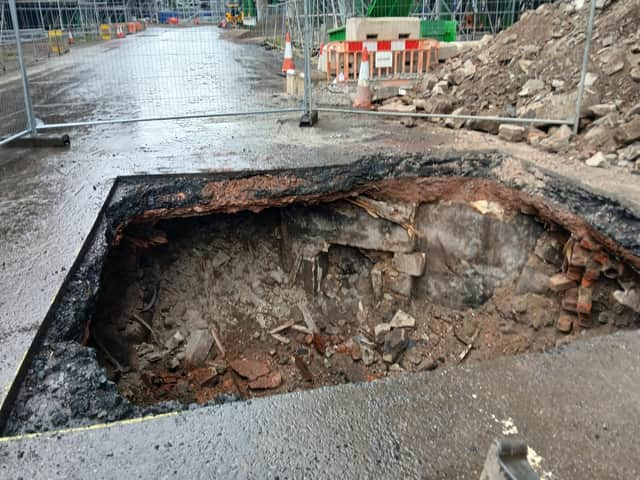

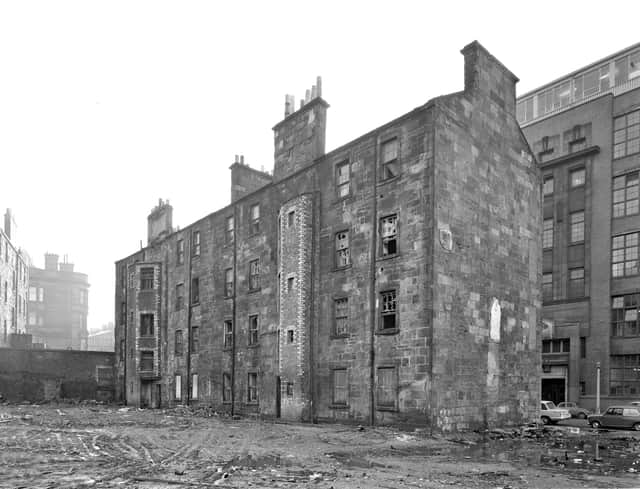
The discovery in Phoenix Road is believed to part of housing in the former Rosehall Street, one of several streets which disappeared to make way for the motorway and associated link roads in the late 1960s.
It came as part of a temporary overhaul by contractor Amey of the ageing viaducts which has been ongoing since 2021, is expected to cost up to £185 million and be finished by the end of next year.
The structures, between junctions 16 and 17, will then be replaced, upgraded or removed.
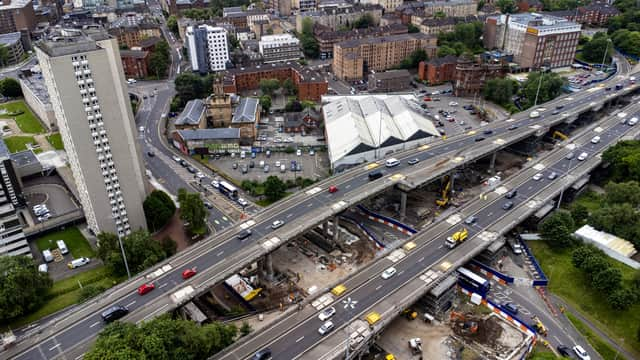
Iain Ferguson, M8 bridges special projects manager for Transport Scotland, told the Roads Expo Scotland event in Glasgow: “Some of the record drawings have proved inaccurate so that’s been challenging, along with unexpected ground conditions.”
An Amey spokesperson said: “We identified some ground settlement in an area of the site which had not been disturbed as a result of our works.
“To establish the cause and carry out any remedial work needed to keep our construction activities operating safely, we carried out further ground investigations.
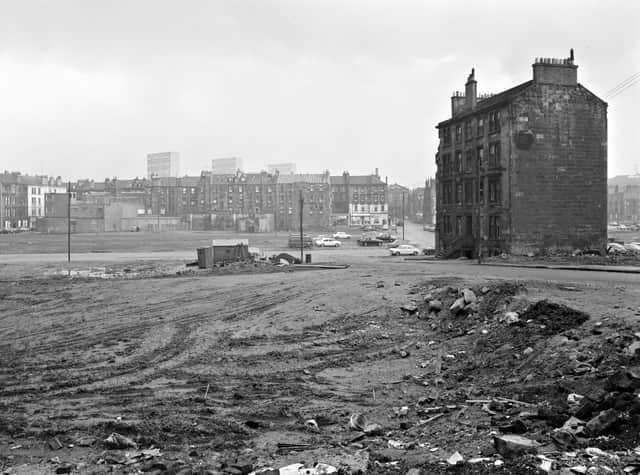
“These investigations uncovered the remains of a demolished tenement, with a number of its original features still clearly visible, including a fireplace, chimney breast, timber joists and some of the original sandstone walls.
“It appears that when the tenements were taken down, they were cut back to the level required at the time and then filled in, which is why so much has survived largely intact beneath the site.”
A Transport Scotland spokesperson said: “The sinkhole was on a very small scale, caused by timbers in the hole that had rotted and other material that had settled.”
Duncan Macknight, a research officer at the Scottish Roads Archive said, “The discovery of part of a former tenement beneath the Woodside Viaducts is a fascinating reminder of the communities that existed before the construction of the M8 transformed this part of Glasgow in the 1960s and 1970s.
“The archive has been digitising photographs of the motorway’s construction through Woodside and Cowcaddens which vividly illustrate the scale of change that took place.
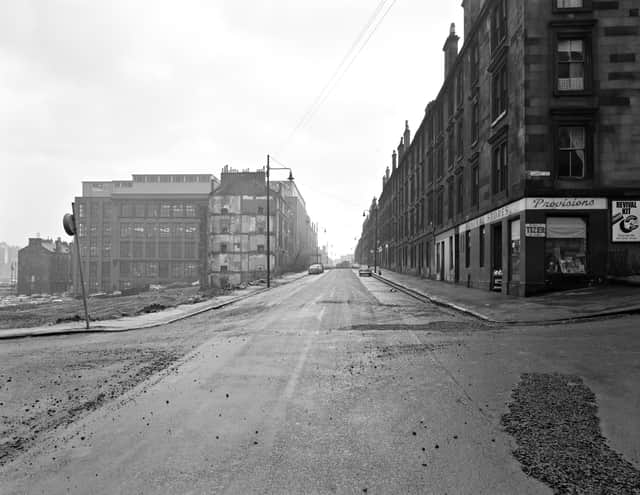
“The recently uncovered remains are thought to be part of a tenement on Rosehall Street, one of several streets that disappeared as the motorway and its associated road network were built through the area.
“While many buildings were demolished to make way for the new infrastructure, the remains uncovered during the current works show that parts of some structures were retained below ground level and covered over.
“The survival of features such as a fireplace provides a tangible link to the people who once lived there.
“Finds such as this help bring Glasgow's lost streetscape back into focus and add another chapter to the story of one of Scotland’s most significant urban infrastructure projects."
Mr Macknight said several buildings photographed shortly before demolition stood directly on the route of the motorway off-ramp to West Graham Street, some of whose foundations and basements were buried beneath the new infrastructure rather than removed.
Comments
Want to join the conversation? Please or to comment on this article.