
£2 maximum bus fares across Scotland pledged by SNP

Pilot in Highlands would be extended across country by 2031
Fare-paying passengers would travel across Scotland for a maximum of £2 under an SNP pledge in its election manifesto published on Thursday.
The party said that if re-elected it would also scrap plans to charge island visitors higher CalMac ferry fares, but it has scaled back its commitment to dual the entire A96 between Inverness and Aberdeen to only widen “key sections”.
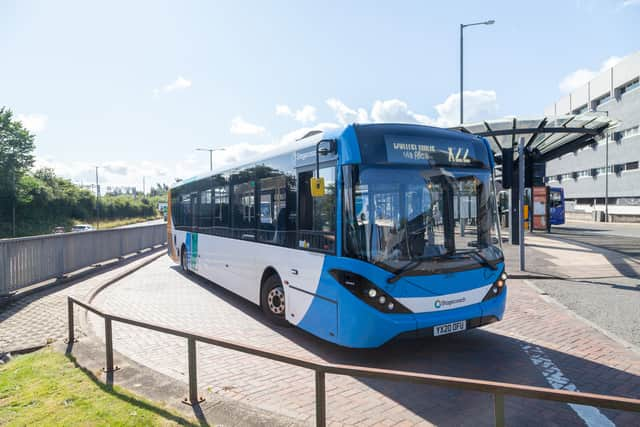

Other transport pledges include the consideration of direct sleeper trains between Scotland and Europe, tram trains in Edinburgh, extending the Borders Railway to Carlisle, and rebuilding a rail line between Aberdeen, Ellon, Fraserburgh and Peterhead.
The SNP also confirmed it would open a station at fast-growing Winchburgh in West Lothian, which is likely to be popular with commuters into Edinburgh.
But it said the planned north-south Edinburgh tram line should not be routed via the Roseburn Path, a fiercely-championed walking and cycle route in the west of the city.
That could put the SNP at loggerheads with the city council’s minority Labour administration should it opt for that route, which is seen as cheaper and less problematic than a tram line on roads instead.
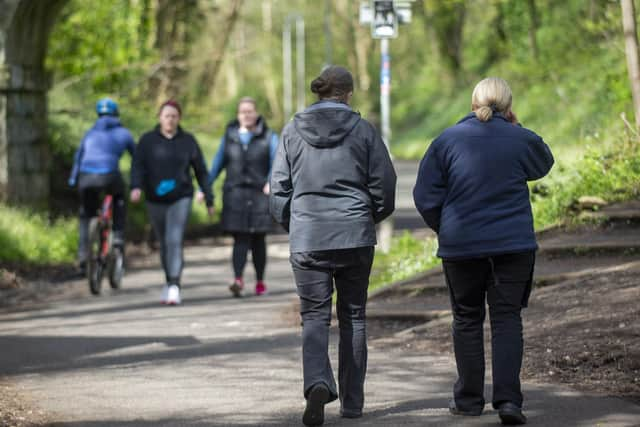
The bus fare cap would be extended to the whole of Scotland from the current one-year pilot in the Highlands, Moray, Argyll & Bute and Orkney and Shetland through legislation by the end of the next Scottish Parliament in five years’ time.
The SNP manifesto said the move “will help with modal shift [from cars] and reduce household costs. Our action will benefit families, the economy and the environment”.
Colin Howden, director of sustainable transport campaigners Transform Scotland, said: “It could be the sort of transformational measure that is needed to change the general perception that public transport tends to be more expensive than car use.”
However, an industry source said: “Fares is never the number one factor in passenger surveys. Reliability and journey times are, and this does nothing to improve these.”
Former bus chief Roger French, who writes the Bus and Train User blog, has also warned that already well-used buses could be overwhelmed, potentially deterring passengers, especially on low-frequency services, because of worries about them running full.
Scottish government funding of £10 million has been provided for the pilot, recommended by its Fair Fares review in 2023, which it said had not estimated the cost of a national scheme.
Some 40 per cent of Scots are already eligible for free bus travel, such as the under 22s and over 60s.
For those that pay, Lothian, Edinburgh’s main bus operator, has a £2.40 flat fare for single journeys.
First Glasgow, the main operator in the west of Scotland, has single fares between £2.45 and £7.05.
Those at Xplore Dundee, the city’s main operator are £2.70-£3.25, while they are £2.25 on First in Aberdeen.
A £2 fare cap on many bus journeys in England was introduced in 2023 and increased to £3 in January.
Paul White, director of the Confederation of Passenger Transport Scotland (CPT), which represents bus operators, said: “We welcome the recognition of the importance of public transport in the SNP manifesto but note the £2 fare cap pilot across the Highlands and Islands has only recently started.
“This pledge to extend the scheme nationally comes before government and the bus sector has had the opportunity to monitor scheme use or evaluate benefits and cost.
“We hope this seemingly uncosted commitment does not come at the expense of government support to improve bus speeds, which is a key ask of CPT, and would enable operators to enhance bus services, improve reliability, and grow bus use.”
On ferry fares, a Scottish government report had proposed that reductions of some 40 per cent introduced by the SNP in 2008 to bring them into line with road travel costs would be scrapped for non-islanders.
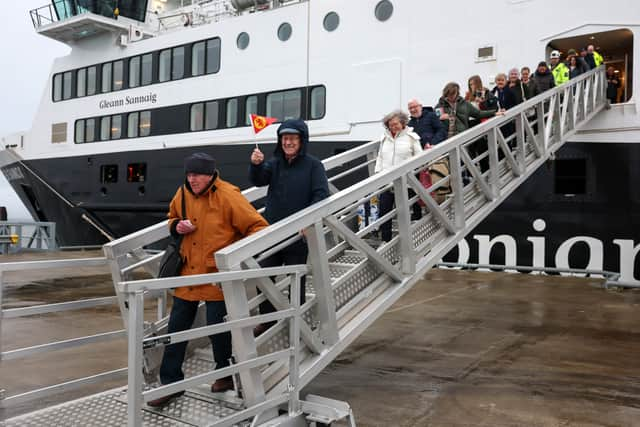
The party said the so-called “road equivalent tariff” savings would be retained “as the basis for [the] future fares structure for islanders and non-islanders alike”.
On the A96, the SNP had previously pledged to fully dual the A96 by 2030 but has not updated that timescale and only progressing the Inverness-Nairn section.
Extending Caledonian Sleeper trains, which run as far as London, to Europe via the Channel Tunnel will be examined in a feasibility study into reducing air travel.
Such services were planned when the tunnel opened in 1994 but the Nightstar train fleet built for them was sold to Canada when the plans were abandoned.
Tram trains which can run on rail as well as tram lines in Edinburgh are seen by the city council as a way of further extending its tram network by using the orbital south suburban rail line, all of whose stations closed more than 60 years ago.
However, SNP ministers have not previously championed completing the re-opening of the Borders Railway by restoring it as far as Carlisle.
The line is seen as a potentially useful third cross-Border route but there are doubts about the viability of the project beyond extending it from Tweedbank to Hawick because of the sparse population south of there.
By contrast, the north east of Scotland is one of the few areas of the country without a railway and its inclusion in the SNP manifesto reflects determined campaigning locally.
Comments
Want to join the conversation? Please or to comment on this article.