
Scotland 'must act now' as threat of 'wildfire disaster' looms

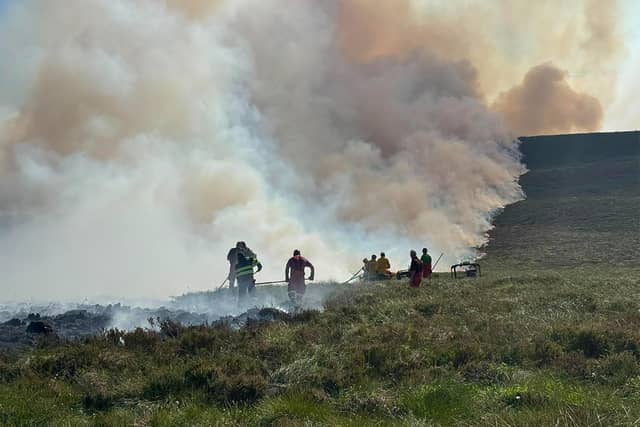

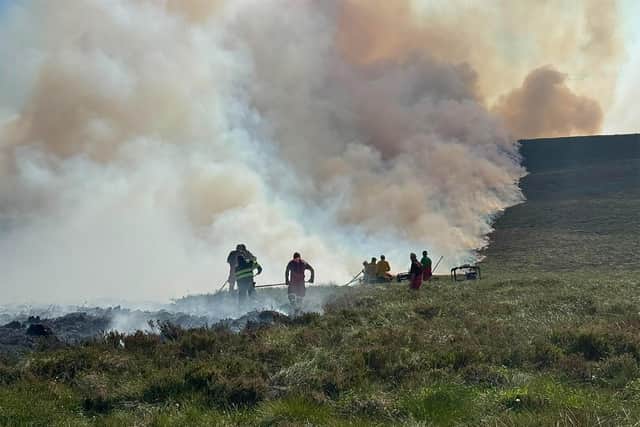
The warning comes as firefighters continue to tackle a wildfire in Scotland’s largest national park.
Scotland faces a wildfire disaster unless action is taken now to address future risk, it has been warned.
It comes amid efforts to extinguish a large-scale wildfire in Cairngorms National Park, with the fire covering an area almost 6km (2.3miles) squared.
Calum Kippen, co-founder of Bright Spark Burning Techniques, an organisation that specialises in wildfire prevention, said Scottish ministers must follow advice from other countries with high wildfire risk to help save lives in Scotland in the future.
The Cairngorms wildfire started near Ryvoan Bothy, which sits on RSPB land near Nethy Bridge, on Wednesday morning with multiple homes evacuated, as well as tourist sites and other properties around Glenmore near Aviemore.

“It’s just awful for these people,” said Mr Kippen, who has been a gamekeeper for more than four decades.
“It’s a major fire.
“I feel we need to act now to save lives within the next four or five years, maybe ten years. What I definitely know is that there is a disaster coming for Scotland.
“What we really need to start doing is take advice from the fire-prone countries in Europe, from the experts, and start from the ground up and get on with it.
“With fires and floods you always ride your luck then eventually your luck runs out and you have a disaster.”
Mr Kippen had already warned MSPs and the Cairngorms National Park Authority (CNPA) that Highland villages were in “imminent danger” of wildfires during a Holyrood’s rural affairs committee meeting in March.
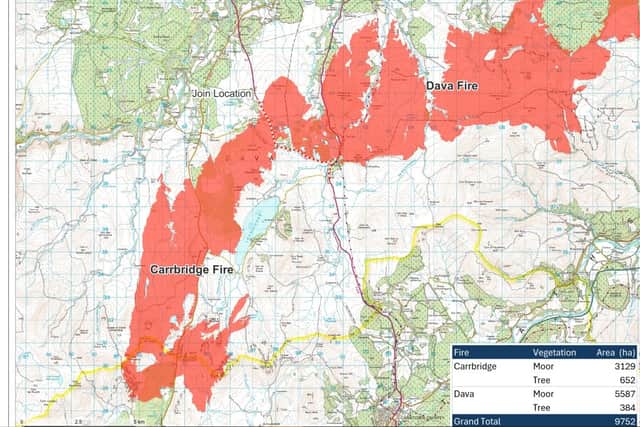
He warned the wildfire last year that swept through the Carrbridge area could have “easily ended up in Grantown-on-spey”, one of Speyside’s larger towns. The wildfire, combined with the Dava Moor fire, were recorded as Scotland’s largest wildfire incident on record, burning more than 11,000 hectares of vegetation.
Just months earlier, residents of the south Scotland village of Glentrool in Galloway were evacuated when a wildfire spread across surrounding hills.
Jon Henderson, assistant chief officer and director of prevention at the Scottish Fire and Rescue Service (SFRS), has previously said “it is absolutely foreseeable that wildfires will start to interact with communities more than at present.”
The SFRS said crews are facing a “protracted incident” as they seek to prevent the flames spreading to other areas.
Mr Kippen said the incident is “going to go on for ages” given the location of the flames and the dry weather.
Scottish minister Neil Gray said late on Thursday that the blaze was “contained” and that emergency services “confirmed they have adequate resources committed to this incident.”
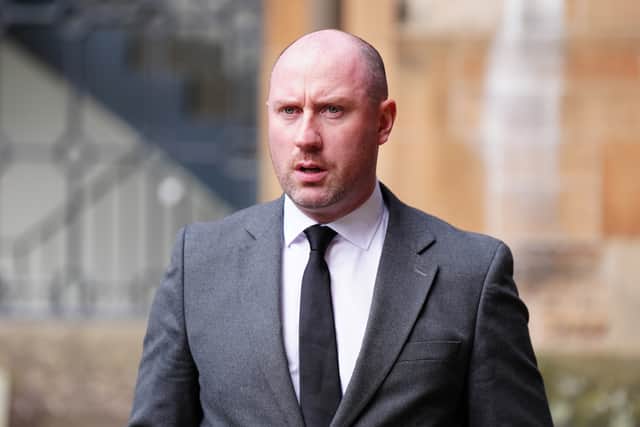
The minister’s views, however, were disputed by some members of the local community who pointed to the fire spreading further.
One resident, who preferred to remain anonymous, said he believed the flames were spreading towards Glenmore Lodge and had reached the tree tops.
“There’s a lot of timber houses in that area and the trees are in such close proximity to them and come right up to the roofs, so they are very high risk,” he said.
Flames also spread across Forestry and Land Scotland terrain, burning through some of its Caledonian pine wood which supports endangered species, including capercaillie.
Police have assisted walkers off the hill, with remaining walkers urged to get to safety and let their families and friends know they have returned.
Motorists travelling on the A9 were also impacted after a lane was closed at Dalnaspidal, just south of Dalwhinnie, due to reports of smoke blowing onto the busy carriageway and affecting visibility.
Sandy McCook, chairman of the Nethy Bridge and vicinity community council, said the situation was “very concerning” and claimed there was a lack of resources to deal with the fire. He said the lessons learned from the “devastating” wildfires in Dava last year “haven’t been put into practice”.
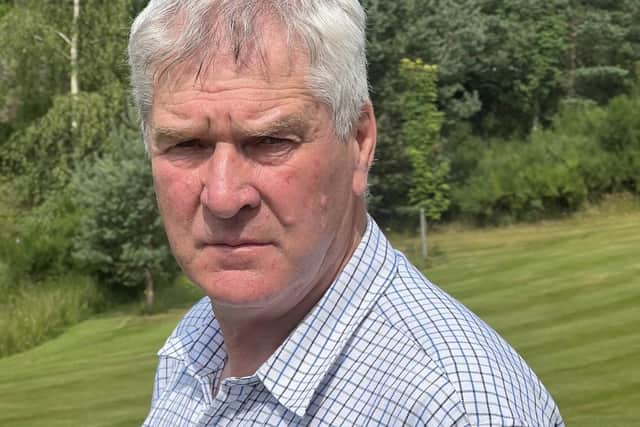
”We are seeing exactly the same situation,” the community leader said.
“We need a national facility for situations like this, where there’s always something (available).
“If a helicopter had been here and available within, let’s say, an hour of the fire starting yesterday, the fire could have been out a couple of hours after it started, but now here we are, and it’s 24 hours since it started, and it’s still spreading.”
He added: “The fire service is understaffed, under-resourced, with not enough equipment that we need to have facility to get helicopters in much earlier.
“So, my answer to the politicians, those in power, would be listen to the local people in Nethy Bridge, Abernethy, Glenmore, and other areas of the Highlands that have been badly hit by fire.
“Listen to what they say, not to what your so-called advisers or your other fellow politicians say. Listen to local common sense.”
Last night, a senior-ranking firefighter insisted the service has “adequate resources” to tackle the Cairngorms wildfire.
Lynne Gow, a SFRS area commander based in the Highlands, said she is “absolutely certain” of the force’s plan to tackle the blaze, which is almost four miles in size and has been burning for more than 24 hours.
RSPB Scotland had earlier called for helicopter support “urgently to bring the fire under control.” The SFRS said at the time that no aerial support was required but that it was regularly reviewing the situation.
Colin Brown, of the Fire Brigades Union, said the organisation has been warning about the risks of wildfires to communities and the lack of UK-wide preparedness “for many years.”
“For over 15 years the SFRS have failed to attract adequate numbers of firefighters into the retained duty system (RDS) that covers around 80% of Scotland’s land mass including some of Scotland's remote rural communities that are now experiencing increased instances and severity of wildfires,” he said.
“The combination of budget cuts and the inability to recruit adequate crew numbers from local communities led the SFRS board to ratify proposals to close long term dormant stations such as Nethy Bridge as part of a raft of 30 changes including further station closures and withdrawal of frontline appliances and crews.”
Mr Brown said the SFRS budget has lost £900 million since it was created resulting in the loss of over 1,200 frontline firefighter posts from the SFRS.
“The Scottish Government must commit to ending its year on year financial attacks on the Scottish Fire and Rescue Service and provide real terms investment to bolster firefighter numbers and ensure the SFRS is equipped and fit for a future that seems set to be blighted by increasing instances of large wildfires across Scotland.”
Farmers and crofters in the area, whose businesses and livelihoods are at risk from wildfires, said certain land management techniques need to be considered in order to prevent devastating damage to the land and its wildlife.
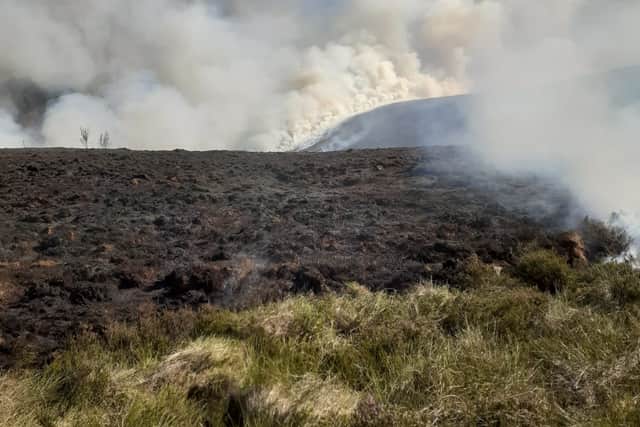
A spokesperson from the Cairngorms Crofters & Farmers Community (CCFC) said the latest wildfire “once again highlights the need to rethink upland land management” and called for a review of Scotland’s approach to wildfire resilience.
“The devastating wildfire in the Abernethy and Glenmore area is a stark reminder of the growing wildfire risk facing Scotland’s uplands during prolonged periods of hot, dry weather,” they said.
“While the cause of this fire has yet to be established, one issue that cannot be ignored is the build-up of combustible vegetation across many upland landscapes.
“The CCFC has repeatedly warned that reducing active land management and grazing, in favour of allowing land to rewild, risks increasing fuel loads and making future wildfires more difficult to control.”
The CCFC said for generations, grazing by hill cattle, sheep, deer and wild goats helped manage heather and other vegetation, naturally reducing the amount of combustible material on the hill. It added that carefully managed muirburn has also played a vital role by creating a mosaic of vegetation ages and strategic firebreaks that can help slow or contain the spread of wildfire - the latter being similar technique to what SFRS firefighters use when managing wildfire spread.
SFRS said the ongoing wildfire in the national park is currently affecting an area of approximately six kilometres squared.
Gavin Miles, of the CNPA, said: “We are grateful for the ongoing efforts of the emergency services, gamekeepers, NGO and estate staff who are working tirelessly to bring the fire under control, and those of the businesses and local community providing support to those affected.
"This is – of course – deeply worrying for all of us who love this special place. Photos and videos from the scene, and thermal drone footage captured by our team last night, give a sense of the scale of the wildfire, but we don’t know yet the extent of the damage, or the cause.”
Mr Gray, Cabinet Secretary for Justice, said: "This wildfire in the Cairngorms National Park is currently contained thanks to the exceptional work of firefighters who have been on the scene since Wednesday morning. Public safety is the priority, which is why the decision to evacuate a campsite and various properties has been taken as a precautionary measure.
"I want to thank the firefighters, police, land managers, volunteers and all partners who are doing an outstanding job keeping people, property and the natural environment as safe as possible. The Scottish Government continues to monitor the situation closely and the Scottish Fire and Rescue Service has confirmed they have adequate resources committed to this incident.
"A very high wildfire warning was issued on Wednesday and continues to be in place across Scotland until Monday. Everyone in the countryside is urged to avoid naked flames, choose picnics over barbecues, and fully extinguish cigarettes. I ask everyone in the affected area to continue following advice from the authorities and to stay up to date with the latest guidance."
Comments
Want to join the conversation? Please or to comment on this article.