
Why Scotland has a shortage of dead bodies as 180 cadavers rejected by medical schools

Surgical colleges have already had to cancel courses over the issue
The increasing number of medical students at Scotland’s universities has led to a shortage of cadavers for anatomical training and research, it can be revealed.
An annual report by Professor Gordon Findlater, HM Inspector of Anatomy for Scotland (HMIAS), found surgical colleges are already having to cancel training courses due to the issue. He said there was now a “serious problem of sourcing cadaver material” at the Royal College of Surgeons of Edinburgh.
There were 5,930 undergraduate medical students in Scotland in 2023/24, up from 3,928 in 2015/16. The Scottish Government has sought to increase the number of medical graduates in a bid to grow the workforce.
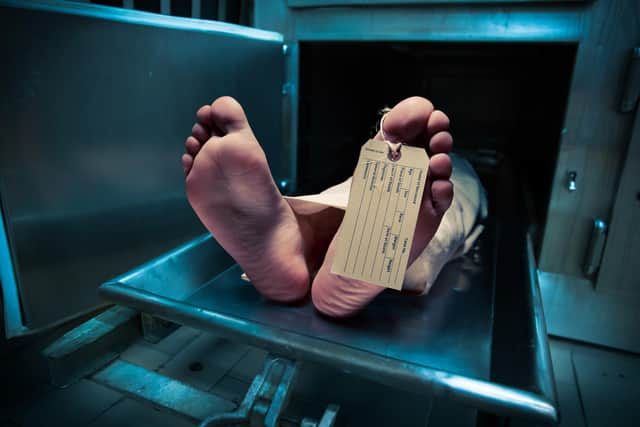

Prof Findlater, who is tasked with carrying out inspections, said all departments were “working well and to a very high standard”.
But in his annual report for 2023/24, he added: “There is, however, a potential problem arising from the increasing number of medical students attending university with the resulting increased demand for bodies. This is already having an impact on the surgical colleges who are now having to cancel training courses due to medical schools having to meet their own needs first before that of the colleges.”
In a section on the Royal College of Surgeons of Edinburgh, he said: “Due to the increased demand for courses to be run at the college, there is now a serious problem of sourcing cadaver material to meet this demand.
“This situation is not helped by the need of the five medical schools in Scotland having to meet the increased need for cadavers required to teach the increasing number of medical students they now have to accept.”
Prof Findlater found 290 bodies were accepted by anatomy departments in Scotland last year, with 178 rejected. A total of 352 embalmed bodies are currently held, alongside 123 frozen bodies in storage. There were 1,113 bequest forms requested and 692 returned.
"All medical schools hold an annual memorial service in memory of all those who have left their bodies to the medical school; the inspector attended all of these in person,” his report said. “All were very well attended and very much appreciated particularly by the families and friends of all the donors.”
Prof Findlater said there were no incidents requiring his intervention during the period covered by the report. In 2022, he investigated after a student at the University of Dundee was expelled for uploading footage of a body being dissected on social media.
The use of cadavers for medical research and training has a long history in Scotland. A shortage of corpses legally available for dissection led to a thriving trade in body snatching in the 18th and 19th centuries, in which the bodies of the recently dead were removed from their graves and sold to medical schools.
In the late 1820s, Burke and Hare famously murdered at least 16 people before selling the bodies to Dr Robert Knox's anatomy school in Edinburgh.
HMIAS, which reports to the Scottish Government, has been a watchdog since 1842.
A Scottish Government spokeswoman said: “Anatomy departments are reliant on bequests being made and the availability of bodies depends on the number of deaths at any time. The bequest co-ordinators for the anatomy departments at the five Scottish universities work collaboratively to avoid shortfalls. There is an arrangement between anatomy departments to redirect bodies to another anatomy department providing the donor has consented to this when completing the bequest form.
“Neither the Scottish Government nor HM Inspector of Anatomy for Scotland has a role in ensuring adequate supply or storage of bodies for academic teaching. This lies with the five Scottish universities.”
Comments
Want to join the conversation? Please or to comment on this article.