
UK Government issues decision on legal challenge over Rosebank and Jackdaw North Sea oil fields

Campaigners say it is “right not to waste time and money trying to defend the indefensible”
The new UK Government will not defend the legal challenges against two controversial North Sea oil field developments.
Energy Minister Michael Shanks says it will save taxpayer money to not challenge the judicial reviews brought against development consent for the Rosebank and Jackdaw oil fields.
One of the groups that brought forward the legal challenge says the government is “right not to waste time and money trying to defend the indefensible”.
However it is still possible for developers to drill at these sites as the exploration licences granted for these two oil fields have not been revoked.
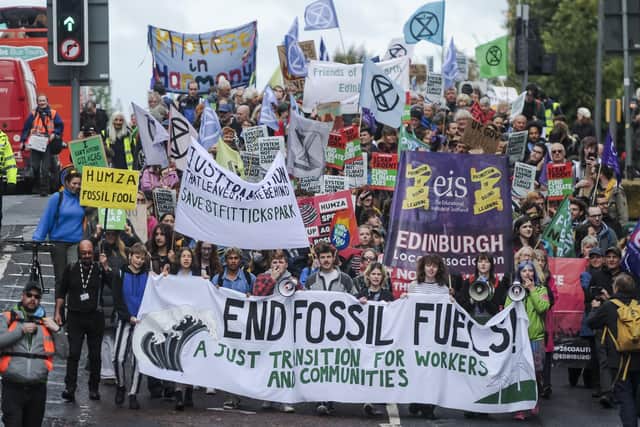

Energy giants Shell and Equinor can also continue to defend this review in court.
The UK Government says this decision is part of its new environmental guidance for oil and gas firms, which they say is “necessary” following a Supreme Court ruling requiring regulators to consider the impact of burning oil and gas in its environmental impact assessments for new projects.
Mr Shanks said: “The government is committed to making Britain a clean energy superpower, helping to meet our first mission to kickstart economic growth.
“While we make that transition the oil and gas industry will play an important role in the economy for decades to come.
“As we support the North Sea’s clean energy future, this government is committed to protecting current and future generations of good jobs as we do so.
“We were elected with a mandate to deliver stability, certainty and growth.
“Every action we take will be in pursuit of that.
“We will consult at pace on new guidance that takes into account the Supreme Court’s rulings on environmental impact assessments, to enable the industry to plan, secure jobs and invest in our economy.”
Rosebank is 80 miles west of Shetland and contains around 300 million barrels of oil, making it the UK’s last major undeveloped oil site.
It is to be developed by Equinor and is twice the size of the controversial Cambo oil field.
Jackdaw on the other hand will be developed by Shell and is 150 miles east of Aberdeen.
The legal challenge against developing these two oil fields was brought by Greenpeace and Uplift.
Tessa Khan, executive director of Uplift, welcomed the decision, saying it is “astonishing” decision-makers gave the go-ahead for licensing this oil field in the first place because of the “massive emissions” it will create.
She said: “Experts have repeatedly warned that new oil and gas drilling will push us past safe climate limits, but Rosebank is also a bad deal for Britain.
“It’s mostly oil for export and would do nothing to lower bills or boost our energy security yet, because of huge tax breaks for new oil and gas drilling, the UK public would effectively cover a huge chunk of the costs of developing it.
“We face a stark choice today - do we protect ourselves against the worsening climate crisis or allow the oil and gas industry to continue profiteering?
“In the year since Rosebank was approved, we've seen the impacts of climate change escalate, driven by the burning of oil and gas, whether that’s months of flooded fields impacting UK farmers, or lethal temperatures and wildfires around the world.”
She added: “This government is right not to waste time and money trying to defend the indefensible.
“It’s now up to the Scottish courts to decide if Rosebank’s approval was unlawful.
“After decades of the oil and gas industry obscuring the harm it is causing and delaying the transition to clean energy - while the world heats up and jobs decline as North Sea reserves dry up - we welcome this government’s commitment to act on the science, in line with the law, and the public interest.”
Mel Evans, climate team leader at Greenpeace UK, added: “This is absolutely the right decision from the government.
“These permits should never have been granted without being properly assessed for their impact on the climate, and following the Supreme Court ruling earlier this year, conceding these cases is the logical course of action.”
She added Shell and Equinor must now “respect the Supreme Court’s decision and the government’s position that their permits are illegal”.
The move has already been criticised by the Scottish Government, who say it is a “shortsighted decision” that will lead to the demise of the oil and gas industry in the north-east.
Douglas Lumsden MSP, the party’s net zero and energy spokesman, said: “This craven stance by the Labour government underlines their contempt for tens of thousands of Scottish oil and gas workers, as well as their desire to kill off as quickly as possible a sector that’s crucial to the nation’s economy and energy security.
“Keir Starmer is telling North Sea oil and gas producers loud and clear - you’re on your own - and the danger is they opt to walk away now and take their investment, including investment in renewables, elsewhere.
“This shortsighted decision will not just accelerate the demise of the industry and devastate communities across the North Sea, it will increase our reliance on imported fossil fuels with a greater carbon footprint.”
The move has already been criticised by the Scottish Government, who say it is a “shortsighted decision” that will lead to the demise of the oil and gas industry in the north-east.
Douglas Lumsden MSP, the party’s net zero and energy spokesman, said: “This craven stance by the Labour government underlines their contempt for tens of thousands of Scottish oil and gas workers, as well as their desire to kill off as quickly as possible a sector that’s crucial to the nation’s economy and energy security.
“Keir Starmer is telling North Sea oil and gas producers loud and clear - you’re on your own - and the danger is they opt to walk away now and take their investment, including investment in renewables, elsewhere.
“This shortsighted decision will not just accelerate the demise of the industry and devastate communities across the North Sea, it will increase our reliance on imported fossil fuels with a greater carbon footprint.”
A spokesman for Shell said: “Jackdaw was approved in 2022 and we are carefully considering the implications of today’s announcement by the government.
“We believe the Jackdaw field remains an important development for the UK, providing fuel to heat 1.4 million homes and supporting energy security, as other older gas fields reach the end of production.”
Comments
Want to join the conversation? Please or to comment on this article.