
Transmission charging regime 'not fit for purpose' as Scottish renewable projects braced for £1bn bill

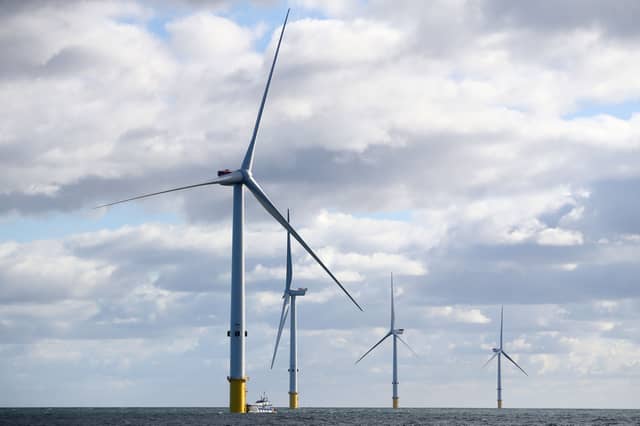

The industry body has warned the regime is “seriously affecting the commercial competitiveness of Scottish offshore wind projects”.
Scotland’s clean power projects are poised to be hit with a £1 billion bill to use the UK’s electricity network while projects south of the border will be paid to connect, new figures have revealed.
The industry body representing Scotland’s renewable energy sector has branded the UK’s transmission charging scheme as “not fit for purpose” amid a warning the set up “offers poor value to billpayers and undermines the competitiveness of Scottish projects”.
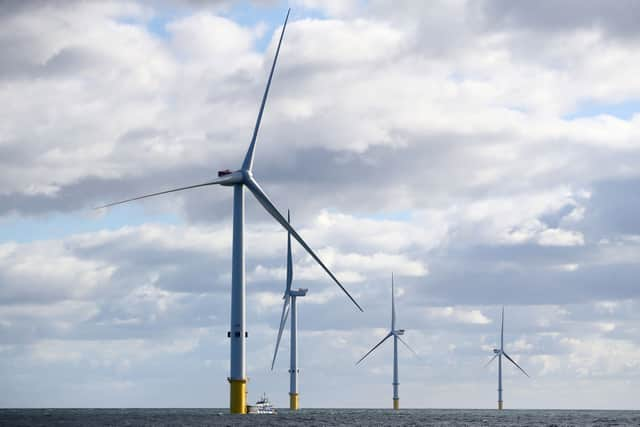
Data obtained from the National Energy System Operator (Neso) under Freedom of Information, shows that in 2030/31 forecast generation charges for projects in the north of Scotland will hit £669 million while developments in central and southern Scotland will face a bill of £291m.
Meanwhile, projects in England and Wales are forecast to receive a net payment of £436m in the same year.
The UK’s network charging regime was designed to favour projects closer to the major demand centres, such as large cities in the south of England, while projects in northern Scotland face the highest charges.
READ MORE: Shell hands back ScotWind lease risking £3bn of Scottish investment amid 'fierce headwinds'
But fears have emerged that the set-up, developed for a previous generation of the UK’s electricity system dominated by large fossil fuel and nuclear power stations, is now misaligned.
Transmission Network Use of System (TNUoS) charges allow transmission owners, Scottish Power Transmission, Scottish Hydro Electric Transmission and National Grid Electricity Transmission, to recover their costs of building, operation and maintenance of the national electricity transmission system.
Although the transmission charges do not directly impact energy bills, as well as the impact on potential investment for Scottish offshore energy projects, there could be a potential knock-on consequence for consumers.
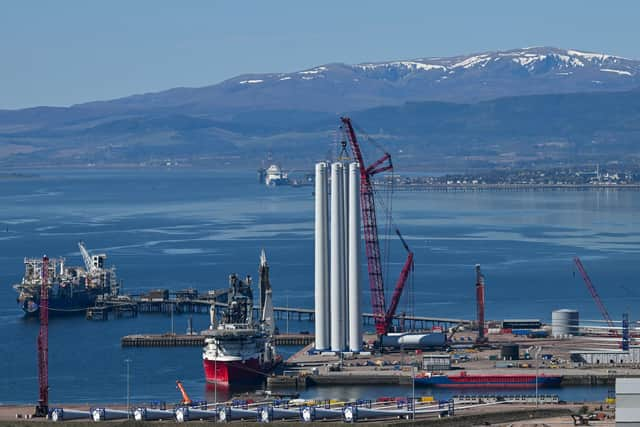
Renewable projects bid into so-called Contracts for Difference (CfD) auction rounds on the basis of expected costs and risk, with fears over Scottish projects facing higher and more volatile transmission charges, which must be reflected in their bids - increasing the likelihood of higher strike price and, ultimately, higher costs being passed onto bill payers.
With the next CfD auction round due to open in July, the offshore wind sector is warning that the current regime is not fair and is actively discouraging investment in Scottish projects, potentially threatening the offshore wind pipeline the UK and Scottish governments are prioritising in the shift to clean power.
Earlier this year, directors of the fully consented West of Orkney Windfarm, a 2GW project, said it would not proceed unless the system was reformed. But the UK government has suggested any overhaul may not happen until at least 2029.
Crown Estate Scotland has argued that the Scottish government’s flagship ScotWind and INTOG leasing rounds together could unlock more than £96bn of investment over the next 10 to 15 years, but the sector says the transmission charges are now putting that potential prize at risk.
Claire Mack, chief executive of Scottish Renewables, said the new figures demonstrate “how the UK’s current transmission charging regime is not fit for purpose”, adding that the arrangement is “seriously affecting the commercial competitiveness of Scottish offshore wind projects”.
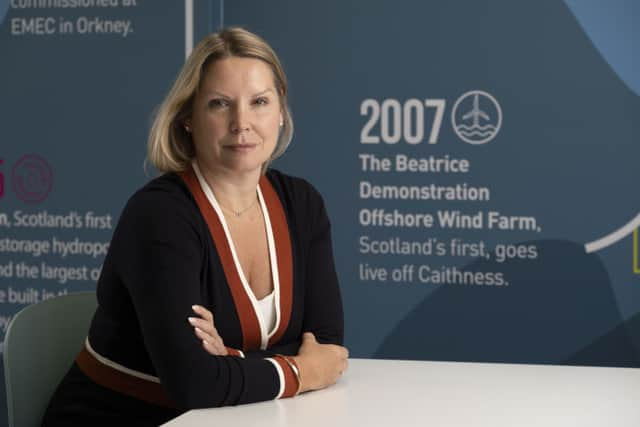
She said: “Scotland is expected to play a major role in delivering the clean power the UK needs, yet projects here are facing the highest network charges while projects elsewhere are receiving net payments under the same system.
“In effect, northern generators are helping fund payments in England and Wales rather than all generators contributing fairly to the growing cost of the network.
“This offers poor value to billpayers and undermines the competitiveness of Scottish projects.”
Ms Mack warned the transmission charging regime is “a direct barrier to new investment”.
She added: “It makes projects harder to finance, reduces the value that can be recycled into the next generation of developments and risks slowing the build-out of offshore wind at exactly the wrong moment.
“We are already seeing the impact network charging is having on the sector, with some projects, despite having secured planning consent, unable to move forward.
“With vital CfD allocation rounds on the horizon this year and next, UK ministers and regulators need to move with real urgency to fix the current network charging regime so that Scotland can get on with delivering the clean and secure energy system our future generations will need.”
A report commissioned by Scottish Renewables earlier this year found that expected lifetime transmission charges for Scotland’s existing generation fleet have soared by around £2.9bn compared with what developers could reasonably have expected at the point of investment or against 2015 levels.
Based on the published data, a 1GW wind farm in northern Scotland could see annual charges rise from £16m per year in 2016/17 to £72m per year by 2031/32.
Aberdeen and Grampian Chamber of Commerce CEO, Russell Borthwick, said: “If Scotland is being loaded with the biggest grid charges while projects elsewhere are paid, that is unfair and it sends a deeply damaging signal to investors.
“That risks real consequences for the North-east - not just for developers, but for the engineering firms, ports, contractors and workers who should be at the centre of the move from oil and gas into the next generation of energy projects.”
SNP Energy Minister, Stephen Gethins, said: “The current system of transmission charges is completely unfit for purpose, and unfairly penalises Scottish renewable energy generators, putting them at a commercial disadvantage.

“The UK government has failed to set out a solution to this issue, alongside measures to address the impact of unfair transmission charges on Scottish generators because Scotland is an afterthought to them.
“Scotland is an energy superpower, and yet we find ourselves held back by UK government control of our energy. “
A NESO spokesperson said: “Transmission Network Use of System charges allow transmission owners to recover their costs of constructing, operating and maintaining the transmission system both onshore and offshore in Great Britain.
“NESO has an administrative role in forecasting and collecting these charges in line with existing regulations.”
A UK government spokesperson said: “We are reversing decades of underinvestment and delivering the biggest upgrade to the grid, as we work to halve the time it takes to build new transmission infrastructure by reforming the planning system.
"NESO has made clear that driving for clean energy saves money by fundamentally reducing our exposure to fossil fuel markets - its report shows we could save £36 billion annually if we hit our 2050 goals compared with a scenario in which we slow down.
“We are looking at transmission charges as part of our reformed national pricing review, and will update in due course.”
Comments
Want to join the conversation? Please or to comment on this article.