
SNP public service reform chief vow to cut the number of quangos and civil service size

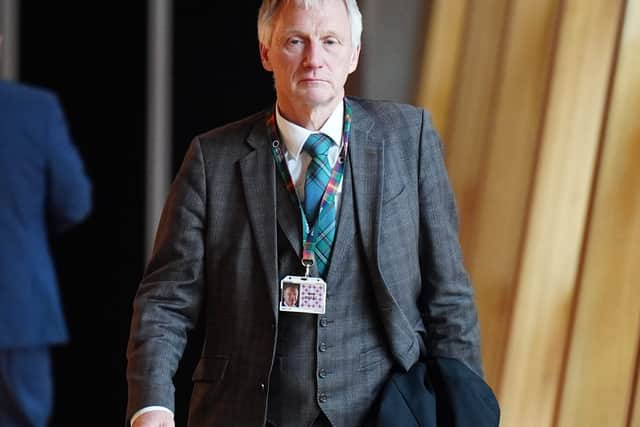
Ivan McKee is hoping that cutting back office staff and merging departments will help the government make some much-needed savings.
The man in charge of overhauling the public sector in Scotland says the number of quangos will need to shrink to make savings.
Public Service Reform Secretary Ivan McKee says modernising these departments and reducing duplications in the system, particularly in back office roles, will help to bring around substantial savings.
There are around 130 public bodies in Scotland right now, however the Scottish Government is not able to introduce compulsory redundancies.

As of last year, there were 551,500 people employed in the devolved civil service. Before the election the government said it would cut 11,000 public sector jobs.
There is an annual staff turnover of around 6.5 per cent. Mr McKee says there are opportunities to fill some of these positions with technology automation.
Mr McKee has told The Sunday Times that reducing the bloated civil service would be the “defining task” for this government.
He said: “There are some which have already merged and others where we think there is scope to do things.
“We are absolutely looking to see where the opportunities are there.
“We will bring forward specific proposals on that as we go. Everything is up to be looked at to get the right system.”
He said the merging of NHS Education for Scotland and NHS National Services Scotland to create Public Services Delivery Scotland is a good example of what the government hopes to achieve moving forward.
Mr McKee said: “It’s already doing a lot of that stuff in health and its remit is explicitly to do that across the wider public sector as well. So it will be one of the vehicles for allowing us to be able to share services and they’ll provide services for a lot of public bodies.
“They don’t need to duplicate stuff, particularly if you’re a small public body. I mean having your own IT department and your own payroll system and your own HR system and all of that kind of stuff.
“A lot of that can get pulled together and frankly that allows more resources to be taken to service delivery.”
In his interview, Mr McKee also stressed that there is no room for error, as there is projected to be a £5 billion black hole in the public finances by the end of the decade.
He said: “We’re rewiring the plane while it’s in flight. We’re trying not to crash it and trying not to run out of fuel, but it’s essential.
“It needs to be done. This isn’t something we’re just about to launch, this is stuff that’s been going on for a wee while in various guises, but we’re scaling up and accelerating it.”
He said the priority is maintaining and improving frontline services like the NHS, but back office staff and middle managers are now facing an uncertain future.
Mr McKee also said that pay negotiations with trade unions will be done on a case-by-case basis, and warned he would not be able to please everyone.
He said: “The conversation with trade unions is important. We’re not going to deliver this without them and their members being part of it.
“We won’t agree on everything. They know that. We know that. But we’ll work our way through it. We need to get to a place where we’re delivering much better customer service.
“The citizen has experienced a service, they should be delighted, surprised, pleased with the service level they get. That’s the place we need to get to and I recognise that’s far from the case in a lot of places. In some places it is.
“There’ll be some things here the services are already very good and we should be using those as examples to say this is what it can be like and other bits of the public sector learning from each other.
“Like any transformation, a lot of things need to change, but we think there’s buy in for that.”
Mr McKee also said preventative measures could help alleviate pressures on the economy. The Scottish Government’s own estimates suggest that reducing poverty by 25 percent by 2030 would save £2.9bn on public services.
He adds there have been £300m of savings in the past two years due to better procurement processes, and after 40 processes in the public sector were already automated.
Comments
Want to join the conversation? Please or to comment on this article.