
Exclusive:Scottish Government officials accused of censoring experts who warned Gaelic will die out
A row has broken out over legislation aimed at boosting the language

Officials have been accused of colluding against and "censoring" experts who warned Gaelic-speaking communities will die out within a decade unless radical action is taken.
Professor Conchúr Ó Giollagáin, who co-authored a landmark 2020 study into the crisis facing the language, published as The Gaelic Crisis in the Vernacular Community, said officials and academics had failed to properly engage with its findings.
He said the recently passed Scottish Languages Bill, which aims to support Gaelic in Scotland, was “largely pointless” and weaker than what was originally proposed.
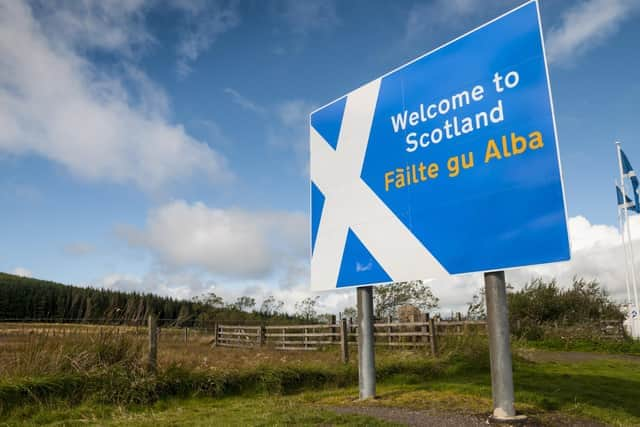
But Deputy First Minister Kate Forbes, who has responsibility for the language in the Scottish Government, insisted there had been “an encouraging increase” in Gaelic speakers.
Writing for The Scotsman, Prof Ó Giollagáin, of the University of the Highlands and Islands, said the Scottish Languages Bill failed to respond “coherently and credibly to the documented reality of Gaelic community demise”.
He said: “The official and academic failure to engage sincerely with the reality check which the Gaelic crisis evidence engendered is also implicated in this misguided legislation.
“The book’s evidence was subjected to an irrational academic and official antagonism in which custodians of existing Gaelic promotion colluded to ensure that the Gaelic crisis perspective would be denied a fair hearing.
“In censoring the Gaelic crisis, these custodians have merely reasserted a version of what constitutes Gaelic promotion while at the same time refusing to accept any responsibility for its societal failings. They have washed their hands of any linkage between their institutional power and the consequences of official inertia.”
He added: “The reality is that the Gaelic crisis evidence has never been properly considered or debated in Scottish academia, in official language bodies or in governmental circles. Five years on, nobody in these key sectors for Gaelic affairs has sat down with the authors for an in-depth discussion on the implications of their research for the sustainability of Gaelic in Scotland.”
Prof Ó Giollagáin said the Scottish Languages Bill “is more likely to generate a cottage industry of navel-gazing language politics, rather than offering practical help to a language community in existential crisis”.
He continued: “Given the irrelevance of this Bill to the social circumstances of the Gaels, it is likely that this legislation will become the sociolinguistic equivalent of a religious liturgy for a non-existent congregation.”
The expert called for a “Gaelic community summit” to identify sources of support outwith the political sphere, adding: “Besides availing of the limited opportunities from the Bill, it is clear that the Gaels are going to require a bespoke fund to support their collective efforts to reverse the current trajectory towards social erasure.”
Ms Forbes said: “It is inaccurate to claim that the Scottish Languages Bill was weakened during its progression through Parliament. It was strengthened to make it easier to establish Gaelic schools and introduce targets on Gaelic speaker numbers.
“There has been an encouraging increase in Gaelic speakers and we are taking action to drive growth in Gaelic communities, so that more people who speak Gaelic continue to live in those areas.”
Bòrd na Gàidhlig, the public body with responsibility for Gaelic, was approached for comment.
Comments
Want to join the conversation? Please or to comment on this article.