
Scotland facing population decline amid stalling migration fuelling social care 'critical staff shortage'
As numbers of people coming to Scotland come to a standstill, critical concerns arise for the future of the workforce
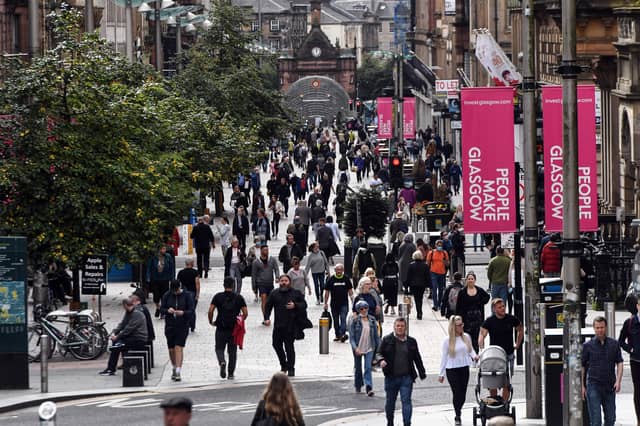


Scotland is poised for a declining population unless migration increases in the coming years - amid warnings over a “critical staff shortage” in social care.
Latest population statistics published by the National Records of Scotland (NRS) show that in the year to mid-2025, Scotland’s population grew by just 0.5 per cent in the space of 12 months, while net migration was lower than the average calculated over the last 24 years.
In the face of Scotland’s ageing and potential declining population, a SNP minister has told Scotland on Sunday that the landscape means it is “ever-more critical in ensuring we have working-age people to fill skills gaps, sustain public services like our NHS, support communities and grow the economy”.
The new statistics show that Scotland’s population has increased by just 2,200 in the last year - a smaller increase than those seen in most recent years. In the two decades until mid-2024, the average annual population change was around an increase of 23,000.
Net international migration increased by 9,300 in the last year while the net migration between other parts of the UK and Scotland increased by 8,600 - totalling a total net migration of 17,900. This is a much lower increase than the recent peak of 83,300 in 2022-2023 and the boost of 47,000 in 2023-2024.
The migration peak and subsequent dramatic fall that was experienced in Scotland from 2022 to 2024 appears to correlate with figures from the Higher Education Statistics Authority (Hesa) showing a drop by almost 10,000 in the space of a year.
READ MORE: Scotland’s social care system has reached 'breaking point' and is 'piling pressure' on NHS
Changes to UK migration policy are also thought to be having an impact ,while the Labour government’s decision to end the health and care visa route for new international applications last year is also expected to exacerbate the situation.
National Records of Scotland’s head of demographic statistics, Esther Roughsedge, told Scotland on Sunday that “migration has slowed” in Scotland.
She said: “The figures show that Scotland’s population had grown, but only by a very small amount - it was about 2,000 people overall which is less than the growth that we’ve seen in recent years.
“We saw this really big increase in international migration from 2022 to 2024 and that’s fallen back down. International migration is roughly where it was before then. It looks like a really steep fall, but really it was a big increase and a big fall and now we’re back to where we were.”
Ms Roughsedge added: “What’s changed over that time is the gap between births and deaths has got wider each year.
“It’s not that we’re dying at a faster rate. It’s that we’ve got an older population, so that ultimately leads to more people dying. Also, our birth rates are falling and they’re quite low level.
READ MORE: How anti-immigration politics poses risk to £42 billion a year brought to UK by overseas students
“Over time, as that gap gets wider, the population would be falling if it wasn’t for migration. Migration has been keeping our population growing. If you have the same level of migration, over time, that wouldn’t be enough to compensate for the widening gap between births and deaths.
“It’s interesting that the population still grew, but only just. It’s at the boundary where quite a small shift in the figures could make a difference between the population growing or not.”
The statistician said that forecasts by NRS indicate that Scotland’s population is poised to fall into decline in the next few years.
“We produce projections, which we published earlier this year”, she said.
“That assumes that past trends will continue. If they do continue, then Scotland’s population would continue growing at a very low level for a few years and then it would start to fall, because of this gap between births and deaths getting wider.”
She stressed that the decline in overseas students has “had quite a big impact” on Scotland’s overall population.

Ms Roughsedge added: “Their figures show, for Scotland, the same big increase and then fall in international students coming over for that period.
“It looks like a big proportion of that was due to international students increasing and then falling again.”
But she warned that “migration is difficult to predict”.
“It can fluctuate over time”, Ms Roughsedge added. “Policy changes can have a big impact. Things that nobody expected like the Ukraine War, can happen and have an impact.
“Births and deaths change in a much more steady way. We’ve seen falling birth rates for some time now. Birth rates in Scotland are lower than other parts of the UK and at the lower end of European countries, but not the lowest.”
Between 2010 and 2025, 23 out of Scotland’s 32 local authorities have seen population growth below the Scottish average of 5.4 per cent. Of those 23 council areas, 10 have seen their population decline over the last 15 years. Over the last 15 years, the only local authorities with a higher population growth than the Scotland average are Midlothian, East Lothian, Edinburgh, Glasgow, East Renfrewshire, Renfrewshire, West Lothian, South Lanarkshire and Perth and Kinross.

The council areas that have experienced a population decline since 2010 are the Western Isles, Dumfries and Galloway, Inverclyde, North Ayrshire, West Dunbartonshire, Shetland, Argyll and Bute, East Ayrshire, Angus and South Ayrshire.
Ms Roughsedge said that “you tend to see young adults move to cities for work and study”.
She added: “Some people go back home afterwards and some people stay. Other people move out to the surrounding councils like the Lothians and the greater Glasgow area.
“Parts of each country in the UK have increasing populations and decreasing populations, but there’s a lot more parts of Scotland with falling populations.
“For the rest of the UK, it’s just a few areas whereas here, it’s a reasonable proportion of councils in Scotland that are falling. Scotland has lower birth rates than any other part of the UK, we also have lower life expectancy than any other part of the UK.”
The statistician stressed that “migration, in recent years, has been much more comparable to other parts of the UK” for Scotland.
She added: “We’ve seen some quite similar patterns in terms of migration.
“We also get more people moving to Scotland from other parts of the UK than the other way around. That’s been quite consistent for the 21st century - for each year it’s about 9,000 or 10,000 people on average difference more move to Scotland than leave.”
But huge concerns have been raised over the impact of Scotland’s ageing and potentially declining population on key workers, particularly in the social care sector.
Unison Scotland social care lead, Jennifer McCarey, warned that “social care is dependent on migrant workers”.
She added: “Those who came to Scotland on UK certificate of sponsorships from 2022 onwards saved our care system from collapse, particularly in private care homes.
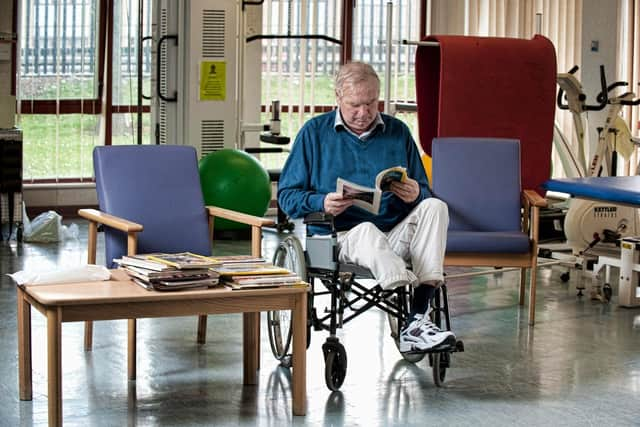
“The care sector in Scotland has a critical staff shortage. Brexit meant that many EU citizens who were working in care left, particularly in rural Scotland, and large numbers found better pay and careers elsewhere.
“The reduction in visas and the fact that workers are now barred from bringing their families has significantly reduced the pool of people who will come. Vital care services in Scotland are unsustainable without migrant workers and the UK government visa restrictions will just make this worse.”
A warning has also been issued over the ability to adequately and compassionately look after an ageing population in Scotland.
Adam Stachura, Age Scotland’s policy director, stressed that the figures and trends show “we need to do much more as a country to support our rapidly ageing society”.

He added: “Older people today face considerable challenges getting the health and social care they need, and as that population grows even more people in the future will struggle to access timely support unless governments have a concerted plan and take action.
“Older people make a huge contribution to our economy, communities and families, but too many feel overlooked and undervalued.”
Mr Stachura added: “We need a much more joined-up approach that recognises the realities of our population change. That means ensuring our health and social care services are properly resourced, increasing the availability of affordable and accessible housing, better supporting unpaid carers, tackling loneliness and isolation, and creating communities where people can remain independent for as long as possible.
“It also means our workplaces need to become much more age inclusive as greater numbers of people will be working longer but the ageism they face holds them and the national economy back.”
SNP minister for fair work, Tom Arthur, said: “Scotland continues to be a country in which people want to work, live and study. However we must recognise that - mirroring a trend in many countries throughout the world – Scotland has an ageing population and areas where the population is falling.
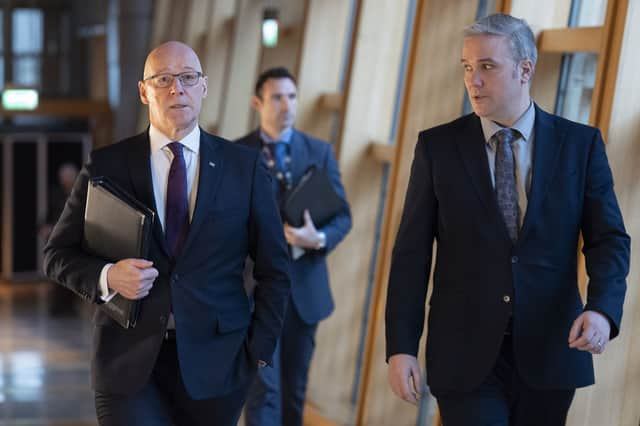
“This makes immigration ever-more critical in ensuring we have working-age people to fill skills gaps, sustain public services like our NHS, support communities and grow the economy.
“The Scottish government is taking action to address these challenges – from Scotland’s migration service to our addressing depopulation action plan. We have increased funding by nearly 50 per cent to the action plan this year, providing targeted support for projects within 10 local authority areas.”
He added: “In line with our 100 day commitment, I will soon submit Scottish visa proposals to the UK government. While immigration policy is reserved, the Scottish government has consistently engaged the UK government on the importance of ensuring that the UK's immigration system meets the distinct needs of Scotland's economy and communities.
“The UK government decision to close the health and care visa for new international applications last year continues to pose serious risks to the sustainability of Scotland’s care sector. It is a further 100 day commitment of this government to mitigate this decision by expanding the displaced workers scheme, with an aim to deliver a total of 45,000 extra hours of care a month”.
Comments
Want to join the conversation? Please or to comment on this article.