
Rachel Reeves 'to scrap plans' to raise income tax as SNP accuse Labour government of 'chaos'

The SNP have criticised the latest development as ‘chaos’
Rachel Reeves has abandoned plans to hike income tax at the Budget because of improved economic forecasting, as she was accused of allowing the process to descend “into complete chaos”.
The Chancellor had been expected to hike income tax in the face of a yawning gap in her spending plans, hinting as recently as Monday the alternative would be “deep cuts” to public investment.
But Ms Reeves has now performed a U-turn on introducing an income tax rise at the November 26 Budget, over fears it could anger both voters and backbench Labour MPs.
The markets reacted sharply, with stocks falling and bond yields spiking in volatile trading on Friday amid renewed uncertainty over the UK Budget.
The FTSE 100 Index closed down 109.31 points [1.1 per cent] at 9,698.37. It had earlier traded as low as 9,610.45.
Speculation about the change in direction sparked a sell-off in UK government bonds, also known as gilts - the means by which the Government borrows money from private investors.
The decision on income tax, first reported by The Financial Times (FT), comes after Scottish Finance Secretary Shona Robison warned any UK tax changes could have a “massive impact” on Scotland’s public services.
Ms Robison has again pushed for a meeting with the Chancellor on the back of the U-turn.
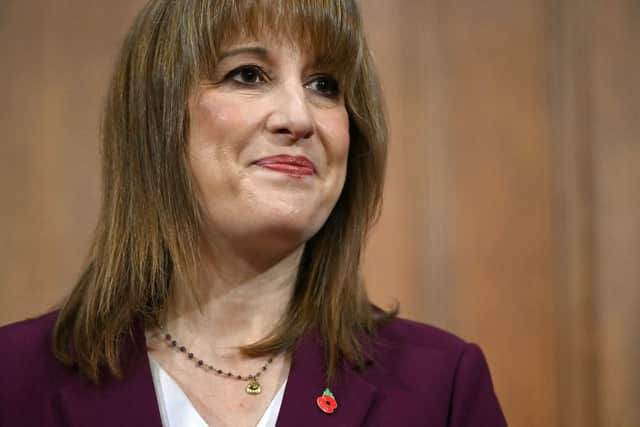

In a statement on Friday, Ms Robison said: “The UK Budget process has descended into complete chaos. This has created a huge level of deeply damaging uncertainty and is exactly why we need urgent engagement with the Chancellor.
“I would reiterate my calls for her to meet me as soon as possible to provide some clarity and allow us to carry out the necessary preparations for our own Budget in just over six weeks’ time.
“The UK government needs to ensure that Scotland isn’t left yet again as an afterthought in its plans.”
It is understood the Office for Budget Responsibility, the independent body which analyses public finances, was told of the decision by Ms Reeves on Wednesday.
The Chancellor will instead reportedly look at thresholds at which people pay tax instead in a bid to fill a £30 billion budget black hole.
The leader of Scottish Labour has separately urged Ms Reeves to scrap the two-child benefit cap when she announces her Budget.
Anas Sarwar said on Friday he wanted to ensure the Budget would not see a “return to austerity”, reduced energy bills and tackled child poverty, which he said could be done by ending the cap.
The controversial provision has stopped parents being able to claim certain benefits for more than two children.
Opposition politicians, including the SNP-run Scottish Government, have long derided the cap, with mitigation measures set to come into force north of the Border early next year.
Speaking during a visit in Glasgow, the Scottish Labour leader said: “I think three things have to come from that Budget. It has to be a budget that confronts child poverty, and that’s why I want to see the end of the two-child benefit cap.
“It has to improve living standards. That’s why we’ve got to have a package to lower energy bills. And third, we can’t return to austerity like we had under the Conservatives.
“That has to be the fundamentally different approach this Labour government takes.”
The climbdown from the Chancellor and Prime Minister Sir Keir Starmer on income tax comes after backlash from both their own MPs and voters.
Income tax is mostly devolved in Scotland, although the personal allowance is decided by the UK government. However, any decisions on tax rates at Westminster could impact the block grant the Scottish Government receives.
Experts at the Fraser of Allander Institute said: “As we have pointed out before, the devolution of income tax makes decisions on budgets in Westminster and Holyrood more interlinked, not less, and that certainly will be true if the UK Government changes rates.”
The organisation added: “If UK income tax rates are raised, either the Scottish Government will have to spend less or Scottish taxpayers will also have to pay more tax - it’s just arithmetic.”
For the past few weeks both Ms Robison and First Minister John Swinney have refused to rule out increasing income tax rates themselves in Scotland to make up for any losses caused by income tax increases at Westminster.
Last week Ms Robison estimated that income tax increases south of the border could lead to a £1bn cut in Holyrood’s budget.
SNP Westminster leader Stephen Flynn said of the U-turn: “This isn’t government, this is chaos.

“Labour give the impression of a party that has completely lost control - playing a dangerous game with people’s finances so that their Prime Minister can try to cling to power. But everyone now knows the clock is ticking until he is dumped from Downing Street.”
The Chancellor will set out the UK Budget on November 26 and Ms Robison will set out the Scottish Budget on January 13.
Limits to salary sacrifice schemes, as well as new measures to tax electric vehicles, are still in the mix as the Treasury pursues a “smorgasbord” approach of raising a range of smaller taxes.
The Chancellor has not changed her approach, it is understood, and still intends to give herself larger fiscal headroom – the buffer against economic headwinds, which could impact her government’s spending plans.
The government remains in turmoil, with Health Secretary Wes Streeting on Friday saying he and Sir Keir were both “extremely frustrated” about the leadership row that has further destabilised the Prime Minister’s position.
Sir Keir has faced calls to sack his top adviser, Morgan McSweeney, over anonymous briefings claiming Mr Streeting was plotting a bid for the Labour leadership.
Mr Streeting insisted he had confidence in Mr McSweeney and they had “always got on”.
Comments
Want to join the conversation? Please or to comment on this article.