
Emergency medics 'crying out for help' as A&E waits hit worst level in 18 years
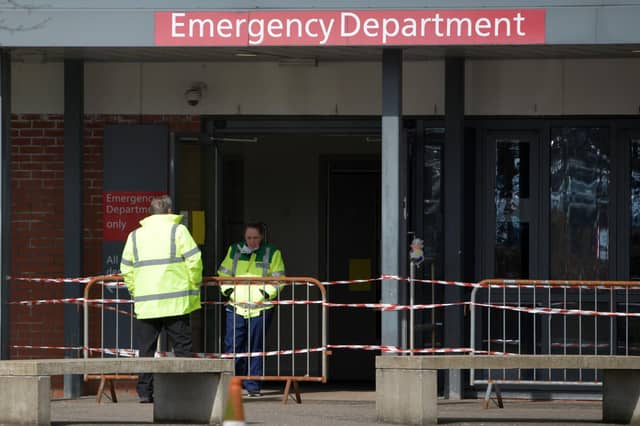

The Royal College of Emergency Medicine (RCEM) Scotland said delayed discharge was making A&E waits worse.
Scotland’s specialists in emergency medicine are “crying out for help” after figures showed the worst A&E waiting times for February on record.
Latest data from Public Health Scotland showed that two thirds (66.4 per cent) of patients in A&E were seen and then either admitted, transferred or discharged within the four-hour target time during the month.
This is the lowest level for February on record in data going back to 2008 - and well below the Scottish Government target of having 95 per cent of patients admitted, transferred or discharged within four hours.
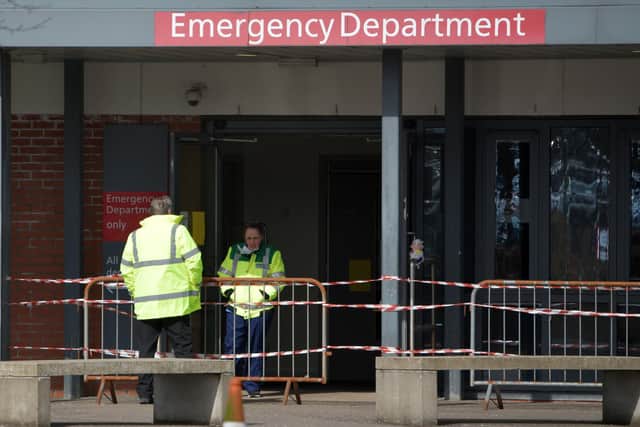
Public Health Scotland noted that compliance with this “has been below 80 per cent since summer 2021”.
The Royal College of Emergency Medicine (RCEM) Scotland said delayed discharge - caused by patients medically well enough to leave but who cannot be released from hospital until suitable care arrangements are in place - was impacting on A&E waits given the pressure the issue places on available bed spaces.
Separate figures, also released yesterday, showed that the number of days spent in hospital by patients medically well enough to be discharged increased to 55,547 in February – a rise of 2% on the same month last year.
Dr Fiona Hunter, RCEM Vice President for Scotland, said: “Long waits in Emergency Departments (EDs) are dangerous for patients and, for the sickest patients who require admission into a ward, are associated with increased risk of death.
“The state of our departments is utterly dire. This winter has left our members, and the departments they work in, on their knees. We are crying out for help.”
The RCEM said that driving this breakdown in patient flow was inefficiencies and blockages throughout the system, with delayed discharges one of the greatest drivers.
A total of 41,252 patients spent more than four hours in A&E in February. This included 16,592 who were there for eight hours or more, and 8,204 who waited at least 12 hours.
The figures were published as separate, weekly, waiting times statistics for Scotland’s A&E departments showed, in the last week of March, 63.5 per cent of patients in A&E were admitted, transferred or discharged within the target time.
The figures, for the week ending March 29, marked an improvement from the previous week’s total of 60.9% but were below the average weekly performance figure of 64.9% recorded in 2025.
In the final full week of March, 10,307 people spent more than four hours in A&E, with 4,051 – 14.3% of patients that week – there for a minimum of eight hours.
Meanwhile, 1,824 patients – 6.5 per cent of A&E cases for the week – were in A&E for 12 hours or more.
The number of patients having these longer waits was up from the previous week, and also higher than the 2025 weekly average.
PHS’s new data showed that in February, a daily average of 1,984 patients were occupying hospital beds despite being medically fit to leave.
Dr Hunter continued: “If the ‘back door’ blockages in our hospital, causing patients to be stuck in beds they do not need, it would ease pressure across the system – particularly in ED.
“Addressing the elephant in the room, next month’s elections: we call on all political parties to bring patient flow to the top of the agenda.
“We need whoever forms the next Scottish Government to tackle delayed discharge, end ED overcrowding and help us make the abhorrent practice of corridor care a thing of the past.”
Health Secretary Neil Gray said that “only the SNP can be trusted with Scotland’s NHS” with the party the only one with a “credible plan” for the health service.
Meanwhile, Scottish Labour Deputy Leader Jackie Baillie said the SNP’s “litany of broken promises” were causing “misery and chaos” for patients and staff.
She added: More than a decade ago the SNP promised to eradicate delayed discharge, but the issue is still piling pressure on hospitals and harming patients.
“Five years ago Scotland was promised an NHS recovery, but the number of operations taking place still hasn’t recovered and A&E is still in chaos.
“Incompetence has consequences and the SNP’s catalogue of NHS failures is costing lives.
“These shameful figures show John Swinney and the SNP do not have the answers to this crisis – we need a change in government to save our NHS.
“The only party that can get rid of this failing SNP government and fix the mess they have made of our NHS is Scottish Labour.”
Scottish Conservative health spokesperson, Dr Sandesh Gulhane, described the statistics as “appalling and worsening” which were a result of the SNP’s “chronic mismanagement” of the health service.
He added: “Our A&E departments are in a state of permanent crisis, with thousands of patients enduring dangerous delays on the nationalists’ watch. We know this costs lives.
“Frontline staff are working flat out but SNP incompetence means they simply don’t have the resources to get through the A&E backlog.”
The Tory went on to warn that if the SNP was to win a majority in next month’s Holyrood election, the “top priority” for John Swinney and his party “will be independence, not fixing our health service”.
As a result, he urged voters to back the Conservatives to “stop an SNP majority and ensure the focus is on real issues like our NHS”.
Scottish Liberal Democrat leader Alex Cole-Hamilton said: “We are disturbingly used to huge waits at A&E, which shows just how commonplace the SNP’s failures have become.
“The only way to bring down waits is to fix the broken care system- that is what Scottish Liberal Democrats have been saying from the very start.
“There are not enough beds in A&E because there are no longer the beds in longer-term wards to move patients to.
“Too many beds in longer-term wards are occupied by people who are medically ready to leave but can’t because the shortages of care workers and care packages won’t let them.”
Health Secretary Neil Gray said that while there “are challenges” in the NHS, Scotland’s A&E departments “are outperforming the rest of the UK”.
He stated: “John Swinney is driving improvements in our health service – we are the only party with a credible plan for our NHS and we are determined to see it through.
“Operations are up, waiting lists continue to fall, we have more GPs per head than England and our GP walk-in centres are springing up across the country – that’s what you get with an SNP government on the side of our NHS.
“As England braces itself for yet another NHS strike under Labour, not a single day has been lost to strikes in Scotland’s NHS thanks to the SNP in government.
“Only the SNP can be trusted with Scotland’s NHS – that’s exactly what you get from John Swinney’s strong leadership and that’s what’s on the ballot on May 7.”
Comments
Want to join the conversation? Please or to comment on this article.