
Labour should back Jackdaw gas and Rosebank oil field, says Blair think tank

It says the Middle East crisis has highlighted the UK’s vulnerability to shocks
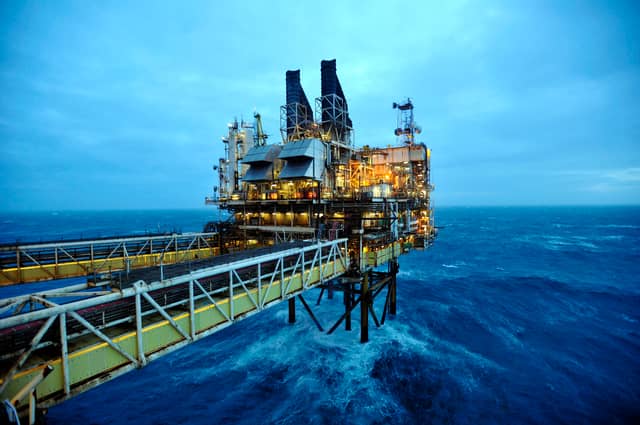
The Government should already be backing new licences for drilling the Jackdaw gas field and the Rosebank oil field in the North Sea, Sir Tony Blair’s think tank has said.
In a new report, the organisation says the Middle East crisis has highlighted the UK’s vulnerability to shocks in the global fossil fuel market and that ministers should accelerate domestic oil and gas production to help reduce exposure.
Tone Langengen, a policy adviser at the Tony Blair Institute (TBI) and author of the paper, also said the UK risks falling behind global competitors by solely focusing on delivering clean power.
“If the Government doubles down on the wrong parts of the system, the UK will remain exposed to the same vulnerabilities,” he said.
“But this is also an opportunity to reset – including by accelerating domestic supply to reduce reliance on volatile imports and support UK jobs and tax revenues.”
Labour came into government promising to remove almost all fossil fuels from the UK’s electricity generation by 2030. It also banned new North Sea oil and gas licences, although ministers have said oil and gas will remain part of the energy mix for years to come and extraction near existing fields will still be allowed. Widespread political and environmental opposition remains to new drilling at the Rosebank oil field north west of Shetland and the Jackdaw gas field off Aberdeen.
But industry leaders and energy experts have recently stepped up calls for the Government to back the two projects amid spiking fossil fuel prices driven by Iran’s blocking of the key Strait of Hormuz shipping route as conflict with the US continues.
In its report, the TBI said: “The war in Iran has focused the nation’s attention on energy supply and prices, but the UK is not facing a temporary energy shock.
“It is operating in a world where volatility is structural and where energy security can no longer be treated as a narrow question of supply.
“The response cannot be limited to accelerating clean power alone, nor to expanding fossil-fuel production in isolation. Both approaches fail to address the underlying vulnerability.”
The organisation said the “organising logic” of energy policy in China, the US and India is not decarbonisation but building electricity systems that are abundant, secure and cheap.
“Clean energy plays a central role, but it is being deployed as part of a broader strategy of system expansion and national resilience – not pursued as an end in itself,” it read.
The former Labour prime minister’s think tank criticised the Clean Power 2030 plan earlier this year for neglecting affordability and “political durability”. It also called on Sir Keir Starmer’s Government to axe the windfall tax on oil and gas firms and to reverse its ban on new North Sea licences.
But green groups, scientists and energy experts challenged the argument that new North Sea drilling would improve energy security and cut bills because extracted fuels are still sold at international market prices.
Recent reports suggested that Energy Secretary Ed Miliband could approve the Jackdaw project, but the Government says speculation is “incorrect”. A Scottish court last year upheld a legal challenge brought by environmental campaigners over the approval of the two projects.
Projects were able to reapply for consent after the Government published new environmental guidance last summer, and Jackdaw is being assessed by the Offshore Petroleum Regulator for Environment and Decommissioning after further information was submitted.
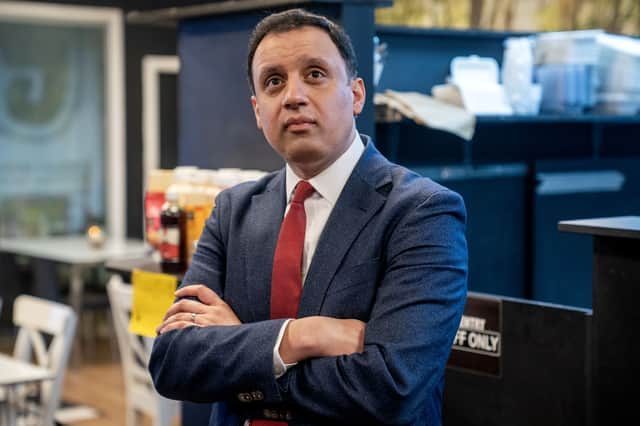
The intervention came as Anas Sarwar pledged to deliver a £100 million emergency energy support package within the first 100 days of a Scottish Labour government. The party leader said he would not “sit back and let Scottish households and businesses pay the price” for the instability caused by the war in Iran.
First Minister John Swinney has urged Downing Street to step in and alleviate the cost increases hitting consumers on energy bills and at petrol stations.
Mr Sarwar said his emergency package would be triggered if volatility continues after the election. It would focus on practical emergency help, such as crisis loans for energy-intensive businesses to protect jobs, bulk buying fuel to help drive down prices at the pumps, and emergency grants or interest-free loans for households which are struggling.
Mr Sarwar said a Scottish Labour government would also convene a summit with supermarkets and other partners to drive down the cost of staple items and help protect family budgets in the face of continued instability.
Meanwhile, a “national income maximisation drive” would see civil servants redeployed to make sure people get the support they are entitled to but are currently missing out on, such as help with childcare costs, pension credit and other financial support.
The Scottish Labour leader said: “Everybody wants this war to end, but if the instability continues, we are not going to sit back and let Scottish households and businesses pay the price.
“Leadership is about finding solutions to problems. All John Swinney has done in the face of this crisis is point the finger somewhere else instead of coming up with a plan to help Scots struggling right now.”
Mr Swinney said yesterday that a re-elected SNP government at Holyrood would give eligible islanders £300 towards their energy bills this winter. The First Minister announced the £16 million proposal while visiting the Western Isles on Thursday.
The pledge, he said, is “part of recognising the steps that have got to be taken to protect householders from the cost of energy”.
Scotland’s islanders generally suffer from greater fuel poverty than their mainland counterparts, and asked what he would say to someone who feels islanders are getting special treatment, Mr Swinney said: “What we’ve got to address is the acute challenges in the islands that exist compared to mainland Scotland and the overwhelming responsibility here is the responsibility of the UK Government.
“We have a situation in Scotland where we’re living in an energy rich country, but the benefits are not being felt by the people of this country because of decisions taken in Westminster.
“That can be sorted out for everybody in Scotland – whether they live on an island or the mainland – by the UK Government acting to make sure that energy costs are lower.
“If the UK Government won’t take the dramatic action that’s required now, they should get out of the way and allow an SNP Scottish government to take the action.”
Comments
Want to join the conversation? Please or to comment on this article.