
Exclusive:Labour and SNP should work together on £20m defence skills boost, says Michael Marra
Michael Marra urged the Scottish Government to match the £10m offered by the UK Government for defence technical excellence colleges.


Labour and the SNP should work together to deliver £20 million defence skills boost, a Scottish Labour leadership candidate has said.
Michael Marra urged the Scottish Government to match the £10m offered by the UK Government for defence technical excellence colleges.
In March the UK Government committed the money for two colleges - one in the west and one in the east of Scotland - if the Scottish Government contributes half.
North East MSP Mr Marra said: “In an increasingly uncertain world we need to build more here and ensure we keep the country safe.
“Defence investment will be one of the engines that drives economic growth in the coming years,and we need to ensure young Scots have the skills tomorrow find work in that reality.
“It’s a staggering fact that on Scottish shipyards right now warships are being built with welders from South Africa and the Philippines because we have a skills shortage in Scotland.
“As Scottish Labour leader I will put education and opportunities for young people back at the heart of Scottish politics.
“If the SNP match the UK Labour government’s defence skills commitment that would be an additional £20m of investment in training our young people for jobs in these industries.
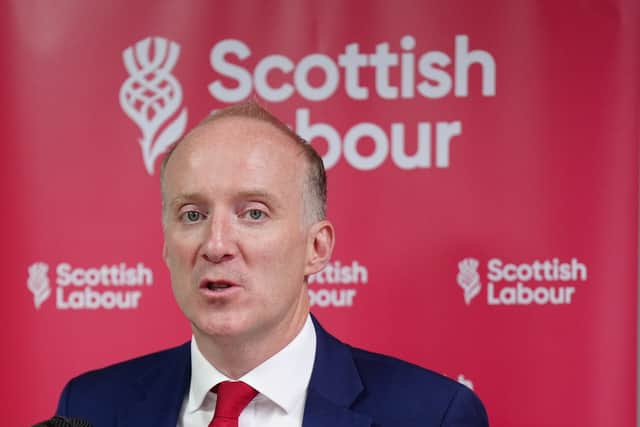
“It’d also be a sign of two governments working together for the greater good - keeping the country safe and providing opportunities for young people. That’s what people want to see.”
The UK Government has said that the colleges would “develop new specialist pathways into high-skilled, well-paid careers in defence engineering, advanced manufacturing and maritime technology.”
They “will be located to support Scotland’s defence clusters in the East and West of the country.”
The UK Government has said it would work with Colleges Scotland to determine which colleges could achieve defence technical excellence college status.
It said that the colleges should provide a direct route into the workforce. Industry analysis has suggested there could be demand for up to 50,000 additional defence jobs across the UK by 2034/35.
The Ministry of Defence spent more than £2 billion in Scotland in 2024/25, directly supporting 11,800 industry jobs and placing 254 contracts with Scottish businesses.
Mr Marra is running against South Scotland MSP Joe Fagan for the Scottish Labour leadership.
The ballot opened on August 28, and closes on September 17. The winner is announced two days later.
A Scottish Government spokesperson said: “Scotland is well placed to seize the opportunity of increased UK defence spending with a highly skilled workforce, world-class universities and internationally recognised manufacturing. The conflict in Ukraine is a reminder of the increasingly complex and immediate threats we face, underlining the importance of maintaining a strong and resilient defence capability.
“Our aerospace, defence, security and space sectors contribute around £3.7 billion to the economy and support approximately 37,000 jobs. We can maximise the economic benefits of these sectors through a responsible approach while supporting innovation, skills development and building long-term economic resilience.
“The Cabinet Secretary for Economy will meet with representatives from across the sector to discuss how the Defence Industrial Growth Programme can maximise the economic benefits arising from increased UK and allied defence spending, supporting economic growth, high-value jobs and national resilience. Further details of the Programme will be announced in due course.”
It comes as the UK Government insisted it “has not moved away” from a key defence spending goal.
Business Secretary Jonathan Reynolds suggested ministers will hike defence spending to 3 per cent of national income by 2030, but said reaching 3.5 per cent by 2035 is the “principal target”.
It comes after reports that Chancellor John Healey could backslide on the earlier objective, despite saying it was vital to keep the country safe when he resigned as Sir Keir Starmer’s defence secretary.
Asked about the aim to hit 3 per cent of gross domestic product (GDP) by the end of the decade, Mr Reynolds told GB News that Prime Minister Andy Burnham “has not moved away from the target you said”.
“He said the fundamental target is the 2035 3.5 per cent of GDP on defence spending. That is our Nato commitment.
“The trajectory to that covers the 3 per cent, but that is the principal target.”
Mr Healey, when he quit as defence secretary over what he saw as inadequate funding for the Defence Investment Plan (Dip), said he was “certain that a headmark date for 3 per cent of GDP on defence in 2030 is what Britain must set” before reaching its Nato commitment of spending 3.5 per cent by 2035.
In an interview with the Financial Times over the weekend, the Chancellor said he will set out the timetable for spending 3.5 per cent of GDP on defence by 2035 at next year’s spending review.
Pressed on whether he accepted the Chancellor had moved the goalposts, Mr Reynolds said: “No, I do not.
“I know that John is deeply committed to defence spending, he is going to set out that target and pathway.
“And look, if he wasn’t going to do that, John would not be the Chancellor. The Prime Minister himself said in Parliament that is why John Healey is the Chancellor.”
The Treasury has consistently said the Government will set out plans for reaching the targets at the spending review, and Mr Reynolds stressed the sums of money involved amounted to “fundamental changes” that “cannot be moved around outside of” spending reviews and budgets.
The Chancellor is due to make a major speech on the economy on Monday.
It will “cover the aspirations he has for the British economy, that will therefore deliver the envelope he needs to do that level of defence spending,” Mr Reynolds said.
The Business Secretary also highlighted the Labour Government’s record of increased defence spending, which involved “difficult decisions” including last year’s cut to the international aid budget.
Comments
Want to join the conversation? Please or to comment on this article.