
John Swinney warned rapid expansion of GP walk-in clinics risks worsening health inequalities and NHS staffing

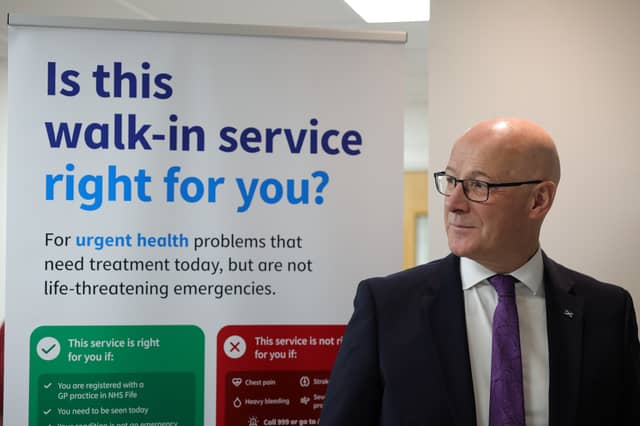

The Scottish government has announced 24 new walk-in centres, taking the total number of facilities to 40 - with a one-year pilot extended until 2029
John Swinney has been warned a rapid expansion of 24 new GP walk-in clinics risks "unintended consequences" - including worsening health inequalities and adding to NHS workforce pressures.
The First Minister pledged to open five new centres and announce 14 further locations within the first 100 days of forming his new government.
He said the fleet of facilities will give patients “greater choice and access to care closer to home”, adding that the strategy will help in “relieving pressure on hospitals and acute services”.
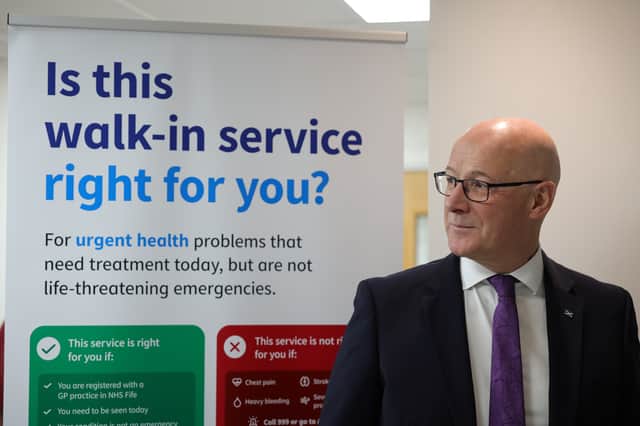
But clinicians have warned the walk-in clinics are a distraction and have called for the Scottish government’s one-year pilot to be ended and funding redirected to core GP services, with medics claiming there is“no justification” to expand the one-year pilot scheme.
Mr Swinney has officially opened the 11th walk-in centre, in Buckhaven in Fife, while the pilot scheme will be extended until April 2029 despite an initial evaluation yet to take place.
According to the government, the GP walk-in pilot is testing new ways of accessing same-day care from GPs, advanced nurse practitioners or other clinicians at a wider range of times.
New statistics published on Tuesday showed that in July, GP walk-in centres delivered an average of 120 appointments per day. By comparison, GP practices across Scotland provide around 136,000 patient contacts on a typical weekday, meaning the GP walk-in centres currently opened added approximately 0.09 per cent of additional capacity.
The SNP launched the walk-in strategy as the party and Scottish Labour vowed to end the so-called 8am rush for GP appointments ahead of May’s Holyrood election.
But Mr Swinney has been issued a stark warning that a further expansion of the facilities could add to workforce pressures across the NHS and potentially worsen health inequalities.
Dr Chris Provan, chair of the Royal College of General Practitioners(RCGP) in Scotland, said: "GP walk-in centres have already been extensively trialled in England and simply failed to deliver the results promised to patients who deserve high-quality care in their community. They did not reduce pressure on GP practices or A&E departments, and there is no reason to suggest the Scottish pilot will be any different.
.jpg?crop=3:2,smart&trim=&width=640&quality=65)
"What's particularly concerning is that the English experience also highlighted a range of unintended consequences. Walk-in centres were associated with worsening health inequalities, workforce pressures in existing services, and poor value for money. Ultimately, most have since been closed or absorbed into other urgent care services.”
Dr Provan warned it was “difficult to understand why the Scottish government is committing substantial sums of public money to duplicating services that already exist when there are more effective ways of improving patient access”.
He added: “The pilot was originally presented as a one-year pilot, yet it has now been extended until April 2029 without clear justification. The evaluation of the initial centres has not even started.”
Dr Provan argued that “it is disappointing that so much time,attention and funding continues to be devoted to GP walk-in centres rather than measures that would make a meaningful difference to patient access”.
He said: “Investment in modern IT and digital infrastructure, improved telephone and appointment booking systems, continuity of care, along-term workforce plan for general practice, and targeted support for patients in deprived communities would be more beneficial.
"The real challenge facing general practice is not a lack of walk-incentres. It is workforce shortages, rising demand and increasing complexity of care. Those are the issues that the Scottish government should be focused on addressing if they want to support patient care."
Dr Iain Morrison, chair of BMA Scottish GP committee, said: “We are dismayed by the push to set up more walk-in centres which the Scottish government seem determined to rapidly expand in the absence of any evidence of a positive impact in Scotland, or indeed the UK.
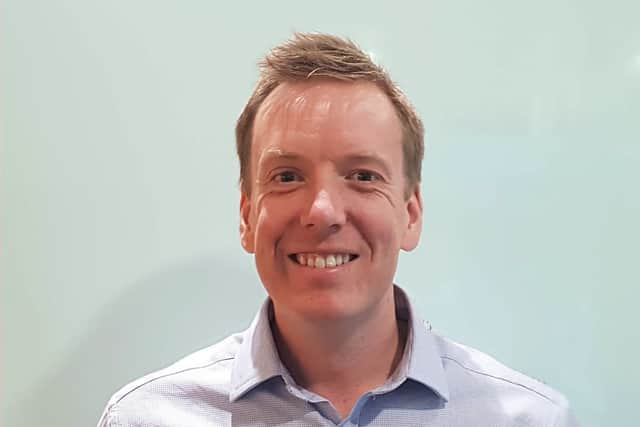
“We have consistently highlighted that from the experience of walk-in centres used elsewhere in the UK, there is no convincing evidence they reduce pressure on GP practices, out of hours services, or emergency departments and they offer only a fraction of the range of services available through a traditional GP practice, but at a much greater financial cost.”
He added: “In Scotland, the latest figures suggest low numbers of patients are using the walk-in centres which have been set up so far, with one reporting seeing just four cases a day in July.
“Instead of continuing to plough more resources into an unproven scheme, the roll-out of GP walk-in centres should be immediately paused so an unbiased assessment can take place.
“If as expected they are shown not to work, the funds should be redirected and invested in core GP services so that patients can have better access to their own GP.”

Scottish Liberal Democrat health spokesperson Adam Harley said: “Several GP walk-in centres are seeing as few as four patients a day. It’s a far cry from the one million additional appointments promised by John Swinney.
“The Royal College of General Practitioners describes this SNP scheme as poor value for money. They have also suggested it may increase the workload on GPs, making it even more difficult for patients to be seen.”
He added: “The Scottish government needs to urgently rethink this plan and start listening to the voices of nurses and doctors.
“The focus should be on easing the burden on GPs to free up their time and get everyone seen quicker. The best way to do that is by hiring more specialist staff in GP practices, enabling pharmacists to do more prescribing and investing in modern IT and digital systems.”
Work is under way with health boards to establish new walk-in services for communities including in Angus, Dumbarton, East Kilbride, East Renfrewshire, Edinburgh, Falkirk, Glasgow, Inverness, North Ayrshire, Paisley, Shotts, Tweeddale and West Lothian. The Scottish government said that many will be able to open within a year.
Proposals are also in development for walk-in services in communities in Ayr, East Dunbartonshire, Glasgow North East, Glenrothes, Grangemouth, Inverclyde, Musselburgh, North Lanarkshire and Oban.
Mr Swinney said: “I promised that my government would break from the status quo and introduce a new way for patients to access same daycare – and we are delivering on that commitment. We are listening and want to create more choice for patients, closer to home and without the need for a pre-booked appointment.
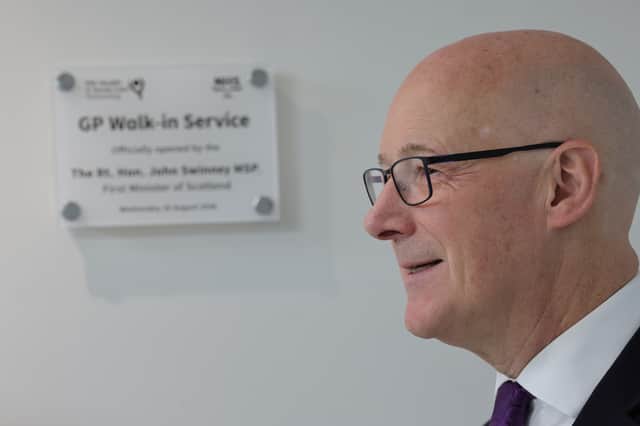
“In the first six months since we opened the first service in February, more than 10,500 walk-in cases have been seen. As these services are phased in to become fully operational, seven days a week,I am confident that many more people will benefit.”
He added: “The opening of our newest GP walk-in service, in Fife, is an important milestone in the roll-out of this pilot project, fulfilling my government’s commitment to open five new walk-in centres within our first 100 days of office. We have done this in Aberdeen, Dunoon, Invergordon, Cardonald and Buckhaven.
“This is part of my government’s wider agenda to provide patients with greater choice and access to care closer to home – in turn relieving pressure on hospitals and acute services.“It will complement our trusted network of GP practices across the country, which we are bolstering with historic additional investment to recruit more GPs with £531 million to 2029.”
Comments
Want to join the conversation? Please or to comment on this article.