
The private jet 'fair tax' that would make SNP £20 million for public services, analysis shows

The First Minister has been told to begin preparatory works on a private jet tax
John Swinney has been urged to introduce a “no-brainer fair tax” on private jet users after new analysis found the levy could have generated around £20 million for public spending this year alone.
The First Minister, who has previously said he is “sympathetic” to the idea of a private jet tax, is under pressure to introduce the measure. Campaigners insist the move would “send a clear message that ultra-wealthy polluters won’t be allowed to continue to get off virtually scot-free”.
The Scottish Greens have suggested rolling out the tax could raise £250,000 every time US president Donald Trump visits Scotland in his private jet.
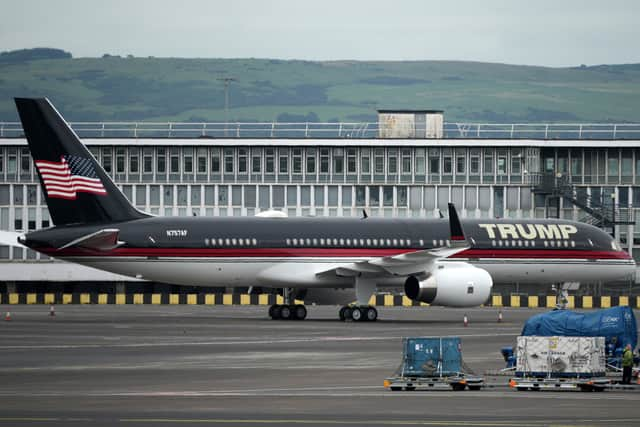

A private jet tax would likely need to be attached to long-delayed plans to introduce devolved air departure tax (ADT), which Holyrood has had the power to introduce as a replacement for UK-wide air passenger duty for almost a decade.
But talks with the UK Treasury over obtaining an exemption for Highlands and Islands airports, seen as providing lifeline routes, have resulted in a stalemate.
New analysis by Oxfam Scotland has found that in the first eight months of this year, there were 8,162 recorded private jet flights taking off or landing at Scottish airports. The monthly average of 1,020 flights so far in 2025 is slightly above the monthly average of 1,012 per month last year.
In 2024, more than 12,000 private flights took off or landed at Scottish airports, including a surge at Glasgow Prestwick Airport, owned by the Scottish Government.
If Oxfam Scotland’s proposed private jet tax had been in place during 2025, it would already have raised up to around £20m more to invest in green projects, according to illustrative forecasting.
Estimates suggest private jets produce up to 20–30 times more pollution per passenger than economy class flights. Independent advisers, the Climate Change Committee, has warned aviation emissions accounted for 4 per cent of Scotland’s emissions in 2022 and the sector’s emissions have increased by 20 per cent since 1990.
Ahead of next year’s election, campaigners will be urging every political party to commit to the tax and to ensure private jet passengers pay at least ten times above the existing higher rate of air passenger duty.
READ MORE: SNP urged to tax 'lavish lifestyles' of super-rich after pollution limit breached in just 10 days
Oxfam is calling on the Scottish Government to immediately draw up preparatory work for the proposed tax, including designing a fair new exemption that doesn’t let private jet passengers evade the charge.
Jamie Livingstone, head of Oxfam Scotland, said: "The First Minister says he’s ‘very sympathetic’ to the idea of a Scottish private jet tax, but sympathy doesn’t cut pointless pollution.
“Detailed preparatory work should start immediately and, ahead of the Scottish election, all parties must commit to this no-brainer fair tax and send a clear message that ultra-wealthy polluters won’t be allowed to continue to get off virtually scot-free while the rest of us foot the bill for their climate carnage.
“A fast, funded, and fair transition isn’t just possible, it’s the only sensible choice. It’s beyond time for the richest polluters to pay up.”
A Scottish Government spokesperson said: “The Scottish Government continues to explore all options for implementing air departure tax in a way that protects Highlands and Islands connectivity while complying with subsidy control principles.
“Rates and bands, including those for private jets, will be set once this has been resolved and prior to implementation of the tax.”
Comments
Want to join the conversation? Please or to comment on this article.