
Irn-Bru to be hit by sugar tax as UK government announces new soft drink rules
UK Health Secretary Wes Streeting confirmed the levy will now be put in place at a level which will apply to Scotland’s other national drink.
Irn-Bru will be hit by the UK government’s sugar tax after ministers announced tough new rules on soft drinks.
UK health secretary Wes Streeting confirmed the levy would now be put in place at a level that would apply to Scotland’s other national drink.
Irn-Bru had changed its formula in 2018 after the UK government first introduced a sugar tax.


It was divisive, with many of the drink’s fans saying Irn-Bru did not taste as good as before. But the new version - produced by AG Barr in Cumbernauld - will now be hit by the sugar tax.
Currently drinks with between five and 7.9g per 100ml are taxed at 19p per litre. But the new rules mean the lower threshold will drop to 4.5g.
This means that drinks like Irn-Bru, 7Up, Pepsi and Fanta will all be hit. They contain between 4.5 and 4.7g of sugar per 100ml. The new rate will be introduced in 2028 to give firms time to change their formula.
Mr Streeting said: “An unhealthy start to life holds kids back from day one, especially those from poor backgrounds like mine. We’re on a mission to raise the healthiest generation of children ever, and that means taking on the biggest drivers of poor health.
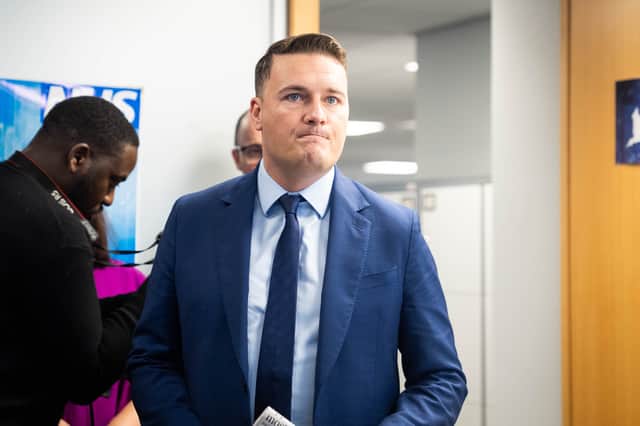
“The levy has already shown that when industry cuts sugar levels, children’s health improves. So, we’re going further.
“A healthier nation will mean less pressure on our NHS, a healthier economy and a happier society. It’s a simple change that is part of this government’s mission to give every child a healthy start to life.”
AG Barr and other soft drinks giants like Coca-Cola had appealed directly to Prime Minister Sir Keir Starmer to warn the change would result in them facing £220 million in extra costs.
In a letter to the Prime Minister organised by the British Soft Drinks Association, firms warned a stricter sugar tax would have “severe economic consequences for our industry”.
They wrote: “This couldn’t come at a worse time. Inevitably prices will have to rise to pay for this, by as much as 5 per cent. Sacrificing tomorrow’s growth for modest revenue gains today will weaken long-term tax take and won’t be worth it within a decade."
Gavin Partington, director of the British Soft Drinks Association, said: "While this move will create an additional cost burden for industry, we take comfort from the fact that a government which describes itself as pro-growth has elected not to pursue its original goal of lowering the threshold to 4g per 100ml, which would have been technically challenging for industry.
"We are also reassured that the government has committed to making no further changes to the levy this parliamentary term, as well as deciding against an implementation date of 2027, which would have been damaging for our sector at a time when we are helping to set up a world-leading deposit return scheme to go live in 2027.
"As well as protecting jobs and investment in our industry, the move to 4.5g acknowledges the widespread reformulation work undertaken by soft drinks manufacturers over the last decade.
"Since 2015, sugar consumption from soft drinks is down 43 per cent, and today just 6 per cent of take-home sugar in diets in Great Britain comes from soft drinks.”
Comments
Want to join the conversation? Please or to comment on this article.