
Ferguson Marine looking into building 'autonomous' robot warships
Board minutes show the ‘autonomous vessel market’ was discussed ‘in some detail’ over the summer

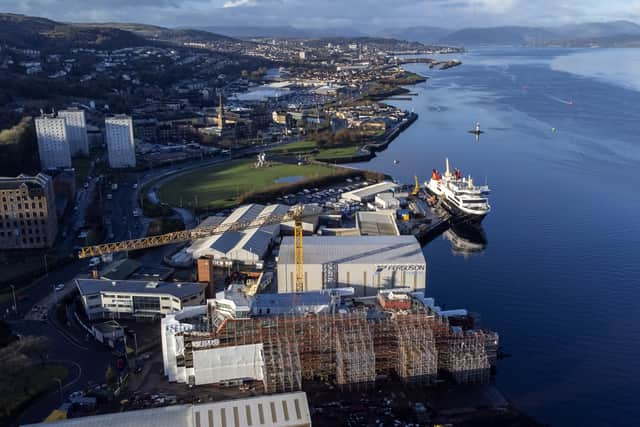
The troubled Ferguson Marine shipyard is looking into building "autonomous" warships for the defence sector.
Board minutes show the "autonomous vessel market" was discussed "in some detail" by bosses over the summer, with plans for further scoping work to be undertaken.
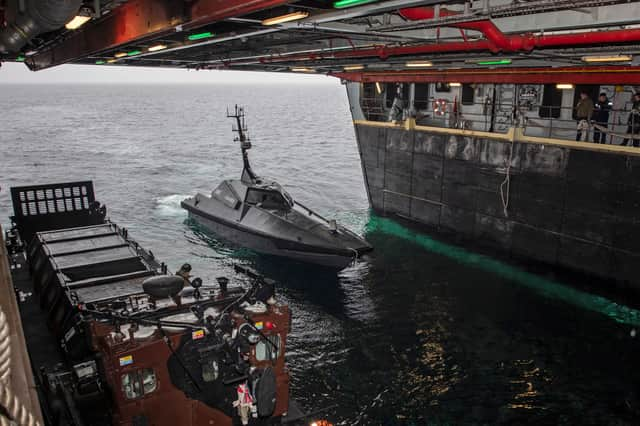
It comes amid UK government proposals for a "hybrid navy" combining traditional warships and uncrewed surface and undersea craft.

Its defence investment plan includes at least £1.3 billion of spending on a hybrid navy fleet, including uncrewed missile platforms and underwater vessels.
The Scotsman recently attended a demonstration of how this might work at Babcock’s dockyard in Rosyth.
The defence giant is currently building five Type 31 frigates for the Royal Navy, which it describes as “state-of-the-art warships”.
Sir Nick Hine, chief executive of its marine sector and the former Second Sea Lord, has championed plans for a hybrid navy using autonomous, unmanned vessels.
He said he would like to deliver HMS Venturer, the first Type 31, together with a large “uncrewed surface vessel” in 2028.
There have long been concerns over the future of the state-owned Ferguson shipyard in Port Glasgow, which is at the centre of the CalMac ferry fiasco.
Last week, it emerged delivery of the massively-late ferry Glen Rosa has been delayed yet again by another two months to February.
Ministers said they agreed to the move so new propellers could be fitted to fix a vibration problem.
In August, it was reported nearly a quarter of its workforce would be made redundant as part of a voluntary scheme.
Graeme Thomson, chief executive of Ferguson Marine, said this would help protect the long-term viability of the yard.
READ MORE: Delivery of Glen Rosa ferry - already eight years late - is delayed another two months to February
Minutes from a Ferguson Marine board meeting on July 30 show it discussed how it “could use its heritage, local content, Scottish government backing, future modernisation, and potential first-mover partnerships in autonomous vessels as sources of advantage”.
The minutes add: “The autonomous vessel market was discussed in some detail, including the emerging defence opportunity, the need to be involved in early market conversations, and the potential for the yard to act as a secure hull-building partner for system integrators.
“The board was broadly supportive of the direction of travel and asked that further work be undertaken on capability, capacity, resource requirements, commercial versus defence work, autonomous vessel market evidence, internal communications and alignment with the financial model.”
The shipyard does have some recent experience in the defence sector.
In 2025, it signed a contract to build three sections of HMS Birmingham, one of the Royal Navy's Type 26 frigates under construction at BAE's Govan yard in Glasgow.
It had previously built two units for another frigate, HMS Belfast.
A spokeswoman for Ferguson Marine said: “This is simply a paper on what markets the yard could enter in the future and no discussions have taken place. The yard is currently focused on the delivery of MV Glen Rosa.”
The Scottish government declined to comment, saying it was a commercial decision for the yard.
Labour MSP Paul Sweeney previously suggested Ferguson Marine would be "well suited" to establishing a foothold in the specialised, high-value superyacht market.
Comments
Want to join the conversation? Please or to comment on this article.