
BBC Scotland channel closure will 'leave viewers behind'
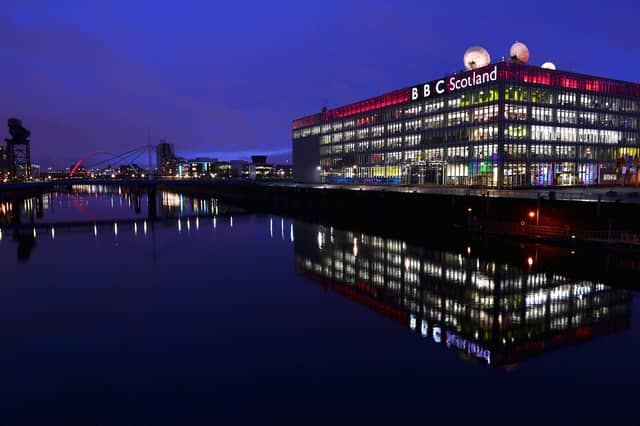

The Scottish Greens said the channel being exclusively shown on BBC iPlayer from Spring 2027 - with 10 job losses - was “a backwards step” which “reflects a wider cultural crisis”.
The closure of the BBC Scotland channel “risks leaving viewers behind”, the corporation has been warned.
The Scottish government said the decision was “wholly unacceptable”, and the Scottish Greens said the move was “a backwards step” that “reflects a wider cultural crisis”.
The broadcaster announced on Tuesday that the channel would move solely to BBC iPlayer from spring of next year - with ten job losses - as part of a raft of changes that will see BBC Three also move online, together with Radio 4 Extra.
Tory Shadow Scots Secretary Harriet Cross urged the Scottish government to “protect” Scottish TV jobs after the announcement.
The BBC also confirmed that Reporting Scotland: News at Seven will not move to BBC iPlayer and will cease when the channel closes.
The Scottish government’s Culture Secretary Mairi McAllan said she would take her complaints to media regulator Ofcom.
“The proposal to close the BBC Scotland channel is wholly unacceptable and the Scottish government opposes it in the strongest possible terms,” she said.
“This represents a significant blow to our media landscape and is the latest example of a long-standing pattern of BBC underinvestment in Scotland, raising serious questions about the broadcaster’s commitment to Scottish audiences and the creative sector, and its public service obligations to serve all parts of the UK fairly and equitably.
“I have set this out directly with the BBC Scotland director and will engage with Ofcom to make clear the significant concerns this proposal raises.”
Scottish Greens culture spokesperson Q Manivannan described the move as a “serious blow for Scotland’s media”.
“My solidarity is with all of the BBC workers who will be impacted by it.
“It is a backwards step that risks leaving viewers behind, and reflects a wider cultural crisis in Scotland. Moving away from a traditional TV channel will only make BBC Scotland less accessible, particularly for older people and those who face barriers to getting online.
“Not everyone has reliable internet access, the right devices or the confidence to navigate digital services. Public broadcasting should be available to everyone, not just those who are digitally connected.
“BBC Scotland has been home to excellent Scottish programming and a launchpad for a lot of creative talent. We should be expanding access to Scottish stories and culture, not putting up new barriers.
“There remains a significant gap between the BBC’s licence fee income in Scotland and BBC’s identified spend in our country.
“Licence fee payers here need guarantees that money raised in Scotland is spent in Scotland. A move to iPlayer cannot become cover for a smaller Scottish office, and channels like BBC Alba need support to ensure their survival.”
Read more: UK and Scots Governments urged to support Glasgow School of Art's Mackintosh Building restoration
Ms Cross said the closure was blow for staff, TV crews and production companies.
She added: “Just a few months after the closure of STV North’s news bulletins, this announcement marks further cuts to Scottish programming.
“The channel often explored subject matters from rural parts of Scotland that otherwise wouldn’t have been shown on the main channel.
“However, with fewer Scots watching linear TV, the BBC must provide best value for money that reflects the interests of viewers.
“The onus is now on the Scottish Government to actively work with the BBC to ensure Scottish TV production is protected from any further cuts.”
A Screen Scotland spokesperson said: “While understanding the pressures the BBC is under, Screen Scotland and Creative Scotland are deeply concerned to learn of the closure of the still relatively new BBC Scotland channel without prior public consultation.
“Going forward from here we would hope the BBC will continue to provide a broad spectrum of high-quality television across genres for Scottish audiences, that audiences across Scotland will be able to access those programmes via their televisions, and that the BBC adapts its commissioning practices to ensure that the majority of those BBC programmes that are considered Scottish by Ofcom are made by producers, crew, and talent based in Scotland.”
As part of the changes, BBC Two in Scotland will be reconfigured to enable the BBC to deliver Scotland-only programming alongside BBC One Scotland.
BBC Two in Scotland will become the new home for the broadcaster’s SPFL Championship on Friday evenings.
In a note to staff setting out the changes, BBC Director-General Matt Brittin said: “We need to make every pound work harder for audiences as we respond to the immediate cost pressures and reinvent the BBC for a changing world. We all know that means tough choices.”
He added: “Much of the great content they currently carry will still be found where audiences already enjoy them on iPlayer and Sounds. While this follows media speculation, I recognise the confirmation of this news will be hard for audiences and colleagues.”
An email to staff from Rachel Jupp, the new director of BBC News, said the 100 employees who will lose their jobs have already been informed.
She said: “We’re now announcing further saving proposals, with a total value of around £5.5 million which represents the net closure of just over 100 roles.
“I know this will be very difficult news for those affected. We will continue to work closely with colleagues and trade unions throughout the consultation process and will do everything we can to minimise the need for compulsory redundancies.
“Colleagues affected by today’s proposals have already been informed.”
She will also lay out plans for further savings early next year, while other divisions will confirm savings plans in the coming months.
The review will include how presenters are used across video, audio and digital, as well as how to get as much value as possible from long form journalism, planning and commissioning.
At the weekend the BBC confirmed its long-running home renovation TV series DIY SOS will be “rested” next year amid the corporation’s ongoing “savings challenges”.
The BBC also cancelled plans to build a new bespoke studio for The Archers at its Tea Factory in Digbeth amid its cost-cutting measures.
Comments
Want to join the conversation? Please or to comment on this article.