
Andy Burnham promises to ‘do more next year’ to bring down energy bills as price cap rises
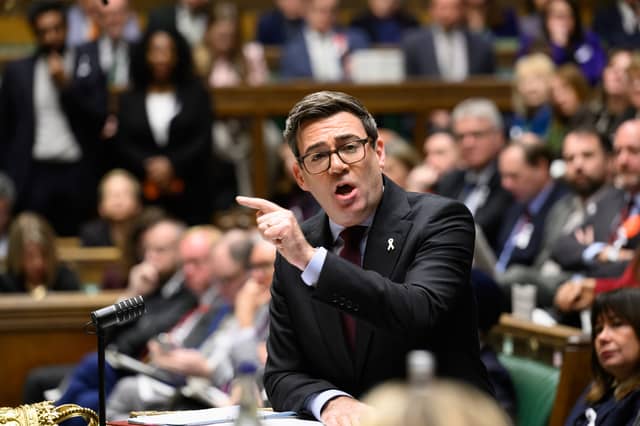

The Prime Minister said the energy market needs “longer-term reform” as the energy regulator’s limit will increase by £443 per year to £2,166 in January.
Andy Burnham has said he “will do more next year” to bring down energy bills after it was confirmed prices will soar from January and campaigners warned of “devastating” costs facing thousands of Scots this winter.
The Prime Minister said the energy market needed “longer-term reform” as Ofgem prepared to increase its limit on what suppliers can charge by £443 per year to £2,166 in January - a 26 per cent rise in the price cap.
Ofgem said the increase was being driven by the conflict in the Middle East.
Mr Burnham said during Prime Minister’s Questions on Wednesday: “I recognise that the energy price cap announced this morning by Ofgem will cause concern to many people up and down the country.
“I do accept that there is longer-term reform needed of the energy market.
“We will set that out in the plan for Britain to be published next month.
“Obviously, we took a different form of action in the Budget, which was to put a levy on banks to pay for £100 support for 20 million households across England, starting early January.
“What Ofgem have announced is that for the first three months of the year, families will see about £110 extra on their bills. The support we have provided, alongside the removal of VAT from electricity bills, will give people some breathing space.
“But I accept there is more to do.”
He added in his next answer: “If I could first go back to energy bills, [Lib Dem leader Ed Davey] is right to push for more, and I will do more next year.
“We will remove the standing charge from gas bills, and I will seek to do that as quickly as possible.”
The price cap increase will raise bills for those not on a fixed tariff by £36.91 a month for the average household using both electricity and gas .
The quarterly cap, which is in line with predictions from industry analysts, is the highest since the second quarter of 2023.
First Minister Mr Swinney said the rise in the cap was “a complete failure” by the UK Government.
He said: “I’m horrified by the projected increase in energy costs in January.
“It is a complete failure of the Labour Government, who promised to reduce people’s energy bills by £300, and they are now significantly higher than that.”
He added: “I have never seen a more compelling argument for the energy wealth of Scotland to be in the hands of the people of Scotland from the failure of the Labour Government to reduce energy prices.
“And my simple message to people in Scotland is: if the UK Labour Government will not reduce the energy bills of people in Scotland, our energy resources in Scotland should be in the hands of the people of Scotland.”
Consumer groups have called for urgent action to help those struggling with the high energy costs during cold weather.
Derek Mitchell, chief executive of Citizens Advice Scotland, said: “Energy bills are already extremely difficult.
“This staggering increase will make them unbearable for thousands of people across Scotland – particularly those on the lowest incomes, with disabled people and those in rural communities facing real harm.
“It is especially devastating that this massive increase will come at the coldest point of the year.”
The average energy debt Citizens Advice Scotland helps people with has already “surged” to £3,200, with Mr Mitchell warning that “expecting people to absorb a further 26% increase is simply impossible”.
He insisted: “Our energy system is broken. What was described as a crisis in 2022 has become a permanent state of emergency.
“Bold, targeted and urgent solutions are needed to prevent people from experiencing further harm. The scale of intervention must match the scale of the emergency.”
Caroline Abrahams, charity director at Age UK, said: “These higher prices will hit in January, immediately after Christmas and during the coldest months of the year, when older people need to use the most energy to stay warm and well.
“While we welcome the support the Government announced in the Budget, it is simply not enough.”
The UK Budget included a pledge to give payments of £100 to all those living in homes in council tax bands A to D to help with energy costs, with the Scottish Government having said it will work with councils to replicate the Westminster scheme north of the border.
Craig Tobin, from Advice Direct Scotland, said: “This New Year’s Day price cap rise is one of the biggest increases on record, and will put extreme pressure on thousands of struggling Scottish households.
“Many are already in debt to their energy suppliers as well as battling high living costs, and with Christmas approaching, people’s budgets are stretched to the limit.
“This is why we have been calling for the introduction of a social energy tariff, which could give the most vulnerable people access to the cheapest deals.”
He urged people to take “practical action by examining their bills, finding out how much they are paying, and checking if there are cheaper options available with other suppliers”.
Consumer Scotland chief executive Sam Ghibaldan said: “Too many households across Scotland are already struggling to afford their energy bills, and many are falling behind on payments.
“This increase risks pushing more consumers into debt, forcing others to cut back on essentials, and leaving some unable to heat their homes to a comfortable level, or putting their health at risk, during the coldest months of the year.”
UK Energy Secretary Miatta Fahnbulleh said: “I know people are deeply concerned by another rise in energy bills.
“For too long, British families have been paying the price for conflicts overseas and volatile fossil fuel markets.
“To help this winter, we’re stepping in to give families some breathing space, so from January, the majority of households will get £100 towards their energy costs.
“But there is more to do to take the pressure off families and bring bills down for good.”
Comments
Want to join the conversation? Please or to comment on this article.