
Readers' Letters: SNP's knee-jerk dismissal of Milburn Review is wrong

Scottish government’s reaction to Milburn Review doesn’t impress reader
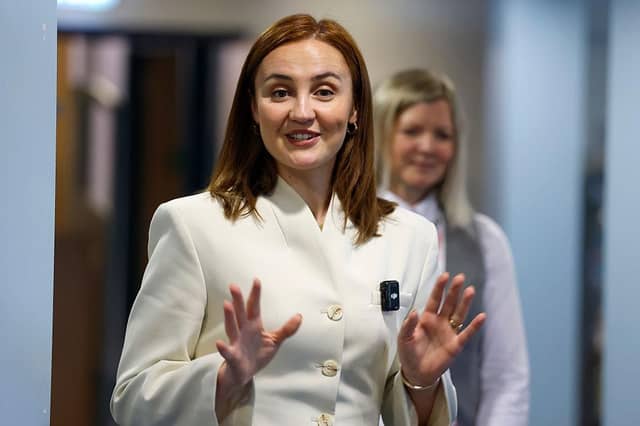
We now know that our education secretary, Mairi McAllan, has read the Milburn Review but, rather than be inspired by its contents – to the potential benefit our our 90,000 Neets – she has summarily dismissed it.
We knew she would. She, along with the other titans in the SNP, has labelled it “not a report for Scotland”.
I didn't expect her to praise the Review, but I had hoped that her reply would be more than along the lines of “we don't have this problem in Scotland”.
We do and we should be concerned about the future of our youth. They are actually the future of the country – not that the SNP actually care about Scotland as long as they can maintain their position of hovering over the gravy train.
Now, I am not saying that the Review is the perfect answer, particularly as it has to battle the disaster of Rachel Reeves's National Insurance and other burdens that affect jobs for the young. However, it does try to be positive, rather than turning the proverbial blind eye.
As the SNP drags our country even more into the past, the gap between us and our near neighbours will only widen, particularly as more of our willing workers will be forced to move south if they want to get on in life.
Ken Currie, Edinburgh
Get some in!
One million Neets! Bring back National Service and watch the numbers plummet.
Alastair Paisley, Edinburgh
Young and old
Here we go, Labour have grand plans to resolve work and care problems for the young and the elderly. A massive problem for us ordinary people is that we have no idea what the final result will be until presented for discussion in parliament with proposals finalised.
OK, Alan Milburn has a few ideas regarding our young Neets but what we can realistically expect is that the final results will be very watered down, expensive and fail to relieve the pressure on this cohort.
For the young, there are no jobs or prospects unless the government does a U-turn on restrictive labour laws which include ratcheting up the minimum wage among all the other employer costs, which include cost of energy.
For the elderly, it appears only workers from abroad willing to work for minimum wage can provide the numbers required to assist with this growing problem. In addition, of course, only those who made little effort to save for the future can expect that help without surrendering money gainfully gathered to give to their children as a leg up for them.
So, there lies the young cohort conundrum which can only really be solved through government action that reduces business costs and jumpstarts business confidence for the future. This could possibly entail a pledge to reduce government spending annually for the next decade at least, with a review every five years as a check on progress, which would be a useful start.
For the elderly, care at present is almost solely the responsibility of local authority, NHS and private entities and there requires a step change of how support is provided. Obviously, not all elderly have children but where available why not consider something similar to parenting support during the first year after birth of children. What I'm suggesting is paid leave for those who leave the workplace to care for elderly parents for a set period of time. This would not be a pleasant experience but it's essential our elderly are given care by those closest to them. This widening of the pool available to provide support at home would hopefully reduce the burden on businesses which have to work around staff taking time off. For those without family, it should be possible to identify alternative people who could use a similar arrangement to help support our elderly who need care at home.
Of course, the need for more intensive support will rise on occasion but care at home should reduce the overall pressure on care homes and budgets, thus relieving the bed blocking which appears to a major problem with our hospitals at present.
Just a suggestion.
A Lewis, West Linton, Scottish Borders
Unfair to OAPs
Reader Chick McKenna rightly criticises the level of the state pension and its designation as a “benefit” (Letters, 19 November).
There is also the big disparity between the old and the new state pension. If you retired before April 2016 you receive the old pension and if you retired after that date, the new one.
There's an unfair disparity between the two. Next April the new state pension will be £251 per week (£13,036 per annum) and the old one only £192 per week (£9,989 per year).
How on earth can a supposed Labour government which majors on “equality” continue with this obvious discrimination based on age? We have two classes of pensioners in the UK – one poorer than the other. Ask yourselves – is this fair?
William Loneskie, Oxton, Lauder, Berwickshire
Energy equation
With the latest news about EnQuest leaving the North Sea, the people of the North East and Scotland in general have to face the fact that, when it comes to jobs, employment and the oil industry, we have been hung out to dry by Labour, Greens and the Lib Dems. It's not even a reason for backing independence because the “it's oor wind” SNP are terrified of supporting oil and gas.
Or maybe independence is a good idea if you want a wind-powered country, although, as I write, only 10GW (28 per cent) of the UK's 37GW electricity demand is coming from wind and 22GW (60 per cent) from gas and nuclear.
And if, by some miracle, Andy Burnham gave Rosebank the go-ahead and encourages exploitation of other licensed areas, I bet the SNP will moan about it but secretly be glad someone else has done their dirty work for them. God forbid if we ever get a Conservative-Reform coalition and they take the shackles off the industry: imagine if all these Neets had job opportunities!
Allan Sutherland, Stonehaven, Aberdeenshire
Shoplifting costs
The rise in retail crime across Scotland is alarming. According to recent Scottish government figures, reported shoplifting incidents have surged from 24,877 in 2021-2022 to 56,920 in 2025-2026 – a staggering 129 per cent increase in just four years.
This sharp upward trend raises serious questions about law enforcement capacity. It appears that a lack of visible policing and sufficient resources to enforce the law has created an environment where there is little to no effective deterrent against shoplifting. When offenders believe they are unlikely to face consequences, the behaviour becomes increasingly bold and widespread, as we are now undoubtedly seeing.
Shoplifting is not a victimless crime. While retailers bear the immediate brunt of these thefts – and staff often face unacceptable levels of hostility – the financial burden is ultimately passed on to ordinary, law-abiding shoppers. In the end, we all pay the price for this surge in crime through higher costs at the till during an already challenging economic climate.
What steps are being taken to address police resourcing, restoring an effective deterrent, and protecting both local businesses and consumers from the ongoing fallout of retail crime?
Steven Robertson, Musselburgh, East Lothian
Blessed relief
The BBC’s decision to finally remove The Daily Service from its national Radio 4 family schedules – following the announcementt of the closure of Radio 4 Extra – is an overdue correction for a modern, pluralistic society. Since its 1928 debut, Britain has transformed from a predominantly Christian nation into a diverse, largely secular country. Dedicating prime mid-morning national airtime exclusively to one religion conflicts with the BBC’s core duty to serve all licence-fee payers impartially.
Furthermore, the programme was already marginalised when it was shunted from FM to Long Wave in 1991, and later to Radio 4 Extra in 2024, proving its diminishing relevance to mainstream national audiences. In an era of severe budget cuts and on-demand digital audio, maintaining a dedicated national linear slot for a niche religious broadcast is financially and culturally indefensible. Moving it to local radio and BBC Sounds should have happened decades ago, freeing up vital resources while allowing devoted listeners to still access worship on their own terms.
Doug Clark, Currie, Edinburgh
Tattie bye
In my area, in October time, before the era of sophisticated farm machinery, we had holidays from school to help lift the potato crop. This holiday is now referred to as the “mid-October or mid-term break”, but to folk our age, they are, and always will be, “the tattie holidays”.
A parallel example of archaic usage is the term “international break”, harking back to the days when top-flight Scottish league teams might have their performances affected by the loss of players to international duty. It seems excessive that the Scottish league programme should now suffer this significant interruption just so that Celtic have the option of fielding Kieran Tierney.
Ken Gow, Bridge of Canny, Banchory, Aberdeenshire
Write to The Scotsman
We welcome your thoughts – NO letters submitted elsewhere, please. Write to [email protected] including name, address and phone number – we won't print full details. Keep letters under 300 words, and in the body of the email – no attachments – and avoid 'Letters to the Editor/Readers’ Letters' or similar in your subject line. If referring to an article, include date, page number and heading. No poems.
Comments
Want to join the conversation? Please or to comment on this article.