
Readers' Letters: Cut employment costs to get young people in work
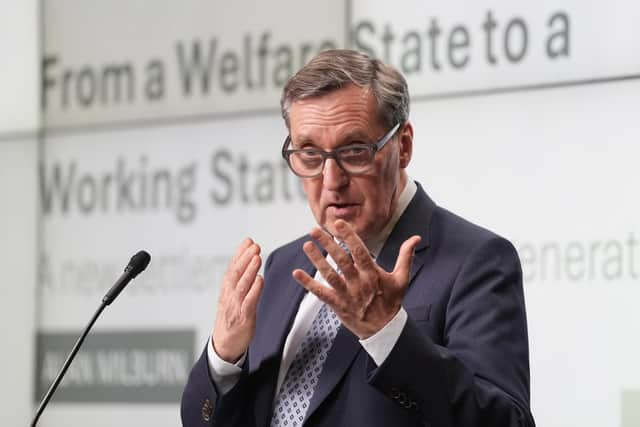
A reader welcomes the Milburn Review’s proposal to reduce employers’ National Insurance contributions for staff aged under 25.
It is hard to believe that Labour, the supposed ‘party of the worker’, did not realise that when you increase the cost of employing people, fewer people are employed. As a direct result of the budgets of Rachel Reeves, over 100,000 workers have lost their jobs. She should hang her head in shame.
Thank goodness that Alan Milburn, a former Labour cabinet minister, has recognised the impact increased National Insurance contributions and regulation have on employers’ willingness to employ people – especially young people. Having a million youngsters as NEETs (not in employment, education or training) is a disgrace. In Tony Blair’s day, the number was less than 200,000 and even then was seen as having a severe impact.
Getting jobs such as part-time jobs, Saturday jobs or jobs in hospitality, can be a great foundation. It increases self-reliance and reduces the likelihood of youngsters being consigned to the scrapheap early on in their lives.

Combined with this, we have companies such as IKEA stopping some investment in the UK, citing the fact that the cost of doing business in the UK is higher than almost any other country they operate in. Each time a business closes, or declines to invest, more employment opportunities are lost, and along with them go the opportunities for youngsters, any tax that might come from them being employed, and any savings on benefits. This is not just a problem for the UK government, but for the Scottish government, which also seem oblivious to the impact high taxes have on jobs.
Let’s hope Mr Milburn’s report encourages both governments to reduce the cost of employing people, particularly youngsters. It is not social justice to have people on a lifetime of benefits when they could be contributing to society.
Brian Barbour, Haddington, East Lothian
Blindingly obvious
In an apparantly revolutionary study, Ayr’s Belmont Academy has discovered that not allowing pupils to have mobile phones on in classrooms causes untold increases in concentration spans and improved “learning outcomes”.
Doubtless, nearby at Carleton Turrets (home of Ayrshire’s last independent school, Wellington) a sarcastic eyebrow will be raised in tribute that state education managed to figure out all by itself what they could have told them an aeon ago when the private sector imposed a blanket ban on mobiles.
No wonder so many of today’s kids can barely count or string a sentence together if the blindingly obvious is beyond those meant to be in charge of Scottish education.
Mark Boyle, Johnstone, Renfrewshire
Council tax
The debate about the future of council tax rumbles on as reform is too difficult and “an endless non-decision” according to Ken Gibb. Surely the answer is to raise less tax in the first place rather than increasing tax for higher value houses as the professor in housing economics at the University of Glasgow suggests.
Around 80 per cent of council tax is for education and social care. If a household does not consume specific services why should it pay? Similarly for library services, museums and sport centres. Scotland is already one of the most taxed countries in the world while nearly half a million households pay reduced or no council tax.
Of course this is unworkable given that low-income households would simply not be able to pay for services like secondary education which costs at least £8,500 per year per pupil. Why not therefore take education and social care into income and NI tax similar to health? That would leave about 20 per cent of the charge from which less essential services like libraries, museums and sport centres could become pay as you use. Council tax would then become a more affordable flat charge covering roads, waste, parks and other civic amenities.
Why should a single person on a basic pension whose family has left a large house be penalised by paying more for council tax? Mr Gibb does not appear to have an answer. Revaluation each year, as he suggests, is a huge cost and house values do not reflect payment for services. Instead, council tax services should be more demand-driven like other goods and services while reflecting ability to pay for essential services.
Neil Anderson, Edinburgh
Prophets of doom
I was puzzled recently by a strange wailing noise from the centre of Edinburgh.
It apparently emanates from some of the shops, or is that shopkeepers? It seems to have coincided with the announcement of the 7-7-7 bus lanes and has increased several-fold with the proposed pedestrianisation of George Street.
I should have recognised it as I am old enough to have heard it several times before: firstly when yellow lines were introduced, again when parking meters were introduced, then again with the start of bus lanes, again with the introduction of cycle ways and cycle lanes and most recently with the introduction of trams.
It apparently heralds the death of society and demise of retailing as we know it but the strange thing is that despite the changes there are still shops plying their trade, commerce seems to thrive and no part of the city has become a barren wasteland devoid of life or shops, I can’t help but wonder if once again they do over-exaggerate.
Neil Robertson, Edinburgh
No laughing matter
It seems that the late Irish comedian Dave Allenis the latest target of woke censorship.
A documentary about his life and work broadcast recently was preceded by the now familiar public health warning that the material was “of its time” and contained “inappropriate and outdated humour”.
A master of irreverent observational comedy which finds mirth in everyday situations, Allen frequently poked fun at Roman Catholicism, the faith in which he was raised. This brought down the wrath of joyless Clean Up TV campaigner Mary Whitehouse during the 1980s, just as it has now provoked the censure of latter-day Puritans in certain politically correct sections of the media.
When we’re actively discouraged from making jokes of any kind which might possibly “offend” some interest group or other, what future for comedy or indeed even freedom of expression?
Heaven knows, we need all the laughs we can get nowadays to help us cope with this increasingly scary and complex world of ours.
Martin O’Gorman, Edinburgh
GB Energy
GB Energy is turning out to be exactly what its doubters suspected. Not a publicly owned energy company, but a costly taxpayer-funded exercise in political branding.
Its own accounts, published in September, show a £14.1 million loss, while chief executive Dan McGrail received a total pay package of about £390,000.
This is the same body presented as part of a plan to cut household bills, yet the reality is soaring system costs, eye-wateringly expensive offshore wind and ever-costlier grid infrastructure for which consumers will ultimately pay.
Meanwhile, as The Scotsman has reported (14 November), support for Scotland’s ScotWind ambitions is now in doubt under Westminster’s revised strategy, hardly inspiring confidence that renewables will deliver the promised savings.
GB Energy has little to show for the £18.7m of public money already spent. It appears to offer spin, salaries and symbolism rather than any credible route to lower bills.
Eileen West, Banchory, Aberdeenshire
Nursery pay
Your report on Glasgow’s childcare pay settlement (16 November) misrepresents the position of Together, representing private, voluntary and independent (PVI) nurseries.
We have never criticised Glasgow’s Child Development Officers’ (CDO) pay awards or suggested they are paid too much. We support proper recognition and remuneration for early years professionals. We seek equitable funding so PVI staff can receive comparable pay.
Christine and Joanna’s descriptions of their work will resonate throughout our sector. Supporting children’s learning, emotional wellbeing and development, working with families and responding to complex additional support needs are equally central to PVI practitioners’ professional lives. The value of this work does not change with nursery ownership.
Yet public funding supports markedly different pay outcomes. Glasgow’s starting CDO rate from April will be £20.13 an hour, while PVI funding currently supports a Real Living Wage benchmark of £13.45. That represents £6.68 an hour, or approximately £12,200 annually on equivalent 35-hour weeks. April’s Real Living Wage increase to £14.10 will still leave a substantial disparity.
Both sectors deliver the same Scottish government-funded entitlement. Together seeks equity in funding and parity of pay. The council’s recruitment figures reinforce our concern: higher salaries understandably attract applicants. Providers competing for the same qualified workforce face an obvious retention challenge.
Without adequate funding, matching council pay would place substantial pressure on parental fees. Our modelling indicated increases of up to £25 per child per day. Fair staff pay should not depend on making childcare unaffordable.
We urge the Scottish government, COSLA and councils to work with us on funding that recognises the equal value of PVI practitioners’ work. Glasgow’s CDOs deserve their award. Our staff deserve comparable recognition.
Ben McLeish, Chair, Together, Perth
Write to The Scotsman
We welcome your thoughts – NO letters submitted elsewhere, please. Write to [email protected] including name, address and phone number – we won’t print full details. Keep letters under 300 words, and in the body of the email – no attachments – and avoid ‘Letters to the Editor/Readers’ Letters’ or similar in your subject line. If referring to an article, include date, page number and heading. No poems.
Comments
Want to join the conversation? Please or to comment on this article.