
Why this is simply the wrong time for SNP to launch massive independence campaign – Joyce McMillan
John Swinney and co should be focussed on developing a convincing plan for independence that addresses the key unanswered questions from 2014


The lion and the unicorn were fighting for the crown; and here in Scotland they’re fighting for it still, more than 300 years after the satirical children’s rhyme first appeared. The lion – king of beasts – represents England, and a UK in which England dominates; the unicorn is Scotland’s mythical beast, supposed to represent the nation’s untamed spirit.
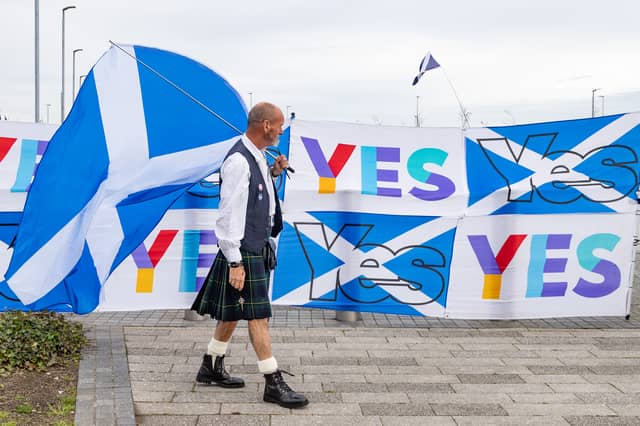
I thought again about this 300-year bout of political fisticuffs when I read, this week, that the SNP – in advance of its annual conference in Aberdeen this weekend – is about to launch what it calls “the biggest independence push in over a decade”, featuring a mass opinion polling exercise involving 1.5 million people, and a big “Choose Scotland” ad campaign.
There can be no doubt, after all – not least after the festival of nonsense on stilts that was the Tory conference – that the chief and most credible representative of the lion, these days, is Andy Burnham’s Labour; and that the unicorn, as ever, is chiefly represented by Scotland’s party of government, the SNP.
Constitutional issues a minority concern
The problem for Scottish voters, though, is that both parties have a tendency, at times, to become so preoccupied with the constitutional battle that they turn a cloth ear to those whom they claim to represent; Labour in Scotland because its tribal dislike of the SNP frequently blinds it to achievements of devolution that voters value, and the SNP because it struggles to grasp that a slim 52 per cent majority of independence supporters does not mean they all place a high priority on the issue.
On the contrary, this week’s poll also showed 68 per cent listing the cost of living among their three top concerns, whereas only 11 per cent listed another independence referendum. Next on the list was the NHS, at 46 per cent; then, at 28 per cent, energy bills.
Of course, any indy campaigner doorstepping the public knows how to argue that Scotland’s underlying lack of sovereignty is responsible for some of our cost-of-living problems; notably when it comes to energy prices, and the baneful impact of Brexit both on food-price inflation and on Scotland’s export economy.
The word “underlying” tells the tale, though. The people for whom constitutional issues are dominant are always in a small minority, in any population; while for the majority, the question is always the practical one, of which party or policy will offer them and their children a more secure and hopeful future. That’s why this week’s SNP announcement is likely to be met with absolute indifference by most voters, and with scepticism even by those the enthusiasts whom it is presumably designed to impress.
It is no coincidence that the highest levels of support for independence since 2014 were recorded in late 2020, when Boris Johnson was making such a visible hash of handling Covid, while putting the country through the long-drawn-out hell of Brexit.
The fact is that most Scots just do not like the increasingly right-wing Conservative governments that the Union has inflicted on us too often since 1979, but are often willing to give the Union another chance in the early days of a new Labour government, of the kind currently offered by Andy Burnham.
Lessons from history
To launch a high-profile “independence now” campaign at this moment in the political cycle is therefore a painful waste of time and money; not because independence does not matter, but because successful political change requires both a high underlying state of readiness, and a finely tuned sense of timing – and at the moment, the SNP seems to have neither.
There are lessons to be learned here from recent Scottish political history. When the Scottish Constitutional Convention was founded in the late 1980s, Margaret Thatcher was still Prime Minister, and devolution in the UK was widely dismissed as an impossible dream.
The leading players in the Convention, though, were convinced of the merit of their own argument for Scottish self-government; and they continued to work, through the long John Major years of the 1990s, until they had a reasonably complete, basic plan for a new Scottish Parliament within the UK, and how it would work.
So that when their moment of political opportunity finally arrived in 1997 – with Tony Blair’s new Labour government, and a group of passionate devolutionists (Donald Dewar, Gordon Brown, Robin Cook) leading Labour in Scotland – the plan was there, and ready for the moment when whole sections of it would be imported into the Scotland Act 1998.
Not time for synthetic red meat
This is exactly the strategy the SNP should be following now. This is not the time for a new referendum; nor is it time to be throwing synthetic red meat to that section of the party membership that is forever in denial about the priorities of most voters in Scotland.
It is, though, more than time to be developing, with the wider independence movement, a convincing plan for independence that answers some of the key questions left unanswered in 2014, and maps out a credible route to the future the SNP wants to see.
The central plank of the party’s current argument, after all – that the tide of history is moving against the old imperial British state, and that the emergence of simultaneous pro-independence governments in Edinburgh, Cardiff and Belfast is no accident – is such a strong one that even Andy Burnham clearly agrees with some aspects of it.
Finding the moment of opportunity when that shift can be embodied in real political change, though, is a different matter. And it seems to me that, for the moment, careful, low-profile discussion and preparation will serve the SNP much better than high-profile campaigning bluster; if only because history suggests that very often, in the fast-moving world of politics, the readiness is all.
Comments
Want to join the conversation? Please or to comment on this article.