
Why Scotland won big at the World Cup, and must do so again – Ian Johnston
The Tartan Army are a hugely valuable form of ‘soft power’ and Scotland must do everything in its power to ensure our national teams’ qualify for future tournaments

In the end, Scotland were not the plucky underdogs of this year’s World Cup, with that title claimed by Cape Verde, one of the smallest countries ever to play at the tournament, who qualified for the knockout stages and were only overcome by one of the favourites, Argentina, after extra time.
That said – and I may be clutching at straws here – Scotland’s narrow 1-0 defeat to Morocco now looks rather better, given their 3-0 victory over co-hosts Canada in the second knock-out stage. Had the fates been kinder and Scotland had secured a draw with Morocco, things on the football side might have ended on a happier note. However, for those of us who thought they might never live to see Scotland getting knocked out of the World Cup on goal difference again, this still represents welcome progress.
The reaction in America to Scotland’s fans has once again underlined just how important Scottish qualification for major tournaments really is. Most countries have some form of soft power. The US has Hollywood and music, France has fine dining and amazing wine, Greece and Egypt have ancient artefacts galore.
READ MORE:
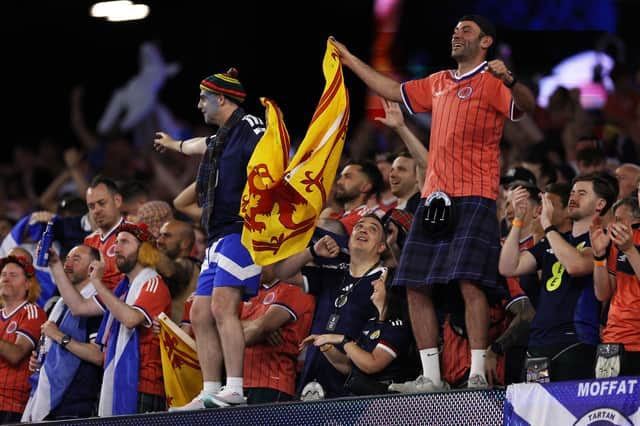

Scotland has castles, beautiful countryside and the extraordinary, the wonderful, the joyful Tartan Army – football fans who drink cities dry and then tidy up after themselves. Who gave a Boston bartender nearly $1,000 in tips during just one shift. Whose infectious enthusiasm wins hearts and minds wherever they go.
In a full-page tribute to Scottish fans, the Boston Globe wrote: "Dear Tartan Army, you came for the World Cup, but gave us something more. For a week, you turned train stations into singalongs, Fenway [baseball stadium] into a football ground and an ordinary June into something we'll be talking about for years.
“Boston has hosted championships, parades and celebrations of every kind. But we've never hosted guests quite like you all. Thank you for the laughter, the bagpipes and the memories. The World Cup will move on. So will the songs, but we'll never forget the joy you brought to our city.”
This is far from the first time the Tartan Army has had such an impact. After they travelled to Germany for the Euro 2024 tournament, Dr Jürgen Amann, of VisitCologne, said: “Scottish fans won the hearts of the people of Cologne… We'll remember the Tartan Army for a long time to come.” He even joined in our catchphrase: “No Scotland, No Party!”
The fans have become known for simple acts of kindness, such as the kilted footsoldiers who shielded an elderly German person walking with a rollator from heavy rain in Cologne. ‘Being nice’ has become a guiding ethos, and fans appear to be looking for opportunities to help out, to do something in a Tartan spirit – like raising thousands of pounds for a Boston children’s hospital.
Along with bagpipes, tartan and, ahem, heavy drinking, this gets Scotland noticed on a global stage.
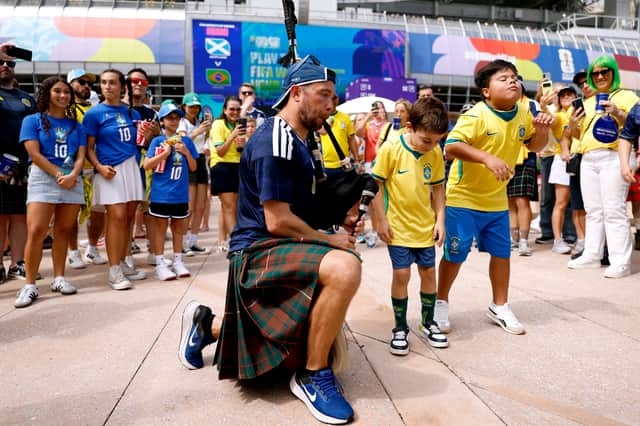
After the 2024 Euros, Germans ranked Scotland as the country they would most like to visit if money was no object in the Anholt Nation Brands Index. And the numbers of German tourists soared, rising from 133,000 in July to September 2023 to 209,000 in the same period in 2024. Something similar may happen with American tourist numbers too.
Therefore, Scotland needs our national side to keep qualifying for major tournaments for economic, as well as sporting, reasons. It should be a strategic imperative for our governments in both Holyrood and Westminster.
Speaking to Scottish Financial News from the grounds of Harvard Business School, Aberdeen-based energy industry operations director Chris Rennie said: “The biggest idea I witnessed... wasn’t inside a lecture hall. It was 50,000 Scots in kilts turning Boston into the loudest, friendliest city on the planet for two World Cup games. I’ve sat through a lot of presentations about the power of collective effort and culture. I’ve never seen it demonstrated quite like that. No boardroom strategy produced what those fans created simply by deciding to show up and mean it.”
There are many reasons to prioritise sport. They are usually related to the profound benefits to health – both physical and mental – from taking regular exercise. It has been described as a “miracle cure” for many of our ills, almost a panacea.
The popularity of football, including the rise of the women’s game, makes it the obvious choice to be the driving force of a major campaign to turn Scotland into a genuinely ‘sporting nation’. Everyone, young and old, should be encouraged to have their own sport, even if it is just going for a brisk walk. It should become a social expectation – forget ‘what do you do?’ and start asking ‘what’s your sport?’ instead.
Developing a national sporting culture would be an antidote to the dangerous sedentary lifestyle encouraged by video games and social media. It would inevitably mean Scotland would produce better sportsmen and women, increasing our chances of producing football teams that can compete at the highest level.
And that would enable the Tartan Army to be deployed at major tournaments for longer and to an even greater effect. Perhaps I’m getting carried away, but it’s possible the benefits would be felt beyond our shores with other countries’ fans persuaded to join in the fun and adopt a Scottish approach to following their team.
Scotland’s politicians need to wake up to the fact that the Tartan Army is doing something special and truly significant. Our team may have been knocked out at the earliest opportunity but this country was a big winner. Finding ways to further exploit this stunning victory is a must.
Comments
Want to join the conversation? Please or to comment on this article.