
Why Andy Burnham's comparison of Vladimir Putin's regime with Nazi Germany is so important
In 1940, Britain stood up to the might of Nazi Germany. Today, as Andy Burnham rightly said, Ukraine is keeping that same ‘flame of European freedom alive’


The first overseas visit made by a country’s new leader is often especially symbolic. Andy Burnham’s decision to make his a trip to Ukraine on the 35th anniversary of the country’s independence from the former Soviet Union sent a strong message to the world that he will continue the staunch support of his predecessors.
Despite their failings, Boris Johnson, Rishi Sunak and Keir Starmer all recognised the need to back Ukraine to the hilt as the country seeks to defend itself against Vladimir Putin’s invasion, the worst act of aggression in Europe since the Second World War.
In a speech outside St Sofia Cathedral in Kyiv, Burnham made clear that nothing had changed. He compared Ukraine’s stand against the Russian tyrant to the UK’s against Nazi Germany, saying that “my nation kept the flame of European freedom alive in the 20th century, you hold that flame in the 21st”. And he stressed that Ukraine was “Europe’s protector, not a drain on our security but the front line in keeping Europe safe”.
This is a most important message. If Ukraine falls, Putin has made clear that it will not be the end of his military aggression. Indeed, his regime would likely fall without the nationalist sentiments aroused by war. He has gambled on victory, the democratic world must ensure that he loses.
Putin’s deliberate targeting of civilians
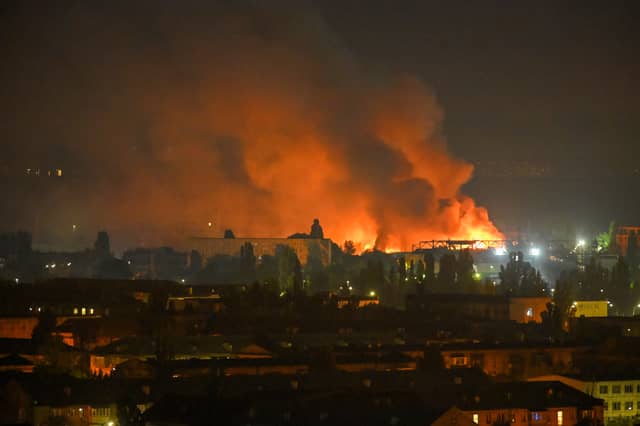
Dismissing the Kremlin’s “outrageous threats” to the UK, Burnham said the government would continue to provide arms to Ukraine and urged all Kyiv’s allies to send more interceptor missiles to help protect the country from Russian ballistic missile strikes, which have been increasing in recent weeks. In just three days of the latest bombardment, at least 23 people were killed and more than 100 wounded.
Putin’s deliberate targeting of civilians – like Hitler’s during the Blitz – is one sign of many that this is a struggle between good and evil. Right now, that struggle is largely confined to Ukraine.
But, while helping its forces, Britain must also urgently increase its own military strength to discourage Putin from the idea that Russia is ready to take on Nato – and deal with that very real threat should it arise.
Comments
Want to join the conversation? Please or to comment on this article.