
The shocking number of ‘urgent cancer referrals’ in Scotland that come with two-month wait – Michelle Mitchell
Being told you have cancer is bad enough. Having to endure a long wait, knowing the disease could be spreading, is even worse
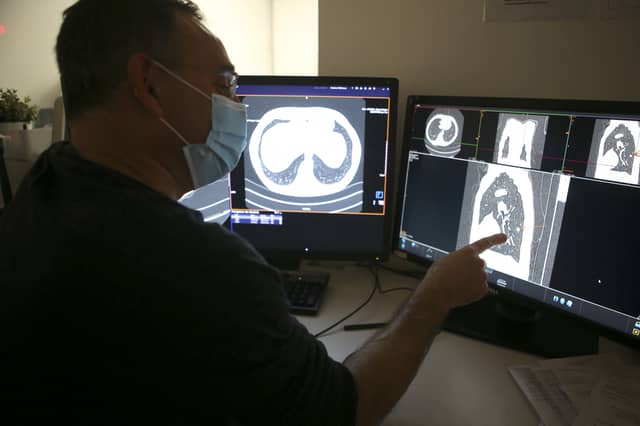

Waiting for a diagnosis is one of the toughest parts of cancer and anyone going through treatment right now, or supporting a loved one, knows exactly how long a week or even a day can feel when waiting for a scan, test result or to start treatment.
For Tamsen Livingstone, a teacher from Clackmannanshire, these were the darkest and most frightening days of her life. She said she felt like she couldn’t even breathe until she knew for sure what she was dealing with.
Waiting times are often discussed in terms of targets and statistics but for patients, they are days, weeks and sometimes months filled with uncertainty and fear that their disease may be progressing without swift treatment. Cancer does not wait and neither should we.
Patients want action
On Monday, I will be in Edinburgh at the Scottish Cancer Conference, meeting people like Tamsen whose lives have been affected by cancer. Among those attending are patients, carers, researchers, clinicians and campaigners.
While they may all have different experiences, they share a common goal: they want to see a future where more people in Scotland survive cancer and live well after it. I believe deeply in the power of people to bring about change and, at the core of the conference, is the message that involving patients is not an optional extra. In doing so, they don’t only want to be heard, they want action.
Scotland is well placed to deliver it. The Cancer Strategy sets out a clear vision with commitments on prevention, early diagnosis through screening and investment in research. The ambition may be clear, but so is Scotland’s challenge. Strategies alone don’t save lives – it is now time for the Scottish government to meet cancer’s growing demands.
The latest figures show that only 73.6 per cent of patients urgently referred with suspected cancer started treatment within the 62-day target – far below the 95 per cent target which has not been achieved for more than a decade. Put simply, people are still waiting too long for diagnosis and treatment.
Despite the best efforts of NHS staff, who are working tirelessly under pressure, services are still struggling to keep up. And demand is only going to increase with cancer cases projected to rise by 16 per cent over the next 15 years due to Scotland’s growing and ageing population. Lung cancer takes more lives than any other cancer in Scotland and every year around 3,800 people die from the disease.
Lung cancer screening in England, not yet in Scotland
Despite the UK National Screening Committee recommending in 2022 that all UK nations implement screening for those considered to be at high risk of developing lung cancer – people aged between 55 and 74 who either smoke or used to smoke – there is still no lung screening programme in Scotland.
Around two thirds of lung cancers are diagnosed late in Scotland when treatment options are more limited. Meanwhile in England, the full programme of lung screening is already under way.
While it’s good news the Scottish government will introduce phase one of the programme in 2027/28, this is long overdue and Scotland now needs to set out a plan for a full roll-out so everyone who may need it has access. Screening is an important tool for early detection, but it must be supported by prevention measures and bold action if Scotland is to tackle its biggest cancer killer.
In May 2025, the Scottish Parliament voted unanimously in support of the UK Tobacco and Vapes Bill – world-leading legislation phasing out the legal sale of tobacco to children born on or after 1 January 2009. It’s vital the Scottish government implements the Act fully when it comes into force next year and ensures stop-smoking services are funded to support people to quit.
Tackling cancer must be a top political priority. Reducing Scotland’s health boards from 14 to two may help create more joined up services in the future. But ministers must not lose focus on improving care and shortening waits for patients.
Incredible progress in recent years
There are powerful reasons for hope. This year, the Cancer Research UK Scotland Institute in Glasgow marked 50 years of world-class research. We’ve never known more about cancer than we do today. New technologies, advances in data and artificial intelligence, as well as personalised medicine and groundbreaking treatments, mean we continue to transform what is possible in prevention, diagnosis and treatment.
Thanks to the incredible progress made by scientists, cancer death rates in Scotland have fallen by around 19 per cent since the 1970s. But the disease remains Scotland’s leading cause of death and for the families facing cancer today, further progress cannot come quickly enough.
Tamsen received the treatment she needed for cancer, is in remission and back in the classroom. Her story is one of hope, and we need more stories like hers.
The knowledge is there. The talent is there. The political commitment is there. What is now needed is urgency and determination if the Scottish government is going to deliver. Behind every statistic is a person. Every target missed is someone anxiously waiting. Action is needed to diagnose cancer earlier, treat it faster and prevent it altogether if we want to save more lives.
Michelle Mitchell OBE is chief executive of Cancer Research UK. She will be at the Scottish Cancer Conference in Edinburgh on Monday in conversation with Angela Constance MSP, Cabinet Secretary for Health and Care.
The Scottish Cancer Conference is delivered annually by Cancer Research UK on behalf of the Scottish Parliament’s cross party group on cancer. For more details, visit www.cancerresearchuk.org
Comments
Want to join the conversation? Please or to comment on this article.