
The separation of powers protects the liberty of citizens
We should be cautious about Parliament issuing pardons or quashing convictions, writes Andrew Stevenson
Mention has been made before in this column of the general need to preserve the separation of powers between the courts and the executive. This constitutional safeguard is there to protect the liberty of citizens, a point that seems to be ignored by the present American government. The principle applies equally in this country, which is why we ought to be very cautious about Parliament pardoning witches, coalminers or suffragettes or quashing convictions imposed under laws of which we now disapprove or in prosecutions that would now be regarded as incompatible with the Human Rights Act 1998.
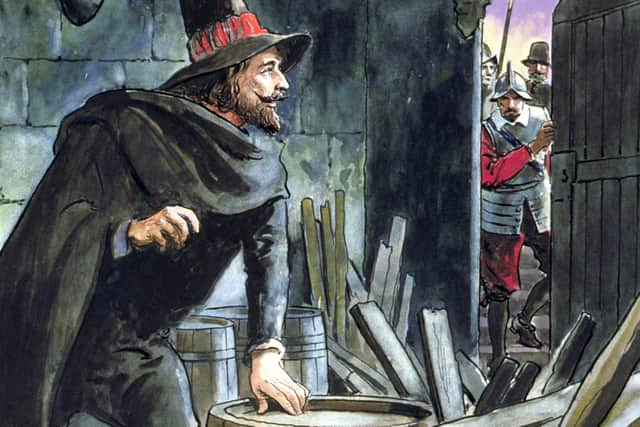
Let us take Article 3 of the Act, which prohibits the use of torture. Had this legislation been enacted in 1598, it would have had a serious effect in determining the outcome of the trial of Guy Fawkes and his accomplices. Fawkes was captured 420 years ago and may well not have incriminated Robert Catesby or any of his other co-conspirators were it not for his barbaric ill-treatment at the hands of the authorities.
Ten years ago there was submitted to Westminster a “Petition to Pardon Guy Fawkes, the only man to enter Parliament with honest intentions”. This was met with the rather feeble response that it would be for the monarch to issue such a pardon. A similar petition, relating to Sir William Wallace, had been rejected the year before. The convictions were for the same crime, high treason, although whether Wallace owed any allegiance to the King of England is questionable to say the least.

Perhaps those petitions would have had more success had they sought a different remedy, namely a simple quashing of the convictions. Last month, it was reported a campaign is under way to grant this remedy, rather than issuing pardons, to Robbie the Pict and others who refused to pay a toll to use the Skye Road Bridge, which opened 30 years ago.
Fawkes and Wallace were subjected to the English judicial system long before the Act of Union so one would have to look to Westminster to pass the appropriate legislation of quashing. Such is definitely within its power, subject to the granting of Royal Assent; in that regard there might be some lack of sympathy on the part of King Charles towards Fawkes and the other infamous would-be regicides. The conspirators were responsible for a grievous hate crime; on being caught with his barrels of explosives, Fawkes is said to have told his captors that his audacious plan was “to blow you Scotch beggars back to your native mountains.” King James and his Scottish entourage had caused some xenophobia upon their arrival in London only three years before. In addition, of course, Fawkes hated Protestants, another motive for his attempted terrorist attack.
In respect of the quashing of sentences it is useful to look at some legislation from just last year; The Post Office (Horizon System) Offences Act 2024 and also its Scottish equivalent state that “Every conviction to which this Act applies is quashed”. The Horizon legislation contains some quite detailed provisions covering the scope of that which is quashed. By contrast, the Gunpowder Plot Convictions (Quashing Order) Act 2025 would simply have to state that the convictions of Fawkes and the others “are quashed”.
It would be better, however, if our institutions made the effort to maintain the separation of powers and focused on trying to prevent future acts of violence.
Andrew Stevenson is Secretary, Scottish Law Agents’ Society
Comments
Want to join the conversation? Please or to comment on this article.